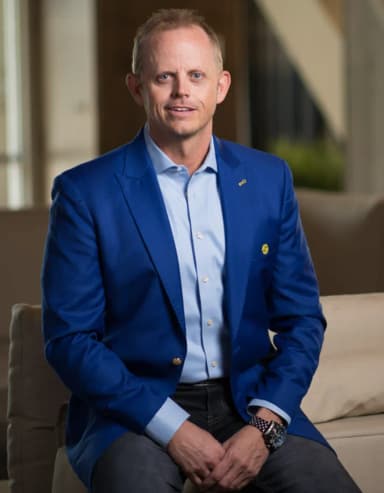
In this episode of The Daily Mastermind, George Wright III shares the second half of a powerful lesson he brought back from a mastermind weekend with the Arate Syndicate. The core idea comes from author Robert Greene, whose work includes six international bestsellers. The message is direct: the attitude you carry determines the reality you experience, and the single greatest attitude you can develop is fearlessness.
If you have been wondering why you keep hitting the same walls or sabotaging your own progress, this episode gives you a clear framework to diagnose the problem and start operating differently.
Attitude Is Your Lens on Reality
George uses a camera analogy to make the concept concrete. Your attitude is the lens through which you see everything. More specifically, it functions like the aperture on a camera: you can narrow your view, focusing tightly on one thing, or open it wide to take in the full picture. How you set that aperture shapes what you see, what you miss, and what you believe is possible.
This matters because most people assume their attitude is fine. They think they are being positive or at least reasonable. But George points out that your deep-rooted attitude reveals itself over time, not just in your best moments.
Your true, deep-rooted attitude will show up over time. You may be positive in certain moments or not in others, but overall, attitude will be exposed over time.
That is why it is worth doing a genuine self-assessment, not a flattering one.
Fearless vs. Fearful: Which One Are You Operating From?
Robert Greene's book "The 50th Law," co-written with 50 Cent, identifies fearlessness as the central key to lasting success. George points to it directly:
The key to success that he had had in life is fearlessness. Many, many successful people operate from this attitude.
A fearful attitude is not always obvious. It does not always look like panic or paralysis. It can show up as focusing on what might go wrong while moving forward anyway. It can look like scarcity thinking, or like an ego that constantly needs to be the center of attention and the most validated person in the room. Fearful people validate their own fears by seeing problems everywhere, which leads to self-sabotaging behavior.
A fearless attitude looks different. You put the spotlight on others without feeling threatened. You stop worrying obsessively about whether things will last or whether you will be successful. You act with openness and an abundance mindset.
Two Ways to Start Building Fearlessness
George offers two concrete steps to begin shifting your attitude:
1. Decide that your attitude is the key. What you focus on grows. If you have not made your attitude a genuine priority, it will not improve. Make the decision that your attitude requires ongoing attention and investment.
2. Honestly gauge your attitude right now. Not the polished version you present to others, but your true rooted orientation. Are you operating from a place of fearlessness or fear? You cannot develop what you are not willing to see clearly.
Two Things That Will Steal Your Fearlessness
Even if you build a fearless attitude, two forces will work against you over time. George names them directly.
The first is age. The more knowledge and experience you accumulate, the more your mind gets weighed down by what you already know. Certainty becomes a trap: you stop being open because you think you have already figured it out. The fix is to return regularly to a youthful mindset, what the Stoics describe as a poverty mindset: what would you do if you lost it all? Bring that hunger back. Then let your experience serve your intentions instead of replace them.
The second, and more counterintuitive, thief is success. Success feeds ego. It makes you want more attention and validation. George has seen this pattern in business partners, celebrities, and bestselling authors: the more success they achieved, the more the work became about them rather than about serving others. When that shift happens, the fearlessness that built the success quietly disappears.
The Role of Gratitude in Staying Fearless
The antidote to both of these threats is gratitude. George closes with advice his father gave him:
Develop an attitude of gratitude because gratitude is the difference maker. Gratitude is what will keep you humble. It will keep you focused on what's important.
Gratitude does not just feel good. It functions as a stabilizer. It keeps you anchored to purpose rather than ego. It keeps you hungry without making you anxious. And it keeps your attitude calibrated toward abundance rather than scarcity.
Action Steps
- Take an honest attitude check today. Do not assess your best moments; look at your overall pattern over time.
- Decide to make your attitude a daily priority. Write it down, revisit it, feed it intentionally.
- Identify whether fear is showing up in your thinking as ego, scarcity, or comfort-seeking, and name it without judgment.
- When you feel the weight of experience making you rigid, return to a beginner's mindset. Ask what you would do if you were starting fresh.
- Build a daily gratitude practice, not as a feel-good ritual but as a tool to stay humble, focused, and fearless.
Fearlessness is not something you are born with. It is an attitude you choose, build, and protect. As George Wright III reminds us, it is never too late to start living the life you were meant to live.