
The Daily Mastermind
→ALL EPISODES
Episode 1375 · Oct 30, 2026

How to Avoid Entrepreneur Burnout

Watch
Listen

The biggest threat to your business probably isn't your competition, the economy, or a shortage of leads. It's you — running yourself into the ground trying to accomplish everything at once. In this Friday lifestyle episode, George Wright III unpacks how to avoid entrepreneur burnout before it quietly takes apart the business, the relationships, and the freedom you've been working so hard to build.

Somewhere along the way, being busy became a badge of honor. We measure success by how long our hours are and how much we can prove we do, instead of what we actually get done. After 30 years of building companies, George's conclusion is blunt: your greatest asset isn't your company, your product, or your strategy. It's you. And when you stop taking care of that asset, everything downstream — your marriage, your friendships, your opportunities, your business — eventually suffers.

How to Recognize the Warning Signs of Entrepreneur Burnout

Here's the challenge with burnout: it doesn't happen overnight. It happens gradually. You start feeling tired more often. You lose some of the excitement you used to have for your business. You get impatient. You get distracted. Most founders don't notice any of it, because they're too busy executing to look up and assess how they actually feel.

The tell is subtle, which is exactly why it's dangerous. Ask yourself the honest question: *Am I building the business and life I want, or am I just trying to keep up with everything I've created?* A lot of entrepreneurs are doing things simply because they've always done them. Momentum isn't the same thing as direction.

The Productivity Trap

One of the biggest mistakes entrepreneurs make is assuming that because they're still productive, everything must be fine. You can absolutely get things done while slowly exhausting yourself. There's a real difference between working hard toward something meaningful and living permanently in survival mode — and from the outside, the two can look identical. Just because you've been pushing doesn't mean you should keep pushing in the same direction.

Why Boundaries Protect Your Energy and Your Business

One of the hardest parts of entrepreneurship is that there is always something pulling at you. An email. A meeting. An opportunity. A problem. If you're not careful, the business will consume every single minute you hand it — your attention expands to fill whatever time you give it. When you're running multiple businesses, managing products, and fielding a constant stream of opportunities, it becomes very easy to convince yourself that everything is important.

Not everything that's demanding your attention deserves your attention.

That's where boundaries come in. Get intentional about your priorities and write them down — with an actual pen and paper. Identify what matters most, then learn to delegate the rest. Protecting your time, focus, and energy isn't a luxury reserved for people who have already made it. It's the discipline that lets you keep going.

Saying No to Good Opportunities

Boundaries also mean getting comfortable saying no — including to things that are genuinely great. George recently turned down several phenomenal opportunities, not because they were bad, but because they weren't right now. That distinction matters.

Every time you say yes to something, you're saying no to yourself — not just something else.

That "no" might be time with your family. It might be your health. It might be the quiet space you need to think and create. The goal here isn't to eliminate hard work. George believes in hard work, discipline, and pursuing big goals. The goal is to build boundaries around the things that matter most, so the hard work is pointed somewhere worth going.

It starts with intent. In a recent conversation with Larry Wydel — a top one-percenter with roughly $11.5 billion in assets under management — George asked what it takes to perform at that level consistently. The answer: it always starts with intent. So ask yourself whether you are intentionally trying to create a good life, or just reacting to whatever shows up. Success isn't about how much you can fit into your schedule. It's about making room for what matters most.

Make Recovery Part of Your Success Strategy

High achievers struggle with this one, because we treat recovery like a reward — something you earn after the quarter closes, after the launch, after the deal. It isn't a reward. It's a requirement. Sleep, exercise, and nutrition aren't indulgences you get to once the work slows down. They're the infrastructure that makes the work possible.

George calls this the corporate athlete mindset. Professional athletes perform at the absolute highest level — and they also rest. They rehab. They do ice baths, massage, therapy, personal training. Meanwhile, founders grind, grind, grind, with no recovery built in anywhere. Think about lifting weights: it isn't the stress of breaking down the muscle that grows it. It's the recovery. Entrepreneurship works exactly the same way. The point of working less isn't working less — it's having the energy, clarity, and focus to do your best work when it counts.

Can You Sustain This for 10 or 20 Years?

Are you building a business and a lifestyle you could maintain for the next decade or two? That old adage — work today like most won't so you can have tomorrow what most can't — falls apart when the version of you that arrives at "tomorrow" is depleted, disconnected, and running on fumes. The ultimate goal of entrepreneurship was never to build a company and then burn out. It was to create freedom and a lifestyle you can actually enjoy.

So be honest about whether what you're building will eventually wear you down. Sustainability isn't a lack of ambition. It's the only way ambition gets to compound.

Action Steps

  • Identify what's consistently draining your energy — a person, an activity, even a location — and eliminate or reduce it. Sometimes that's as simple as working outside the office to get real thinking done.
  • Pinpoint one place where you need a better boundary to protect your time, focus, and energy, and put it in place this week.
  • Pick one habit that helps you recharge or perform better: meditation, journaling, exercise, a genuine day off. Just one.
  • Write your top priorities down on paper, then choose one thing on the list to delegate.
  • Practice saying "not right now" to one good opportunity that doesn't fit this season.

Don't try to change everything at once. Pick one thing and practice it consistently, because small changes add up. And remember: don't spend your entire life building a business only to discover you sacrificed the very thing you were working so hard to create. Success should give you more life, not take life away. You have greatness inside of you — now it's time to unleash it.
READ THE FULL TRANSCRIPT

TDM - How to Avoid Entrepreneur Burnout George Wright III: [00:00:00] Are you intentionally trying to create a good life? Because success is not about [00:00:05] how much you fit in your schedule, how much you can prove you do It's about making room for [00:00:10] what matters most. And once you do that, you've got to make recovery part of your [00:00:15] success strategy. ​ [00:00:20] Hey, guys. Welcome back to the [00:00:25] podcast. I wanna talk to you today about a leadership and lifestyle topic, and it's [00:00:30] one that a lot of people are dealing with. I've had many guests on this. It's how to avoid entrepreneur [00:00:35] burnout. Because here's the thing: I really do think one of the biggest threats to your business [00:00:40] is not your competition or your economy or anything that you're doing when it comes [00:00:45] to lack of leads or opportunity. The fact is, if you're running yourself into the ground [00:00:50] trying to accomplish everything, that is your biggest, um, threat to your business. Think about that for a minute. [00:00:55] As entrepreneurs and business owners, we're constantly pushing. We're building business, [00:01:00] we're hustling, grinding, solving problems, chasing opportunities, and somewhere along the way, [00:01:05] being busy becomes like some sort of badge of honor. You know, it's something that's [00:01:10] expected, the hustle, the grind. You gotta do it. We start measuring our success by how much we're doing and [00:01:15] how long our hours are instead of actually what we're getting done. So that's what I wanna talk to you about today. [00:01:20] For those of you first joining, my name's George Wright III. I'm your host. I wanna try to always give you [00:01:25] inspiration, motivation, and education, but on Mondays, I'll usually talk about mindset, the, the [00:01:30] inner game, the mindset behind the founder. Wednesdays we talk business. Tuesdays and Thursdays we've [00:01:35] got interviews. But on Fridays, I wanna talk to you about lifestyle because that's [00:01:40] the whole reason we're doing this, right? I, as many of you know, I co-host the Franklin Planner Podcast, [00:01:45] and I do this because I believe that leading your life what matters most, first things [00:01:50] first, are the most important things in your life, period. And when it [00:01:55] comes to your business, I wanna talk to you about what you're paying attention to, and that [00:02:00] is how you are building your business. So how do you avoid [00:02:05] entrepreneur burnout? Because there's something I've learned in the last 30 years. Your greatest asset is not [00:02:10] your company, your product, or your strategy. It's you. It's you. And if you're not [00:02:15] taking care of you, eventually everything else suffers. I've had it happen so many times. [00:02:20] Your relationships, your marriage, your business, your opportunities, your friendships.[00:02:25] You know, so I wanna share some ideas with you on how you can protect your energy, maintain your [00:02:30] focus, and create success that lasts. And I wanna share those with you. [00:02:35] Um, usually try to share at least three ideas, but here's the thing. It's gonna start with [00:02:40] noticing and recognizing the warning signs, right? Here's the challenge with burnout. It doesn't [00:02:45] happen overnight. It happens gradually. And then by the time you're burned out, you [00:02:50] know, you start feeling tired more often, you lose some of the excitement that you have for your business, you become [00:02:55] more impatient, distracted. You-- maybe you'll recognize these things. Sometimes you don't even recognize what's [00:03:00] happening because you're so focused on getting things done. I think one of the biggest mistakes entrepreneurs make is [00:03:05] assuming that because they're still productive, everything must be fine. [00:03:10] But you can... You, you know, you could be getting things done while you're slowly just freaking exhausting yourself.[00:03:15] And there's a difference between working hard, you know, towards something that's actually [00:03:20] meaningful and constantly being in survival mode, you know? So ask yourself this [00:03:25] question, would you? Am I building the business and life that I want, or am I just [00:03:30] trying to keep up with everything I've created? Sometimes do you feel like you're just [00:03:35] doing things because you have to, 'cause you've always been doing them? Because just because you've been pushing [00:03:40] doesn't always mean you should That's the thing. You've got to recognize the [00:03:45] warning signs of what you're feeling. Then you've got to create some boundaries that [00:03:50] protect your energy. This is a really tough one. One of the hardest things about being an entrepreneur is that there's [00:03:55] always something pulling at you, an email, a meeting, an opportunity, a problem, [00:04:00] and if you're not careful, the business will consume every minute that you give it. It's the Pareto principle. You will [00:04:05] expand your attention to the time you give it. I've experienced this many times. You know, and when [00:04:10] you're running multiple businesses and managing different products and tons of opportunities constantly coming at you, [00:04:15] it's easy to convince yourself that everything's important. But here's what I've learned. [00:04:20] Not everything that's demanding your attention deserves your attention.[00:04:25] You've got to get intentional about your priorities. What matters the most to [00:04:30] you? Write it down. I, I mean, I'm talking a pen. You guys know what that is, right? A [00:04:35] pen and paper. You've got to learn to write down and identify your priorities, and then you have [00:04:40] to learn to delegate. And, you know, you gotta be comfortable saying no, and sometimes you gotta recognize that an [00:04:45] opportunity isn't necessarily the right one for you right now. It might be a great opportunity, [00:04:50] but not right now. I've recently turned down some opportunities to do some things that were [00:04:55] phenomenal opportunities, but not right now. Because every time you say yes to [00:05:00] something, you're saying no to yourself, not just something else, yourself. [00:05:05] Maybe it's time with your family, your health, you know. Maybe it's time that you need just to think and [00:05:10] create. But the goal is not to eliminate the hard work. I want to be really clear about this. [00:05:15] I believe in hard work. Nobody works harder than me, I don't think. I believe in [00:05:20] discipline. Uh, uh, I may be the, the most disciplined lazy person, but, like, I am disciplined, [00:05:25] and I believe in pursuing big goals. But I also believe you've got to build boundaries around things that matter [00:05:30] the most to you. And if you don't start and you don't know what that is, if your intention isn't there... I just [00:05:35] interviewed Larry Wydel the other day. He's a top one-percenter. This guy's got about [00:05:40] 11 and a half billion under assets under management. And, you know, when I said, "Talk to me about [00:05:45] mindset, talk to me about being a one-percenter consistently," he said, "It always starts with intent." [00:05:50] And I thought, that's a great perspective. Are you intentionally trying [00:05:55] to create a good life? Because success is not about how much you fit in your schedule, how much you can [00:06:00] prove you do It's about making room for what matters most. And once you do that, [00:06:05] you've got to make recovery part of your success strategy. Now, this is one that [00:06:10] we will really struggle with because this is something I think high achievers, you know, will [00:06:15] struggle with, uh, because they're just not used to it. We treat recovery like a reward. [00:06:20] You've got to treat it like something that's more important than a reward. You've [00:06:25] got to treat it like something that's necessary. Get sleep, get exercise, pay attention [00:06:30] to your nutrition. You know, I wrote a paper a while back called "The Corporate Athlete," and the [00:06:35] reason I wrote this paper is because... paper, it was probably a blog, uh, you know, I've, I've gone-- [00:06:40] I've done speaking on it before as well. But, you know, professional athletes will, [00:06:45] will just perform at the highest level and, you know, they will... but they will, they [00:06:50] will rest as well. They recover. They do rehab, you know, ice baths, [00:06:55] massage, doc- you know, personal train- pr- you know, therapists, all this kind of stuff. And [00:07:00] here we are as corporate founder entrepreneurs, and we grind, grind, grind, grind, grind. No [00:07:05] recovery. You've got to remember, it's not the stress of your... Uh, let's just [00:07:10] take working out in the gym. It's not the stress of your muscle, the breaking down of your muscle that grows it. [00:07:15] It's the recovery that grows it. So if you just constantly stress your muscles when you're lifting in the [00:07:20] gym, you'll never-- y- y- you're not gonna repair them. It's the same with [00:07:25] entrepreneurship. The goal isn't to work less just for the sake of working less. It's to [00:07:30] have energy, clarity, and focus, and so recovery is a huge part of that. And I want you to [00:07:35] also think long term. Are you building a business and lifestyle that you can maintain for 10 or 20 [00:07:40] years? Because this whole adage that I grew up around, which is, "Work today like most won't, so that you [00:07:45] can have tomorrow what most can't," is all BS. You need [00:07:50] something that's sustainable long term, and you gotta ask yourself, are you creating something that eventually is just gonna wear you down? [00:07:55] Because I don't think the ultimate goal of entrepreneurship is just to, you know, build a company [00:08:00] and then burn out. I think it's to create a freedom and lifestyle that you can continue to enjoy. [00:08:05] So let me leave you with a challenge this Friday And going into the weekend. As [00:08:10] you head into the weekend, take a few minutes and ask yourself a couple of questions. I [00:08:15] love questions because they really get you thinking. First, what is it that's draining your [00:08:20] energy consistently that you could eliminate or reduce? Might be a [00:08:25] person, might be an activity, might be proximity. A lot of times I won't work in the office because I need [00:08:30] that extra time to get things done and recoup. What's draining your energy that you can eliminate [00:08:35] and reduce? Second, where do I need to establish better boundaries? Where [00:08:40] could you put some boundaries in place that will protect your time, focus, and energy? [00:08:45] And third, what's one habit, just one habit, that you can start practicing that would help you [00:08:50] recharge or perform better? Meditation, journaling, uh, a [00:08:55] day off, like whatever it is. Remember, even a day off is, is productive [00:09:00] if you're using it to recover. Don't try to change everything at once. Just pick one thing, because [00:09:05] small changes add up. You know, practice them consistently, and they add up over time. And [00:09:10] remember this, don't spend your entire life building a business only to discover that you sacrificed [00:09:15] the very thing that you were working hard to create. Because success should give you more life, [00:09:20] not take life away. I appreciate you being here with me today. I hope these are things that [00:09:25] inspire you. I think Fridays are a good time to reflect, to keep growing, to keep [00:09:30] building. Um, you're not doing it on your own. I know sometimes entrepreneurship seems like a lonely road.[00:09:35] It is a lonely road, but not when you-- You know, that's why we have the Dealer Mastermind, so you can [00:09:40] mastermind with, uh, myself, guests, and things we bring in. So I hope this is helping you. [00:09:45] And please do me a favor. Go over to dailymastermind.com or go to my email address. I always put [00:09:50] it in these episodes. People don't, um, think I respond, but I read all these emails. Uh, you can even go to [00:09:55] george@g3worldwide.com. That's my personal email address. Uh, I'd love to hear what you're working [00:10:00] on. Let me know what you've got going on. You have greatness inside of you. Now it's time to [00:10:05] unleash it. That's my message for today. Have an amazing weekend. Share the show. I'll talk with you soon. ​ [00:10:10] [00:10:15]

Free to Join

Join the Mastermind — free.

Get the Prosperity Pillars poster, the First 30 Days guide, and the weekly Prosperity Report — the week's biggest ideas in a 5-minute read.

See the free starter bundle
About the host
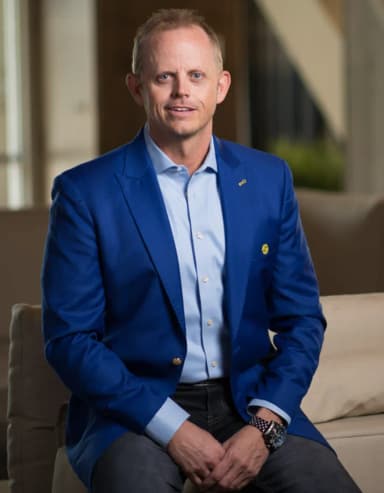
George Wright III, host of The Daily Mastermind

George Wright III

George Wright III is an entrepreneur, investor, and the host of The Daily Mastermind. Over more than two decades he has founded and scaled several multimillion-dollar companies and built a renowned seminar business that put some of the world's biggest names and brands on stage. With 25+ years across marketing, sales, and executive leadership, he's made a career of turning bold ideas into results — and momentum into lasting growth.

Today his mission is singular: empower driven entrepreneurs everywhere to master their mindset, unlock their potential, and live their ultimate destiny. Through The Daily Mastermind, George shares the Prosperity Principles and strategies that help people create massive change — in their business and in their life.

MORE ABOUT GEORGE→