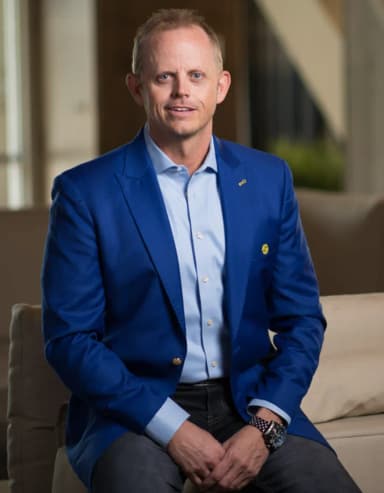
Most people accept that learning is important. They read books, listen to podcasts, attend events, and feel like they're doing the work. But George Wright III, host of The Daily Mastermind, challenges that assumption with a deceptively simple point: the act of learning is not the same as the act of growing. What separates those who transform their lives from those who stay stuck is one critical step most people skip.
In this episode, George unpacks what it really means to commit to lifelong learning, why your beliefs are shaped by your experiences, and how intentional study can unlock results that passive consumption never will.
Why Learning Without Application Falls Short
George introduces a straightforward but powerful equation: learning plus application equals experience. And experience, he explains, is what actually shifts your beliefs. Your beliefs are what determine how you see yourself, how you interpret setbacks, and how boldly you pursue your goals. Without application, you're just accumulating information that never gets translated into the kind of experience that changes how you think.
The goal, George says, isn't just to know more. It's to engage with your environment differently, to manifest new experiences, and to let those experiences expand what you believe is possible. Your beliefs are either being validated or expanded by what you learn and what you do with it.
How to Be Intentional With the Way You Study
Being intentional means more than simply choosing what to read or listen to. It means being honest about whether you're truly absorbing information or just going through the motions. George points out that listening to an audiobook while driving or working out is often just background noise. You're not integrating the material; you're checking a box.
True intentional learning requires presence and focus. It means sitting with an idea long enough to ask: how does this apply to my life right now? It also means repetition with fresh eyes. That's exactly why books like Think and Grow Rich have remained relevant across decades. Each time you return to the same material at a different stage of life, you bring different experiences and different questions, and you find different answers.
That's why books like Think and Grow Rich have stood the test of time. Over decades, people have read that same message. And when they're applying the knowledge over and over, they're learning different things at different times in their life based on different perspectives that they have.
The Role of Open-Mindedness in Lifelong Learning
One of the biggest barriers to growth is a closed mind disguised as experience. George references a principle from ancient Buddhist teachings to make the point:
You can't put more in your cup if your cup is already full.
Whenever you catch yourself thinking "I've already heard that" or "we tried that before and it didn't work," recognize that you're shutting the door on a potentially different outcome. Circumstances change. You change. The same idea or strategy, applied in a new context with new awareness, can produce entirely different results. Stay open at every stage.
Learning From Both Success and Failure
George pushes back on the popular idea that failure is the greatest teacher. He doesn't dismiss failure, but he argues that success teaches you just as much, and in a different way:
I learn what to do, not just what not to do.
Both outcomes are learning experiences. Neither success nor failure is inherently good or bad. What matters is the frame you put around each one. If you treat failure as proof you can't succeed, it becomes a belief that limits you. If you treat it as data, it becomes a resource. The same is true of success. Study what worked, understand why it worked, and you'll be able to replicate it.
Why Mentors and Your Environment Accelerate Growth
You can read every book ever written about swimming, but spending an hour with a great swim coach will teach you more. George makes the same case for mentors in business and personal development. A mentor who has already built the belief system you're trying to develop can transfer some of that belief to you, pulling you further out of your comfort zone and closer to your potential.
Beyond formal mentorship, the people around you on a daily basis shape your learning environment. Surrounding yourself with those who are more experienced and more knowledgeable in the areas where you want to grow integrates learning into your life as a way of being, not just a scheduled activity.
Trading Motivation for Discipline Through Daily Rituals
Motivation is unreliable. It spikes when things are exciting and disappears when things get hard. Discipline, built through daily rituals, is what keeps you learning and growing when motivation isn't showing up. George encourages you to trade your dependence on motivation for a commitment to consistent habits: working out, reading, meditating, whatever practices put you in a state where you can absorb, reflect, and apply.
These rituals don't just support learning. They are a form of learning, because they generate the kind of consistent experience that gradually reshapes your beliefs about who you are and what you're capable of.
Action Steps
- Identify one area where you've been going through the motions with learning (an audiobook you half-listen to, a book you read but never applied) and commit to engaging with it intentionally this week.
- Pick up Think and Grow Rich, even if you've read it before, and read chapter one with fresh eyes, asking how you can apply it at your current stage of life.
- After your next learning session (a podcast, a chapter, a video), write down one specific action you can take based on what you heard.
- Find or strengthen a mentoring relationship with someone who has already developed the belief system or skill you're working toward.
- Replace one motivation-dependent habit with a time-anchored daily ritual so it happens regardless of how you feel that day.
Learning is not a destination. It is a lifelong commitment to expanding your beliefs through applied experience. George Wright III's message is clear: prosperity principle number nine, commitment to lifelong learning, is not about how much you consume. It's about how intentionally you grow. It's never too late to start living the life you were meant to live.