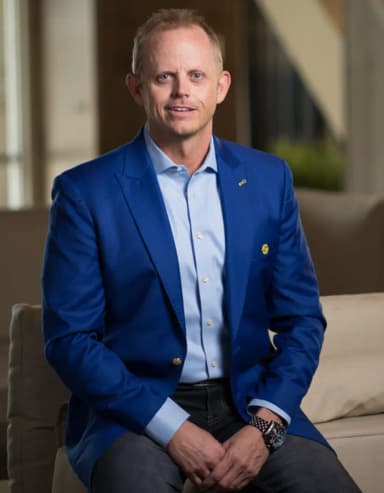
All right, welcome back to The Daily Mastermind, George Wright III with your daily dose of inspiration, motivation, and education. And listen, guys, if you want clarity, focus, and discipline, we've got a real cool story here for you today. And I'm excited to have a guest in the studio, Kurt Belding. How are you doing, brother? Good. Thanks for having me on, George. Yeah, this is going to be good. You know, we, I've done a little bit of a deep dive into Kurt's background and I want to give you guys a little bit of a multi-layer approach to the conversation we have today because Kurt's the, he's the founder of Western Obsessions, which is a hunting television show and full media brand. But he scaled a niche media business as well as a talent booking agency to over $3 million in five years. And he's combined his hands-on kind of content production that he loves doing with a full business, but he's a, he's an entrepreneur. He's done a ton of different things. He's got a loyal audience and I think we can learn a lot from him today. So I really do appreciate you being here, man. I generally will provide a lot of background and details in our show notes, but it still would be great if you could give us a couple minutes on your past entrepreneurial journey and what pivoted you into what you're doing right now. So everybody gets a feel for what your background is. Yeah, sure. And I think it really plays into what I'm doing now because after I've been an entrepreneur pretty much my whole life. You know, from early, early 20s, I've always wanted to figure out how to do things myself. You know, I'd never wanted to work for someone else. I think you're just kind of born that way. In my experience, I was just born that way. I have to tell people, look, I know you think entrepreneurship is cool and you glorify it, but if I wasn't born this way, I don't think I would want to be this way. You know, it's tough, man. It's really hard. You're getting punched in the face like pretty much every day being an entrepreneur. So yeah, I just feel like I'm genetically put together that way. So really my big experiences in being an entrepreneur is I started a sports nutrition retail chain called Fit Republic in the Denver metro area. And we expanded throughout the Midwest a little bit. We opened up, I franchised it and ended up open about 26 locations. And that was over the course of 10 years. You know, there's a lot of failure, a lot of trial and error, a lot of doing things the wrong way. It would have been really nice if I had a nice group of mentors that I could learn from, but I was just white knuckling it, man, and trying to figure things out on my own, you know? I hear it. Yeah. And I spun that into owning three different supplement lines that I was manufacturing to sell through our retail chain, a company called Fit Republic Foods, which is a healthy meal prep company, a content creation company that was handling all my marketing and other business marketing. I also owned a hunting guiding service here in Colorado doing elk hunting. I owned a CrossFit gym, you know, just doing a bunch of stuff. And I got to the point, I think a lot of young entrepreneurs get to this point where they find a little bit of success in something they're doing and they get a little bit of addiction to that. And they want to taste a lot of different other businesses. And I started thinking of all these businesses and I could do this and I could do that and I could do this. And before I knew it, man, I was doing so much stuff and running so many different businesses, but none of them were making me that much money or any money at all. But I was super busy, like my hair on fire every day trying to figure it out. And I just hit a point when I turned 40, which is like a, I guess a midlife crisis where I was like, man, I'm not having fun. This is stressful. I'm not rich by no means. I'm not making passive income. I just want to go on really cool hunting experiences. I've always hunted my entire life. And this is just what I want to do. So I ended up shutting down or closing every one of my businesses, all of them. And I sold some things that I could sell that had value. So I made a little bit of money, which gave me about two to three years of income. Spent that real fast because hunting's expensive and had to figure out how to make money in the hunting world. And here I am, you know, I guess six years after that decision and we're figuring it out. You know, it's interesting. And the reason I wanted to ask you about that is, you know, I led with the fact that you built this Western Obsession TV so quickly, but a lot of people don't realize the lumps, the ups and downs, the things you've got to go to make things happen. And so it's good that they see that and they hear that. But at the same token, you're right. You've got to be a little bit wired for it. You've got to be willing to do the work. And so you had this point where you pivoted and you decided to do stuff that you love, that you want to work with. And so I asked you this before, did this start out as a tv you know project or give us kind of the background on what brought you into it yeah you know when i had all these businesses i had a internal media crew photographer editor videographer and i took a videographer on a hunt with me on an elk hunt just to play around and have some fun film it and see what we could do and i loved it just absolutely fell in love with it so that's where it all just started and i watched hunting content i enjoyed watching a an episode here there of whoever was producing it so i thought man i could do this and maybe i could do it even better which you know that's just ego talking all right when i first started it was terrible but anyway i just fell in love with it and i got to a point where i just wasn't enjoying the other things that i was doing and life was passing me really fast and i realized man i only have so many years to really do what i really enjoy which is i love that like on a mountaintop away from way remote away from society super hard physical hunts you know backpacking everything on my back and I was like man I just that's it I'm just going to shut everything down and start filming hunts and figure it out from there so long story to your question was it was the filming of the TV content first and then I was like well I'll just figure out how to monetize it after that and I got lucky and figured it out so yeah it's interesting because it really is the it really is finding something that you're passionate about, but then combining it with the experience and things that you have, that'll take it to the next level. And, you know, you've gone really deep in this niche, like with hunting. So, you know, rather than trying to appeal to everybody to keep them all excited about, you know, your content and things like this, you are targeting it really well to this outdoor enthusiast. Give me an idea of specifically who your audience is right now. Yeah, it's really niche when you think of a general population of the United States or the world, right? There's not that many people that enjoy hunting or outdoors like I do. It's a pretty small niche. And then it even niches out from there. So like within the hunting community, there's the rifle hunters, and then there's the bow hunters, and then there's the whitetail hunters and the elk hunters. And it's not a lot of people cross over. Like if you're in that niche, it's just who you are. But I kind of do all of it. I do rifle hunting. I do bow hunting. I do elk hunting on whitetail. I go all over the world doing these really cool adventures. So I think I'm pretty relatable to everybody where the 65-year-old guy that's whitetail hunting could relate with me, but the 23-year-old guy that's learning how to backcountry archery elk hunt could also relate with me. So I think I'm pretty relatable across these small niches. Do you consider yourself, I use these terms kind of loosely, but do you consider yourself a content creator, a TV show host, or just a businessman, like an entrepreneur? Because they probably all describe you but on a day how do you do that Because I know a lot of people they just go down this rabbit hole of content creation and they just become obsessed like you said addicted maybe even to the attention I had many speakers and draws and individuals that I worked with over the years and they forget at their core is business but you done successful stuff with both So I'm curious how you mentally attack your day as a host, as a media content creator, as a businessman. What are your thoughts there? I think it goes back to my core reasoning of how do I want to live my life? What kind of life do I want to live, which is freedom. I don't want to work for somebody else. I want to go on cool hunting adventures and I want to make a living and I want to make sure my family is comfortable. That's my why. So everything revolves around that. So to your point, I'm a businessman first because that has to equal, you know, providing that lifestyle. So business comes first and, but I know what's really important about business is content creation. Content creation is so key because the organic content, whether it be on social, YouTube hunting episodes, podcasts like this one, content is the driver to brand. And brand is, in my opinion, one of the most important things of a business. Yeah, it's hard for a lot of individuals to sort of balance content because look, if you're not a content creator today, you're not building your brand, obviously, but to balance business and content. But I like how you started that out. You started with not just your why you want to do it, but what you love doing. And then you realize one of the best, most effective ways to do it is through content. But the goal is to build a business, to drive a business. And so do you find yourself, how do you schedule your typical day when it comes to, you know, some people can create content through a podcast, but when you're shooting shows and hunts, and it's very time intensive, how do you balance your time between content creation and running your business? Do you do that on a weekly? Do you bulk create content? What's your schedule look like? Yeah, I'll just kind of give you kind of like what I do in a normal day, which is, you know, just like every entrepreneur that's successful to the normal person, I look crazy to how I structure my day. But I'll also preface this is when I own a franchise retail chain of 26 locations and six other companies, I had a lot of employees. At some point, I think it was around 60 to 70 employees that I was managing. And I didn't have a very good structure in place of systems. So I got burnt out on employees. So now I'm running a $3 million company with zero employees. I'm the only one managing this. And the key to that, keep going, but it helps us understand how you can do that. And the key to that is understanding how to leverage and scale work through AI now and through automations and through my structure of the day. I'm going to get to your point of how I structure and content in my business. So here's how my day typically works. I'm at the very latest, I'm up by five o'clock in the morning. Sometimes I'm up two, three o'clock in the morning and I'm starting to work and it's huge block for me because I have kids, I have family and no one's awake and I'm the only one awake. So I can get a lot of work in from let's call it four o'clock in the morning to seven. That three hour time period is probably my most productive by far. And that time period is me building business. I'm working with, I use Claude Code and Claude for my AI tools right now. That's building a lot of stuff for me, automations. You know, that's Claude Code itself is probably 20 employees, you know, AI agents, you know, that doing- And the more it gets to know you, the easier it gets to use and the more it can do. Absolutely. And there's a lot of, we could dive in a rabbit hole if you want to go down that like how to structure data so for its memory so you know you're not screwing things up and how to run that efficiently but cloud code is about 20 employees for me and then so i'll do that for a couple hours but i'll spend one hour in the morning to create content for either that day or that day in the next day and how i pull a lot of content is i go on these really cool hunting trips and i bring a videographer with me. We film that, which gives me a ton of content. I can cut that up into shorts. I can cut that into photos. We do long form content, which is typically a 15 to 20 minute hunting episode that goes on carbon TV, YouTube, Waypoint TV. And then I cut all that up into reels and to, you know, quick little clips to photos to that's where a lot of my content comes from. And then I'll do some raw stuff of me just talking into my phone. But it's important for me to create that content because that drives my business. So every day I spend at least an hour on content. And then I may take a day during the week where I'm like, all right, I need to block some stuff out. So maybe I'll film a little bit, actually do some creation of maybe a three-hour block. And then I get into my day and then I get really reactive. So I've got a sales team of eight other consultants and they're 1099 employees. I'm driving leads through ads through meta with AI built in as lead setters that book appointments on to my sales staff. Right. And we're running ads on these book hunting trips that you can go on. So I get really reactive on my sales team, needing things and answering questions, clients. I'm still talking with clients. So I probably have 10 book calls every day talking with clients, talking with outfitters, setting up business meetings with other outfitters and other business to acquire out businesses, you know, stuff like that, that I'm leaning into. And my day typically winds down around three 30 where my kids are coming home. I want to spend some time with my kids. I want to get outside more. I definitely get in a workout midday. That's very important to me. I was going to ask you when you do that, usually for me, it's like first thing in the morning, but you actually jump right into business, crank these things out. And by midday you're hitting the gym. Yeah, because, you know, if I start three or four o'clock in the morning, I combine two days into one. One day is up till about 1, 1.30. That's one day of work. And then I hit a workout and I get all the stress out. And I work on mental toughness during that workout. I do some crazy ass workouts. I get in a lot of pain and I see how much I can get into the suck. And then I got day two after that where I, you know, I'm still reactive with phone calls, meetings, trying to slip in some family stuff with kids. And I'm usually winding down, man. We have dinner as a family. I put the kids to bed and then I'm working for an hour or two at night to plan my next day to make sure, boom, I'm waking up in the most top three, top five things I need to accomplish the next day is laid out for me. Brother, that's a great, no, but that's, you know what, that is what entrepreneurship is, right? It's why most people can't handle it. It is consistency and discipline, but it's, I'm curious because this schedule sounds amazing. And I think it seems to me, and I don't want to put words in your mouth, but you know, as a host of the Franklin Planner podcast, we talk a lot about leadership principles and first things first, what matters most. And, you know, it seems like you kind of have these big rocks in your day, right? You've got to day one, day two, you've got to work out in the afternoon. You got your kids coming, they're going, they're coming. You're building around that. You're building around your lifestyle, around your family, around what matters most. So the rest, at least that's my opinion, can fill in with all the other stuff because you've accomplished the most important things that you have in life, right? Exactly. That's right. You know, do you, how do you, is that how you do it? You kind of book in around your family, basically. I do. I do a book in around my family and make sure that. And you're personal. And my personal, my workouts are real important. I don't, I really don't try to miss that one. Cause man what if I miss a meeting or I don get in the calls that I really want to or I can build something and I it okay It going to be there the next day but that mental like release I get with that workout and being healthy and physically fit And the mental toughness that builds is way more important than me not getting an extra couple things done, you know? Yeah, if you're listening to this episode, I hope you heard what he just said, because you've heard me say it before. maybe sometimes other people say it would be even better, but there is, if something's going to fall short, it's not going to be your mental and physical discipline. It's not going to be your family. It's going to be the day-to-day that, by the way, is always going to be there. So, and I noticed that you use very similar to me synonymously mental toughness and physical workouts. Let's take it just a second and talk to me about what you mean when you say that. Because some people might be thinking, oh man, he just, he pushes himself so hard in the gym. It's more than that, right? What you do and how you do it and how you structure your workouts is mind and body. So tell me how you, what your philosophy is on that. It is, it's my physical workout and I'm, you know, I'm 46. So I've been working out since I was 18. So everyone goes through their own evolution of working out. And I don't expect someone to jump into a workout and look at the way that I look at it immediately. So typically people do a workout because they want to get in shape better. They want to look better naked. That's why people typically work out, right? I get it. For me, it's the byproduct of the workout is I'll look better. That's the byproduct. That's just what automatically happens. But most important for me is that mental stress release and then also building mental toughness because not only entrepreneurship is hard, like you're getting punched in the face pretty much every day of entrepreneurship. It's very rare that you're like, man, what an amazing day. Everything went exactly right today. That's very rare. And life itself is very hard. So if you don't have that mental toughness, you're going to fold and you're going to be under stress and you're not going to build all those skills to be able to handle stress. But that's where I train mental toughness in my workout. So when I go work out, my number one goal is, what kind of workout can I put together to get myself in as much pain and discomfort as possible? So I'll do some crazy stuff to get into that point. And I'm going to get to that point where my body hurts so bad and my lungs are on fire, I'm about to throw up. And my mind says, stop, quit, just give up. If I don't give into that moment of just give up and stop and quit, and if I could push past what you can, your mind is just a, it's like an early alarm system to your body. Hey, you're redlining a little bit. You're pushing it. We might want to back down, but you have a lot left. Once you push past that point, you realize that, man, I've got a lot more I can give and I can override my mind saying, stop and quit. This is too hard. And I can do a lot more. And that moment right there applies to everyday life, applies to entrepreneurship. And when I train that, I'm a much better father. I am a much more successful entrepreneur and I'm way better at life. But I need to do that daily training. If I go a week without training that, I get soft and I get weak and things start to slip. Yeah. You know, it's interesting. I've done some episodes on this. In fact, David Goggins was constantly saying, you know, most people are tapping 40%. You think you can't go any further, but you are literally at the 40% mark. And so I love your philosophy on this. And I think, and I hope people are really taking note of this, that the way you approach things, whether it's business by starting first with family and, you know, your big rocks, or whether it's even your workouts, the order is, and I can't overestimate stress reduction, right? So it's a therapy, it's therapeutic, all these kinds of things, but to push yourself mentally and have the by-product be physical is a no brainer. However, you could go into the gym and get really tired and not get that mental and not get that the rest of that benefit. So it is super important to do that. I love that you say that. And this is a, you do daily workouts. Yeah. Yeah. At least five days a week is super important to me. If I go three, four days, man, my stress starts to build up. And we know what stress is, man. We put stress upon ourselves. It's how our mind thinks about things. Like we're cavemen. We think of the most dangerous thing, like something's trying to kill us. It's not trying to kill us. Just because some sales slips or like marketing went bad or your website crashed, you're not going to die. It's fine. You're going to figure it out. But our brain goes, oh my God, this is the end of the world. And you become under stress. But I need to get that cleared out to reset. And that's the best way for me to do it. Yeah, what a great analogy. I mean, you guys, if you listen to this, you know, you can reduce stress and clear out your mind, push yourself mentally and listen to byproducts you're going to have great byproduct is a great physical body. but confidence, forget, you know, confidence, maybe exterior, but self-worth, self-esteem, knowing that you are pushing yourself. When you go into a workday, knowing that you are kicking butt, you're more confident and all that, you actually get more results. I mean, I think that's a huge benefit and I don't think people really understand the multiplier effect of having mental discipline and confidence. Do you feel like that has helped you to consistently stay? Because when you're innovating and you're growing in areas that you don't know how to do it, just that basic level of confidence higher, do you feel like that's been a real key to your success? Well, yeah, confidence comes from past record of you being able to figure things out, right? That's what confidence is. Like, okay, in the past, I was faced with a dilemma or a problem and I figured it out. I have the confidence to do it again. So absolutely, but what the workout also does for me is my mind needs to stay mentally sharp. if you start to get mental fatigue, it's going to be hard to figure out problems. And little problems seem like big problems. And then the littlest problem of some little irritation is just going to make you angry, right? So now you're going through your day grumpy. So I reset that so I can keep my mind super mentally sharp. That's how I can compound two days into one day is by the time one o'clock hits, I'm already seven hours into my day. Well, how do you continue to do another six, seven hour day without that mental sharpness? That helps out a lot too. So Staying mentally sharp is really key to me. How often do you find your schedule tries to distract you from breaking day one and going to work out? There's stuff, especially if you're doing operational stuff, is trying to push you. And even though you say, I want to go work out at one, how often is it trying to work against you? Every day. Keep you in the office. Every day. Every day it's doing it. Every day I'm like trying to get up away from my computer to go work out. And I find myself drawn back. I'm like, oh, let me do this real quick before I go. Oh, let me make this call real quick. Oh, I got to send this text real quick before every day is one o'clock, two o'clock to, yeah, that's what you, I mean, the mental discipline kicks in. So let's shift gears for a second. Cause I have a couple other, we don't have a ton of time, but I have a couple other real big things I wanted to ask you your philosophy on storytelling. So when you're talking about content creation and you're doing these shows and your hunts, how important is storytelling versus just the, the strategic pieces of creating good content? it's, man, it's so important. That's what makes brand is storytelling. Like you can have brand, you can have nice visuals, you have good type fonts, good color font, like everything, but it could fall really flat without good storytelling on any business, right? Like your website, your landing page has got to have good storytelling to say what's your brand about, because someone is not going to just, you know, recognize your brand. And if they're, if you're the you know the what it for like does pumpkin spice latte drinking white woman like just the vanilla most vanilla with no personality brand you going to you going to lose right And you just blend in Nobody even knows who you are. Yeah. Yeah. You may look like every other brand out there and you're just going to blend in, but with good storytelling and good personality or brand, that's where you're really separate. You may have the exact same business as another business, but with good storytelling and good personality of the brand, you can separate yourself light years ahead. And for me in my business, the storytelling comes in where we're building trust. So someone could come watch a hunt that I do. And they're like, you know, by the end of that episode, maybe they watched two or they watched a social media clip. They feel like they know me and trust me off of my content. So when they go to book a hunt with me, they already know me. They already trust me, which is they already trust my brand. And so when me or my consultant say, Hey, I think this is the right hunt for you. There's already that level of trust built in to for that. Yeah, it's interesting because I do find those two extremes. There's on one extreme, people that are creating great entertainment and they're getting a lot of visibility from entertainment. On the other hand, someone's very strategic with their business and they have stuff that, you know, is a funnel for their business. You've done a really good job of combining the two, which is one of the reasons I, you know, reached out to get you on the show is, you know, you take entertainment, you take business, but you put it together in a blend that really seems to work and drive business, but also fulfill the needs of that audience. So that's amazing. What are some of the biggest challenges that you've faced? Let's talk in the more recent building and scaling Western Obsession TV. What are the biggest challenges you've faced doing that over the last three years? Probably the biggest challenge is just having the visual and understanding of where I'm going. Because without the creative part of, all right, here I am filming some episodes. I'm not sure how to monetize this. Am I going to monetize this with brands? Do we have so much exposure and a lot of eyeballs on what I'm doing where brands will pay me money for that exposure? Now I'm a media company selling ad space and airtime to brands. you know, I went down that road, but that wasn't the right category for me. It wasn't the right vehicle because businesses are businesses, man. Like I get it. I've owned a lot of businesses and they're very tight on ad spend because they want to see the return on investment. They're not physically seeing the return on investment. It's hard for them to spend. So it just wasn't the right play. We still do some of it, but the right play is what I'm doing now. And really the business biggest hurdle was the creative mindset to understand and have the, the visuals. I'm lacking words right now, guys. I'm sorry. I'm having a hard time explaining this, but having the mental visual ability to say, oh, this is where I need to steer the ship. That part right there is finding that is, was probably the biggest, biggest hurdle for me. Yeah. And it's a challenge, right? I think a lot of people are, you said a couple of things I want to point out to people and that is you didn't know exactly what the thing was, but you're moving forward. I think a lot of people, they try to create structure around a business because they think they know what it's going to be when, at least I've found, and I'd love your opinion on this. What I found is that clarity comes from execution. In other words, as you execute in your business, you can create clarity. Obviously you need to have some strategy, but most people are trying to figure out exactly what it's going to look like, smell, taste before they even start. And a lot of times you don't even know, like you said, we were going down the road to find out that didn't work. Now let's go this direction. But you had a clear vision of where you wanted the company to go, but the path, clarity comes from execution. Don't you agree? I agree 100%. And here's the reasons why is every plan. I don't care. Like you may come up with the, you may spend 10 years coming up with a business plan that you think is this is it. I follow this to the T and I'm going to be successful. I guarantee you 100% of the time that business plan will not get you there. It will not because you're not in it. You're not testing it. You're not pushing forward, right? Like I love business plans and I hate them because people spend too much time on their plan. You need to be continuing your plan. That business plan, that version 185 of that business plan is the plan that actually is going to work and you're not going to get there without doing. So if you're waiting for the perfect business plan, you're just never going to get there, man. You got to build that as you're going. You got to push in and figure out what's working, what's not. And most of the time where you thought you're going to end up and what you thought you're going to do is not what you end up doing. Yeah, I agree. I agree 100%. Well, listen, I guess before we go, I wanted to ask you, for entrepreneurs that are listening to this or business owners, and this can be at any level, right? But people that want to find a way to take all this where you were, business they're doing and moving parts and strategy, and maybe they've got multiple, you know, shiny objects they're chasing. What's the first step or what are some of your, What advice do you have for someone that wants to start to pivot to building a business around the lifestyle? I always tell people it's never too late to start living the life you are meant to live. What would be your advice to have somebody start moving towards a business that's built around their lifestyle versus chasing everything they're doing? Yeah, I think the number one thing I would say for people is just get started. Start now. Like whatever you think you want to do, just start doing it now because I'll give my own life example. If I didn't have the 20 years of business experience before I started Western Obsessions, it would have taken me 20 years to get to where I'm at. I pretty much figured out what I wanted to do maybe two years ago. And I went from zero to three million annually in a year and a half. because I have all the experience that I built in the 20 years prior of failing. And you're not going to get that experience without doing. So just start doing, start failing and build that experience. And then you'll figure it out as you go, man. But you need all that skill. You need all that failing to get to a point of now I can really execute because I got all that failing under my belt. Yeah, that is such great advice because so many people are trying to wait for the best plan and they don't realize when the plan does come together, all the mistakes, all the work you did, all the experience you had will help you expedite it. So don't wait. Well, listen, Kurt, I really enjoyed our conversation, man. I know we're going to be doing some other big things. So where's the best place for people to connect with you? Let's give them your site and any other thoughts you have before we take off. Yeah, westernobsessionstv.com. That's our website. Most of everything that we're doing is on there. If you want to go to my YouTube channel to see all my hunting episodes, If you want to watch me out on a mountain doing some dumb stuff, you can go do that. If you want to see some day-to-day stuff where I'm putting some workouts in that we've talked about, that's Instagram, Facebook. I'll put some of those up on my Instagram and Facebook pages. I love it. I'll put all those links in the show notes. And if you're listening to this, do me a favor, share the show. Push it out there. There's people that are out there stuck. There's individuals that are very similar to whether it's me or Kurt. So push the show out there. And then just remember, it is never too late to start living the life you're meant to live. If you take action and you get moving forward, you are going to see progress and clarity will come from execution. And so once again, I appreciate you being here. Make sure that you hit me up on the Daily Mastermind on pretty much anywhere. And let me know what you're doing. Let's celebrate some wins. Let me know what you're struggling with. What kind of guests do you want to hear? I'm happy to get the feedback. I always respond to everything myself. So thanks again for being here with myself and Kurt. And I appreciate it. Talk to you for tomorrow. We'll see you next time.