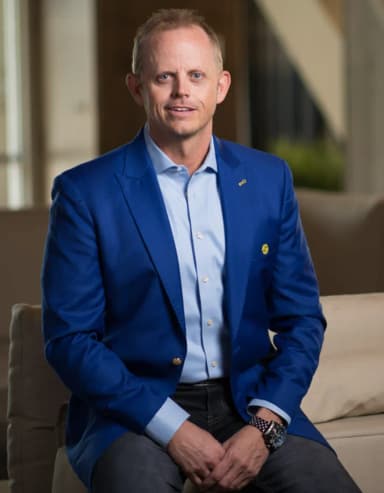
All right welcome back to The Daily Mastermind George Wright III with your daily dose of inspiration motivation and education. Today's Daily Mastermind quote of the day is challenges are an opportunity to learn and grow. Challenges are an opportunity to learn and grow. I hope you adopt that philosophy into your life. So today I was just I just got off the phone I was actually chatting with a good friend of mine business partner Brandon Boyd who's traveling around Europe right now he's on like a 10-city tour across Europe and I wanted to share it gave me an idea that I wanted to do and I wanted to share with you an interview I did with Brandon he's an example of probably some of the most disciplined success daily ritual routines that I have ever seen. It's an individual that's super successful. I'll kind of do a quick and short introduction for him, but I want to just play for you a short interview I did with Brandon in hopes that you might be able to get some great content, ideas, and success tips out of it. Success does leave clues, and he has a long track record of success, and so I hope you enjoy. I want to give a little bit of a background for those of you that are not familiar with Brandon, and the background on him is he's an author of multiple books and programs. He's an international speaker. He's a trainer. He's also had a lot of success in the companies he's been with, seven-figure earner, distributor, recruiter, trainer of the year. I mean, he has really done a lot. But more importantly and more impressively, he's done it consistently because he has like your YouTube channel has over 4 million views. You have a new book coming out and you also have a daily podcast that you do with entrepreneurs called Morning Motivation, which he's now done for how long? I mean, it's been... He's right at about two years and just under 600 episodes. Man, 600. Now, that's the definition of consistent. This is 600 interviews daily. And that's a huge, huge accomplishment. But you do have a new book coming out called bankruptcy to abundance, right? And I know that we've had some people that have been asking for that and we're going to hopefully be able to get that for them and we'll do that here on the call. So I want to start out and a lot of people listen to you all the time online. I mean, there's thousands of people. So I want to give a little bit of background that maybe they don't know, right? So let's dig back just a little bit, not just your career, but into kind of growing up because I've worked out with you. I know your discipline is amazing. Give us a little bit of the backstory as to some things that have defined you, maybe a couple of nuggets growing up, some things that happened to you as you kind of grew up and grew into your stage as an entrepreneur. Absolutely. Well, I definitely feel like that I've always been an entrepreneur. Ever since I was young, I sold baseball cards, coins, stamps, rocks, and all that kind of stuff. So I was always kind of wheeling and dealing and felt like that I wanted to do my own thing. I had garage sales, yard sales. I went to flea markets by the time I was 12, card shows by 15. We started a lawn mowing business when I was eight years old called Boyd's Lawn Service in upstate New York. We were mowing a lot of lawns. I've heard stories of those long nights with you doing that. That's a big one. While my friends were playing Super Nintendo and Sega Genesis, I was out mowing yards. Wow, yeah, that's I mean that's the that's the early age signs of an entrepreneur for sure right well Let me let me ask you this I don't want to get into a lot of details of stuff you have in your book because I think that is some really good stories and things But were there any particular? episodes or Distinct markers that really took you into a different place as you began your career because I want to talk a little bit about your career and your success in your career, but were there any defining moments, you know, as a kid or as you were growing up that really made you decide you wanted to be an entrepreneur? Well, definitely by the time I was 19. So I was actually college roommate with my brother and he got me into personal development. And that is the one time I could say, looking back, that I said, this is what I want to do. I want to be an entrepreneur. I want to be a business owner. He got me into personal development, listening to motivational tapes, learning about finance, learning about investments, learning about passive income. I had never seen this stuff before. I'd never heard of personal development. What type of books did you read? So I was reading Rich Dad, Poor Dad, Think and Grow Rich, See Who Can Top, The Magic of Thinking Big. And that is, I can say, a marker right then at 19 that everything began to change for me right then. And ever since that time, it's been incredible with the ups and downs, but that's a mark I can say my life began to change at that time. And do you feel like that was a pretty foundational piece for you in being an entrepreneur? I mean, it's funny how consistently the topic of personal development happens to come up, and I know you talk about it a lot, but do you feel like that's a real foundation for why you've been successful? I think without personal development, my life would be drastic because I was a very hard worker. The problem is that my attitude was not parallel with my work ethic. When I started to change my attitude and realized that attitude is not everything, but it is the difference. And it made a major difference for me in my personal life and business life. And that's why I say it's the marker that helped me become successful. Without personal development, I think I'd be actually a far different person than I am right now. So you mentioned Difference Maker and I read your ebook and this book is amazing. It's packed with tons of content. But one of the things that stood out to me the most was this concept of the Difference Maker. So I want to transition a bit sort of into your career because you've had a very successful career. I've seen over time even I've seen you kind of gravitate into the lifestyle, the success, the money and the prosperity, right? But you mentioned difference maker in your book. What do you mean by that kind of more specifically? Could you give us some details on that? I think that there's either things that we hear There's things that you know, whether we went to a seminar something that somebody experienced if it's a death in the family Maybe it's a divorce. Maybe it's a bankruptcy. Everyone has different things For me when I think about the difference maker Something that happened for me that I would say this was the difference that I realized you know what things are gonna begin to change for me when I became laser-focused when I became consistent and I made the commitment no more I'm not gonna live like this anymore I'm just gonna get in and this is what I'm gonna do I'm committed I'm gonna burn the boats you know essentially beyond the island myself and I'm gonna make it happen and and so again that's another pinpoint there when I think about what is the difference maker this was the thing that for me that things really started to skyrocket. Well, so, you know, I know a lot of people know you and have watched your videos online and things like that, and I think they see the success all the time. And you don't talk, and you actually don't talk very much, but I noticed you did in this new book, about the failures. But I know you're a big believer in the failures and that making the difference and transitioning. Could you give us maybe a couple of the most defining failures that you feel like have ones you had to overcome and what you did to overcome those because I think a lot of people that we talked to might be able to relate to those that you mentioned in your book well I could definitely say without going into too much detail it's already in the book there was a period of 10 months and I think maybe some of you can relate to this okay and I don't talk about this online loss so I really had to be transparent I had to be vulnerable when I wrote the book I think is important in a period of 10 months I lost my house I I lost my spouse. I essentially lost my kids. I lost my business. And I had both of my cars repossessed. Pretty much everything that could possibly happen, right? All in 10 months. So besides death, I experienced quite a bit. And if your self-esteem was low, I'd say I was right there with you. Well, and you know what? You're right. I don't think very many people, I think they'll be very surprised to kind of hear about your story because you don't talk about it a lot. And it's not, correct me if I'm wrong. It's not because you don't see that as a critical piece in the difference of being successful. It just you had so many things going on But it seems to me like when you went through that which I know a lot of people go through the depression the anxiety the divorce the relationship issues. It's been very difficult for people to get through that. What were the things you did during that time that kept you from going off the deep end? Because that's what most people do, right? They get in such a hole, they can't get out. And it sounds like you've been there. Yeah. And your mindset's not there, but I'm sure it's pretty vivid to you. What did you do to kind of get yourself at least your head above water? Well, and one thing that I don't talk about in the book that I think is really important is there were many days, George, I can tell you that I did not want to be alive. There was a day that I remember being in my car, I saw a telephone pole and I said to myself, I'm going to run this car right now, a telephone pole. That's how down I got. And I knew, okay, this is bad. I need to get some help. So I set up, I got counseling to get through it. But the major thing for me that turned things around was I said, you know, every setback is a set up for a comeback. When life knocks you down, you know, land on your back, look up. If you can look up, you can get up. But I dove into the Word. And it was the biggest thing. You know, the good book, I just put my face and I was reading it every day. That coupled with personal development. I was continuing to listen. because I said, you know, I don't want to be bitter. I want to get better. So between, you know, reading about, you know, the apostle Paul and all these different things, but then coupling that with the personal development, the audios and books, I will tell you it dragged me out of it. I was healed and things began to change. And I would say it probably took a good, at least six to 10 months because I was as low as I've ever been in my life. Yeah. You know, what's funny is I think about that and I know a lot of people, you're right, you don't talk about it as much in the book, but I think people know that your faith and your spirituality is a huge core in your life, right? And I think what I want to point out to a lot of our listeners is, I think that that foundation of personal development you had when you did run into problems helped you, but then you clearly went closer to the personal development in your faith. I mean, you're a very spiritual guy. I mean, there's a lot of people that are religious and spiritual, but spirituality and faith for you has been a huge core. or at least I've seen that in your, not just in your personal life, but in your career. And so would you say that's a pretty big core part of your makeup, even though you maybe don't talk about it a lot in your day-to-day? Absolutely. It's actually the thing I care most about, to be frank. When I also think about with that, I said, okay, I've got to get and stay busy during this time. So I said, I'm literally going to invest myself full time. I'm going all out, you know, I'm gonna 10x this thing before we talked about 10x and I'm going all out and I did and Over a period of the next number of years. I had hundreds of thousands of customers I said I'm gonna put my nose to the grindstone I'm going a hundred miles an hour and see had I not had that setback I Guarantee you that wouldn't happen. Yeah, it's funny I want to draw attention to something you said because it's a common principle I found with a lot of people that I've interviewed over the years, Tony Robbins talks about it a lot as well, and that is when you're having trouble and you're struggling, you would think when you're having a lot of success is when you take a lot of massive action, but really when you struggle the most, it sounds like is when you kind of like 10 times or double down on your taking action, but there was something you said that was subtle that I think is huge for a lot of people. It became a good distraction for you as well as created enough momentum to get you out of it, right? I noticed you said that in your book. It's like when you have all these negative thoughts because what you focus on grows, right? If you're focused on the bad, you're just going to get more of it. When you take massive action, it doesn't give you time to look at or think of or be about those negative things. And then as a result, by default, you get a lot of success, right? Because I notice you work even harder when things are hard, right? Well, when your back is against the wall, you're either going to lay down and you're just going to lay on the canvas or you're going to do something about it. For me, I'm the kind that if I get knocked down, instead of getting the nine count, I'm up at like three or four. And so it really made me actually push harder. My goal was to not come home unless I needed to go to sleep at night. So I would stay out doing what I needed to do with business to change things around. And I'm telling you, in a period of about 71 days, because I remember I wrote it down, it's about 71 days, things drastically changed for me during that time. Let me ask you this, because I know I've thought of this. I know a lot of people think of this. when you're having a hard time and what would you be your advice for somebody that's having an extremely hard time they're trying to work real hard to distract themselves they're taking massive action but you know because in that moment you're waiting for something to happen right and but yet it's not gonna happen right then it might be 71 days before something happens how do you how do you just keep plugging along I mean is it your discipline and and things up to that point or do you just don't think about it? I mean, what would you say to people that are like, I need to see a break. I need a break here. What's happening? I'm taking massive action. It's not happening yet. You're in day 60, right? And you want to keep going. What do you do? Well, it's one of our prosperities that we talk about. You can see up on the poster there. It's act in spite of your mood. I was the kind of person that said, that's good. Hey, don't get all up into your feelings. Forget your feelings. Take action. That was my mentality was my ritual. and my daily habits are going to carry me through. So it's almost like, I remember that there was a very good leader, I won't give his name, but he said, forget yourself and go to work. And so I said, I'm going to forget myself. I'm not going to think about my feelings. I'm not going to be all up in my feelings and things are going to begin to change. Just forget how I feel. I love how you said that. I want to drop back to almost how you started that comment, because I do want to talk a little bit about your rituals for success and your daily rituals. But you made a comment you said you know I just follow this principle that one of the pillars that we've talked about on the Daily Mastermind act in spite of your mood I really love that because I think when you've already made a decision in your mind that you are going to act in spite of your mood then you you've already made that decision you're not making the decision every single day and I've noticed that about you it's like you're going to act in spite of your mood before things happen you've already made that decision so when they happen you're already programmed to be that way and then you take action consistently you keep doing it and acting a spider mood is a hard thing that's a really hard thing to do but it's a lot easier to make that decision before the situations come up right yeah and that's why I think that having the habits and rituals which will get a chance more to talk about helps pull you through that because yeah let's be real you're not gonna feel like doing a whole lot of things don't feel like getting out of bed don't feel like going to the gym don't feel like going to work don't feel like taking care of the kids putting to bed, do all the whole, you don't feel like doing a whole lot of things. But when you have these habits, when you have these rituals, it's almost like on a subconscious level, you just do them anyway. And you're not worried about your moods and how you feel. I think a lot of times people see guys like you or guys like me or, you know, others in the industry of success. And they just think, man, you know, of course, it's easy for you, right? But I've worked out with you a few times in the morning, you know, I get to work out with him and it kind of keeps me going. But there's been mornings where you didn't feel like going to the gym and you went anyway. I mean, I think people just think, oh, that Brandon Boyd, he's always positive. He's always, you know, just, you know, rearing to do stuff. But there's been mornings, right, where you feel like maybe not going as well, but you do it anyway. I mean, would you say that's the case? Because people, I think, think you're just always positive and up because that's what they see. Of course. You know, I got in a car accident, I got rearing, I got four screws in my hand right here. So my arm shrunk down to the size of a noodle. and I will say that mentally it definitely did affect me. There's no question about it. But the next day I was in the gym working legs. Now they said, don't go to the gym. We get, don't want your blood and all this stuff. And so I said, okay, then I'm going to work core and I'm going to work legs. And I was in a sling for about two months. And so those, those habits and those rituals, that acting in spite of how I felt, I didn't like it. I knew that it was gonna affect me the rest of my life having this, but I just kept going anyway. And yes, there's been many days, George, where waking up with watery eyes, allergies, you know, our kids being up, we got six kids, and so being up during the night just frankly exhausted sheer exhaustion and got up anyway In fact there were mornings that I hit the alarm the alarm the snooze and said I not going today Five minutes later, this internal clock and this thought of my brain, get up, go anyway. You know, it's like Mickey said to Rocky, get up you blankety blank. Right. And it just was in my mind. It said, don't don't be a weenie get up and go and it carried me through I tell you that's a that that is so true and I think I can I can tell you from experience that haven't having that attitude has made a difference when I haven't felt like it as well well before before we get to kind of the daily rituals I do want to comment in your book you had a sort of a formula for success you talked about and I want to see if you might be willing to kind of share that with individuals and other people that might be listening because I I thought that formula for success was different than what I see for most entrepreneurs. So can you kind of give us a little bit of that from your book? Yeah. So one of the things I talk about is that failure plus persistence equals success. You have to be a persistent failure because a failure is going to be far more prevalent than success will ever be. You know, and so it's like because you know that it's going to be part of the process of success, that's actually what gets you to success is persistence and the failure. The other thing is, you know, I use as part of the formula is, you know, a belief in something. Okay, so I have a belief in a supreme being, you know, so I have God plus consistency plus laser focus, you know, equals success. I have felt that by having that faith, a very strong faith in something, being consistent and then being laser focused, you're going to find the right kind of mentors to have in your life. You're going to attract the right kind of people into your life. These are the things that you can do to be successful. That'll be, I agree. And I think I love that, that you added laser focus, because I think a lot of the challenges that entrepreneurs have nowadays is that they have kind of that shiny object syndrome, right? Like there's always something bigger and better. It's an easy way for them to kind of let go of one thing, move to the next, or they're doing too many things. So laser focus in whatever you're doing. Even if, would you say that you had laser focus in some things that you didn't end up doing long term, but at the time you were laser focused on? Oh, yeah. And I think there's a season for everything we do. There's phases of why we don't realize we're with a certain business partner or company or whatever. Why am I here? And then you realize, even if it was 12 months or 18 months, that I was focused during that time. not sure exactly why but for the next thing that you were ended up doing it ended up being a benefit and I say in the book I've talked about how I learned search engine optimization from a company how I learned how to sell on eBay yeah you know it's so in every place I sold for a company that had a stock market education program that I ended up actually using 15 years later and so each of those experiences that I was focused in during that time propelled me for the next thing. Yeah, that also is a common element that I found with successful people is not only do they not worry about where they're going to be going, they focus in and laser focus in and sometimes you won't even know the skills and talents and things you're learning are going to help you in something later and you're not going to even know where it's going to lead you. You just, you put your head down. That's another thing. I think a lot of people, they feel like they have to have all the answers and everything figured out ahead of time rather than just putting their head down and being persistent. So that's really good. So, well, great. Let's do this. I want to talk just real quick about your daily rituals for success. I'm hoping that there's some rituals there that, you know, our listeners can kind of glean from and say, those are some great rituals as well as maybe, you know, some might just kind of get the process going for them. So what is your typical day? What are your rituals for success? What do you do? Well, something I've done for, geez, almost two decades at this point, at least over 15 years, is I wake up very early in the morning. I always believed in early to bed, early to rise, and I want to get ahead of everyone else. I want to be in third gear when they're in reverse. What time do you get up now? Well, for a long time I got up at 4, but after our last child, I said, okay, I don't know if I can do this anymore. I've got to have more sleep. So now I typically arise between 435, 435 o'clock, usually about 430. If it's been a rough night with our last child, then it could be five. But I get up and I spend typically at least an hour after having oatmeal. So I got to get something in my stomach because I'm hungry. I start doing personal development right away. So I have my prayer slash meditation. Do you do that on purpose? So you do personal development first for a reason? Or is it just the best time for you to do it? The best time because there's no distraction. So the reason why I do it first is no one in the house is awake. And so I don't have work yet, I haven't gone to the gym yet. I feel like it's really important to be working on my mindset first because it's going to, guess what, text messages are going to come through and emails and other stuff that could be tough to deal with. So I've got to get my mindset right if I want to have my day right. So personal development is the first thing that I do when I wake up. So you get up early, you do personal development first thing consistently. yeah and then what else what else do you so you know so first of all I drink a full glass of water when I first wake up because I feel like it's important to kind of get my energy and everything I've heard that so I literally do that in fact when I'm brushing my teeth before I go downstairs I actually have an audio playing so I'm already doing personal development so I go downstairs I make oatmeal or eggs and then I immediately start doing personal development so I have a marriage book I read because I want my relationship to be the uncommon relationship I read then a mindset book I read a finance book and then I read a spiritual book because I read sections out of each of these yes personal and I wrote down the books because I want to make sure and be well rounded I don't want to be a fantastic businessman and have a horrible marriage I don't want to have a great marriage but be broke I don't want to make lots of money but have no spiritual you know any spiritual life and so I want to be very well-rounded uncommon father uncommon husband uncommon businessman uncommon spiritual leader and I'm not just talking about balance because I think it's kind of impossible to be balanced all the time but definitely be working and priming the pump on every one of those that's a really good point I'm going to kind of put out is even if you're not balanced if you're working on those areas it might give you some peace of mind towards the fact that you are still focused you are still grounded on it and I like how you just kind of rotate the books I think a lot of entrepreneurs and individuals that are looking for success are just constantly reading like think and grow rich business books management books leadership books and having your mind in some of these other areas is really important so I like well it's important because they're pursuing money and then the realities at the end of the day they've lost their health they've lost their marriage they've lost the relationship with their kids they have zero spirituality you know and so to me when they say well family's most important my faith is most important well they don't show it because their personal development shows the only thing they care about is fame and fortune well I guess it's what you focus on grows right I mean especially if you're diversifying your focus a bit what else what else do you feel are key rituals or daily activities that you do that would benefit some of the listeners as well so once I've worked in my mindset I'm not now I'm I'm fired up I'm like okay I'm I'm fired up. So now it's about 6 o'clock in the morning at this point. From there, I go to the gym and I work out, usually with George here. Yeah, yeah. Because it's good to have an accountability partner. Way more awake than me, though. I can tell you that. I'm not up at 5. Well, to have an accountability partner, so we typically work out for 45 to 60 minutes. And that, to me, is one of the most important parts of my day, is the workout. Because when we work out and get the blood going and everything, you feel great. It raises your self-image, your self-esteem, your self-worth. You just feel amazing. Your energy levels go up. So that's another ritual. I just don't miss it. Five days a week, this is year 25, five days a week, man, it's changed things for me. So that's another one of my morning rituals, five to six mornings per week. Well, and I've seen, I've definitely seen that for myself. I mean, look, when you start your day right, you can win the day. And when you start your day right with your mind body and spirit whether it your meditation practice your personal development your workout there no question I mean some of the biggest thought leaders in the world have said if you just get moving just motion creates emotion, creates feelings, creates experience. And so I'm a big believer in that as well. And even though some people may be listening might not be able to get up at five, I mean, the whole point you're trying to make, I'm assuming is, have a practice of what you're going to do. Exactly. And would you say it's more important to be consistent with what you're doing, even if it's just a couple things? Or is it more important to have a bunch of things that you're doing? Like, what do you think is best? Just to be consistent. And the time doesn't even matter. So, for example, you don't need to get up at 4, 35 o'clock in the morning. You may work the graveyard shift. What I tell people is find the best time of the day, even if it's a night. So, like for my wife, Jamie, it's a night. Those kind of things, for her, she's more of a night owl. So if she's going to read books, listen to audios, meditate stuff, the nighttime is going to be best for her. So it's all about the consistency of just doing it. That's the key. And also not overwhelming yourself with having too many things to do where now you're taking no action. For me, it's about what are the top five things that I need to do every day. So one of those things, I don't answer any emails and no social media notifications until I get to the office. Because now my mindset's right, my physical, I've already prayed and meditated. Now I can deal with the different issues that you're gonna have during the day from emails and notifications and all that. It's funny because I know there's a lot of you listening that are like, well, okay, I'm gonna go do my personal development and work out, but first let me check Facebook and Instagram. Well, you've already got yourself on a completely different mental plane for the game than you're trying to add the content. I think that's a great point. And you also made another great point, which is accountability partners. even individuals that have a consistent routine can benefit from accountability partners sometimes it's just the very fact of having someone so whether it's let's say an accountability partner you're working out with or setting goals or following up with people or you know those kind of things accountability I think is huge to being consistent with daily rituals it's it's it's made drastic differences for business my fitness everything I I do not believe I'd be where I'm at today had I not had accountability partners and even in business going to someone that you look up to that you respect and and saying hey look I'd like to check in on a weekly basis and I'd like to get your advice and critical feedback as you know what I could do to improve in these different areas and and being humble enough to hear their advice and to be transparent right so I do I think there's a lot of ways to do accountability and I appreciate you saying that because whether it's a you know personal trainer or a coach which as an accountability partner or a mentor or a mastermind like we have, sometimes it's just being present and being consistent, which is one of the reasons why we do daily masterminds now. Well, so let me ask you this. We're kind of, we're short on time and I wanted to ask you one of our most critical questions we like to dive into. Individuals that are on and listening right now that may be stuck or that maybe even they're, maybe they're successful and they want to go to another level. Maybe they're having trouble with success. maybe they're dealing with anxiety, depression, whatever it is. And there may not be really, I'm not looking for like a one size fits all answer, but what would your personal experience be? What advice would you give? What would be the maybe one thing that you feel like could help an individual really explode the concept of unleashing their potential? If you had some advice you were going to give to somebody that's out there looking to go to the next level, what would be one big nugget you think they should do to really make a difference in their life and start moving the right direction i think become obsessed about progress so seven days a week of personal development whether it's 15 minutes whether it's an hour the time is not that big but you become obsessed with progress whatever it is that you do and and you make that commitment you burn the boats and you say okay if it's one thing that i do every day from now on this is what i do for me I am absolutely obsessed about making progress. Even the good book says, multiply and become more. It's a commandment. We are to multiply and become more than we are right now. We should be better this month than we were last. We should be better this year than we were last. You can't get to where you want to be with your goals in life, your dreams, your aspirations, doing what you did last year. So to me, I would say to become obsessed with progress. A person would say, okay, that sounds good. What do you mean by that? Well, I think the biggest thing you could do is become obsessed with personal development. The audio, the book, so if I want to become a doctor, chiropractor, attorney, whatever, you become completely engaged. Well, how long do I need to do it for? When do I get to stop? And the reality is that you don't because we're always making progress. Yeah. Okay. So if I'm a doctor, they have to have the latest studies, attorney, and all that stuff. And so you are always, every day, working on improving yourself. That's the one thing I could say can work for everybody, that everybody can be successful. Boy, I'll tell you what I love about that. I want to just kind of reiterate two things he said. Number one, he said become obsessed. So this is the focus. This is your main focus is become obsessed. And you said with progress. I was glad to hear, and sometimes it surprises most people say, you didn't say become obsessed with your goal or become obsessed with what you're doing. You said become obsessed with progress. I love progress because that's something that people can have small wins at every single day. So you should be tracking and recognizing your progress. But being obsessed with progress is something anyone can do anytime at any level. Because whether you're making six or seven figures or whether you're making four figures, you can become obsessed with progress. I love that idea. Becoming obsessed with progress. And you also mentioned seven days a week. You can't be obsessed with something if you're obsessed with it two days a week. We're obsessed with it just like on Monday, Wednesday, and Friday. So that's huge. And it doesn't mean that you have to be completely disciplined. So for example, on the weekend, I have at least one day where I don't do the 4.30 a.m. Okay? It's very important for your body, your mind to get the rest that it needs. However, I do not miss personal development. So even if I did it at 7 o'clock in the morning, I still do it seven days a week, and then I get my body, my mind, the rest that it needs. Wow. But you don't break the routine. And again, progress equals happiness. So if every single day I am working on improving myself, I can nearly guarantee you you'll be happy. Because it's hard to be depressed and sad when you are improving yourself. That's why for me, I'm obsessed with progress. And I'm not going to stop. I mean, this year, my diet, my nutrition right now at almost 39 is better than it was last year. That's great. And I think you're right because I think some people might be just obsessed with the wrong thing. I mean, if they're obsessed with progress, then whether you're struggling through anxiety, depression, whatever it is, whether you're making a lot of money, a little bit of money, that's one thing you can control is your degree and commitment and obsession with progress. I love that. Well, we're out of time. I hate it because we have so many things we could still be talking about. But where can, tell me a little bit about where people can connect with you online, your social media online, and what we can do to maybe get our hands on this new book that's coming out. Absolutely. So if you go on Instagram, it's just at, and you'll be able to see this across the screen, at mastermind underscore Brandon Boyd. So you'll be able to find that on Instagram. Look up Brandon Boyd on Facebook. You'll see my face, my wife on there. Also has the fan page. You'll also be able to find me on YouTube. Yeah, you can't miss him on YouTube or Facebook or Instagram. There's another Brandon Boyd, the lead singer of Incubus. You'll see himself and me. Looks a little different. Yeah, looks a little different. And you'll see his wife, Jamie, who's incredibly fit and she's just, she's this amazing person as well. So, mastermind underscore Brandon Boyd. Yep, correct. On Instagram and then on Facebook and YouTube. And then we're going to put a link inside this as well and we'll be able to give individuals access to as the book comes out from bankruptcy to abundance and we're excited about it. So thanks for being here. As always, the reason we provide these interviews and these keys to success is to help you to be able to unleash your true potential. I know that there's greatness inside of you. I think you can see some amazing nuggets that can help you. Please connect with Brandon and have an amazing day. Thanks for tuning in.