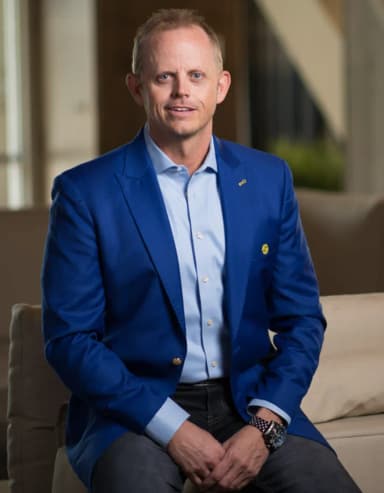
Okay, welcome back to the Daily Mastermind, George Wright III with your daily dose of inspiration, motivation, and education. And I'm joined by an amazing individual. You guys are just going to be completely blown away today because we're going to be talking tech, we're going to be talking business, we'll talk health, mindset, all kinds of different things. And I'm joined by what I like to call a system architect, Greg Anderson. He's an entrepreneur. And this guy's been an author, a producer, a business, a very, very successful guy. He believes you can kind of systematize anything if you learn the rules of the game. But his current passion project is the Jidari platform, which is what we're using to launch our Mastermind X program and our private mastermind. But just want to give you a little bit about this guy. He's done even recently $100 million in coaching, 350 custom builds. He works with the biggest names in the industry and he's got a long, long pedigree. So welcome to the podcast, Greg. How are you doing, man? Damn, I'm having a fantastic day. It's good to be here. It's always nice to hear somebody say something about you, especially when you're like, oh yeah, I have done that. Oh yeah, because sometimes we just forget. Entrepreneur, you just bulldoze through and you just keep working. And then you look back and you're like, wow, there is a pretty cool list of things that we've accomplished so far. I know. I was thinking just in the last year, I mean, gosh, we've had you featured in several of our magazines. You've been in when we had Neil Patel on the cover, one of the best marketers in the world. You've got businesses that you're moving, but we have conversations that go everywhere from mindset and mental health to business and strategy. So today I will try to do my best to keep us focused in just a little bit for everybody on the call. So do me a favor, if you wouldn't mind, give us just a little bit about Greg and maybe what's led you to your current passion around Jadari. And we'll dissect some things, but for people that don't know you, give them a little bit of your background. Yeah, for sure. It's a great conversation because even now I'm learning more about me all the time. right? It's one of those things where I grew up in Utah. I grew up dyslexic in resource classes for everything like math, social studies, English. And originally, I always looked at that as a bad thing, right? My high school guidance counselor told me, hey, Greg, you know what? Labor for construction is a good career. Don't think about college. It's like, what? Later in life, as that kind of unrolled for me. And I just learned that there were different ways of processing information. The information that was processed in the school system wasn't wrong or right. It just didn't necessarily work for me. Years later, I was at a dinner with the Lieutenant Governor and his wife, and she was explaining to me that there's 10 different levels of dyslexia in the Utah school systems and the Utah school system can manage two. The other eight, they didn't have the knowledge, skill sets, whatever that was for people. So I grew up kind of being that outsider. Flash forward 20 years and education and all the different NLPs and the Tony Robbins and all of the personal development work. He's like, man, this is actually my superpower. The fact that I didn't or wasn't classically trained on how to put things in boxes or how those boxes should even exist, I got to figure them out for myself. And so that, and maybe a high degree of Asperger's, because I rank on that chart because I get a little bit intense on some things. These are like superpowers. And so what it's done for me is it allows me to look at life and business as systems. Everything from health and fitness. If there's a certain way that you want your body to react to you, there's a certain way to eat and a certain way to work out. like if I wanted to be a long distance runner, I'm not going to eat and work out like a power lifter. I'm going to follow that process or those systems. And I found that to be true in anything, any type of business, any type of relationship, even the relationship with yourself, there is an underlying system. And if you just care to look, spend some time, you'll learn how to excel in what those are. Like if you're in business and you don't look at your math and your money, your system is failing. I love that because I think most people that work around me see that I have evolved and how not only just in my personal life, but in business. And you do that as you start to recognize the systems, the blueprint, the way you think, what you do, how it all works together. You realize that things tend to evolve and the marketplace is no exception to that. I think that's one of the reasons why you've done so well as you've evolved over time in what you do and how you do it. And more and more, I think people are becoming holistic. That's why with our mastermind community, it's mind, body, money, business to create a lifestyle. It's not just go make a lot of money or do that. So I'm curious, you've talked with me recently. You know that our focus with our mastermind and with the podcast is to kind of help people build authority. And I want to go down the road a little bit on this conversation of content and community, because I believe you're one of the, you know, best at that you've built massive communities. You're working with some of the biggest leaders out there. And so let me set you up for this and just get your take because more and more businesses, even if it's just a, you know, it might be a high level, you know, coaching, consulting kind of individual, might be a brick and mortar. People are starting to realize that content is a big ingredient in growing their business, creating authority, and maybe even building community. So can you kind of talk to us a little bit about what businesses can do and how they should think about this? Because I think the way you think about it is real critical for people. Give me some of your thoughts on that. Yeah, I love it. And to set that up and dive a little bit deeper, the conversation around content as a business, it blankets a lot of things, but that content as a business, it's one of the most sought after styles of businesses now, private equity firms, venture capitalists, family offices, they're looking for businesses that have content attached to it. Whether you're a sports team and you're like, hey, every one of my athletes is a content provider to our group of people, our fans, and they create a business around that or a mastermind. But one of my favorites is something like HVAC. Like I'm a contractor and I'm not saying me, I'm just saying people in general because I'm not that person. But they have a way of doing business that has succeeded. They're really great at HVAC from the way that they manage their employees to way that they set their contracts to way that they market. Well, that is content. And you can take that information and you can sell that or train that as far as a community or course or a mastermind. Other HVAC people around the world are like, wow, you're doing something better than me. You have a 10% higher margin or you're doing something and that content is super valuable. So not everybody but massive amounts of marketplaces are going wow we watched social media explode in content Everybody gave it things for free and free and free And it kind of opened up what social media did really well As I said, ah, hey, George, you have a community on Facebook and you talk about these topics. And then what they found is they said, you know what? I bet I could find a hundred other coaches or other businesses that wanted to market to your group of people because of what you're talking about. ads were going crazy. But then you might say, George is like, hey, that's really cool, but I spent a lot of money and a lot of time and effort cultivating this group of people. Maybe I don't want to do it on a free social media platform because they're going to market to my people all the time. Maybe I want to take that and I want to hold it into my own private world. And in that private world, whether it be a community app or a learning management system, something where you can control that, that information and those people that are part of your community are extremely valuable. So turning that conversation from content as a business, man, it is, it's exploding everywhere. Yeah. I want to, I want to kind of talk a little bit about that, but just to break it down for some of the people listening, I think it's very important to know that as the marketplace shifts, as you evolve, just like we talked about, whether it's personal or business, you've got to recognize the value of content. And like you said, Greg, Like businesses are valuing that, private equity, banks, you know, the marketplace, marketing, they're valuing content. And the reason for this is because it really does level the playing field. First of all, it's a great benefit for businesses because now you have something unique, like you said, with HVAC companies. Everyone has a degree of content, knowledge, information, specialization that they can use to create and differentiate themselves. And that's the value of it. And it's why the playing field has been leveled for a small business versus a giant business, because your detailed specialized knowledge might be as valuable as anyone else. But it's a definite strategy to grow your business. And so you're saying, and I want people to really note this, not only is it a valuable strategy to deal with content, no matter who you are or what kind of business you have, but if you're strategic about it, you're not just putting content out socially. You're not just putting content out. You're finding ways to create systems. And as you started to allude to, not just put it out on social media, but contain that. So tell me what you mean and why there's a benefit to sort of contain that for your community. What's the big benefit of that? Rather than it's like attorney, real estate agent, no matter what you're doing, you're just putting content out there and it's just free and you're hoping to get leads out of it. That's way different than what you're talking about. It is. So if we looked at free social media as kind of the intrigue and all sales, we have to do a few different things. We get somebody interested in our product. That's step one. We convert their mindset. Yes. What they have is super valuable. And then third, we receive value or, you know, there's a sales set. We're like, yeah, we converted their mindset. And then we said, oh, what I have is more valuable than the money in their pocket and then they buy from me, whether you're selling a widget or a vacuum or a piece of content. So social media is more of that intrigue. It's that the content I put out is meant and designed to get people interested in what I have to offer. If I'm an attorney for, you know, for, for a conversation, my social media platforms is all about getting people interested either to work with me as an attorney, or if I'm training other attorneys to do better, my social media, my conversation is the intrigue. Hey, we're doing this really cool thing in my private community. I'm sharing with you all of the life lessons and integrations that I've learned over the past. I've got 20 years of experience or 10 years of experience. I would like to share that with you. You're going to pay me for it. I'm going to teach you how to do that. So the social component is intrigue, And then a landing page or something in the middle is that converting the mindset. And then the private part is where the money is made. And there's a lot of different ideas around this, but one is, hey, I'm a stem cell doctor. And if I post content around the latest of stem cells on social media, the FDA will close me down because they just do it. So maybe what I want to do is I also want to create a private environment, a private community, a private container, if you will. for all of my clients so that now I can actually share the latest and greatest of information. Because not everything is meant to be given for free. Yeah. No, that's good. So you're actually talking about a business, not only creating value through content, but controlling some of that content and creating some exclusivity and an area to be able to draw your customers in that not only now want to do things with you, but they could do it in this environment, which by the way, gives you a lot more freedom and control, but also your ability to, you know, capture their attention in a, in a, in an environment other than, you know, scrolling on social media. So let me ask you this because I want to back up one minute and then we'll come back to this, this vein of conversation. I've realized, and I think you hit it right on there, that no matter what business you have, you've got to get in the process and the habit of delivering some content and value to your customers so they know who you are and that you're valuable rather than just being, you know, a face in the crowd because it's so competitive and loud out there. What do you say to someone who says, you know what, man, I don't know how to do that. Like, I don't know if I'm good at content, even though I want to be, you know, does it take a lot of time and things like this? Because I know you and I've had conversations about the fact that, you know, and this can go down one of two paths. You're welcome to take it down the mindset shift it takes to go into this area or whether it's really just strategically blueprint wise, how to do it. What are your thoughts in those areas? It's great. So anybody that has a product or service and a product can services, it's almost anything. It's unlimited. Like it's my product to sell a pen. It's my product at business or my ability to get a better job. I'm the product in that moment, right? So everything is around this. And there's really two avenues to start with. And then maybe there's a hybrid as you're going down, but you have the capability of creating content and pushing that out into the public. You're spending your time, your effort, your knowledge, your learning, and you're placing that into the market. That's one. The second one is paid ads. I'm going to go buy other people's eyeballs. I'm going to pay to have them see my product and service. And so no matter what you do, there's a cost to it. So from the very beginning, if somebody is starting from scratch and they're like, Hey, I'm not really sure that I, I have something to offer them their own hours, their time and effort, like putting content, creating videos, maybe learning how to do this, maybe getting placed into a magazine. These types of things are creating that. I'm going to use your words. it's creating the authority that you're creating content you're paying for it with your time and energy or you can go buy it and eventually what you're trying to do is both you're trying to create content capture people's attention and then you're buying more media to get back to that attention that people are creating to create more leads more sales and a sale is all kinds of things it can just be attention It can be money transferring hands It can be distinguishing yourself in a marketplace If I a professional chief operations officer if I'm marketing that I am awesome and I'm sharing my content, and then I go to get another job and I can point that I was in one of Valiant CEOs magazines, or I get to point that my social media has a following and people look to me for authority, I'm now more valuable. So it doesn't matter if I'm a coach selling a product or I'm just selling me as the product. It's all valuable. Yeah. And most of our listeners, I mean, they're either CEOs or entrepreneurs or business owners or whoever. And I think they've started to recognize the fact that I'm doubling down on the idea that if you're not creating a personal brand, if you're not creating value and the value does not have to be. We put so many limitations on ourselves because of expectations. You and your story and your expertise and your skills are valuable to your clients. Whether you personally feel that you have that expertise is a whole other topic. But I think that what you have to do is you have to learn. Even Dan Kennedy, one of the greatest marketers of all time, has said, if you are not becoming a celebrity in your niche, in your space, then you're under utilizing an asset, which is your personal brand of building authority. And, you know, I think one of the reasons I wanted to have you on is because you've done a really good job of merging some technology with the trends of the marketplace, whether it's content or community or products and services in that niche. How do you blend community with technology? Because I think it's obvious that people are like, hey, I could get a following on Facebook or Instagram or things like this. But how have you done it differently to where you have blended technology in a different way to allow businesses to have a little bit more control over their environment and growing and being intentional with their content. Yeah. And if I can, I'd love to circle back to just one minute prior and then hit this one because there's a part in here that's super important for owners, entrepreneurs of all kinds. I have some friends that have much bigger social media followings than me. And for a long time, I'd grown my social media and I'm like, I'm not growing my brand. I'm going to do these things. And technically I was living in the jungle for a few years, but I watch deals get presented to friends of mine that blow my mind. They have a big following. They have a big social presence, a big brand, and companies come to them and say, hey, I'd like to give you a percentage of my company if you just talk about it. Or I would like you to be part of this venture that we're doing because of the presence you bring with me. So that brand equals a lot of money. So if somebody is like, yeah, man, I just love better deals. Grow it. Okay. Coming back to tech. I think you're right. I want to add to what you just said though, because I think most people hear authority and they hear content and they think, okay, I get it. I can grow my business. They have way underestimated the idea that when I talk about authority and you talk about authority and content, it's not just about growing your business. It's also about attracting opportunities you can't plan for. And you just have to kind of take our word for it. We've seen it so many times with big names. And so, yeah, I agree with everything you just said. So let's go back to, yeah, now we can go back to the technology combined with this idea of content and branding. Yeah. So one of the things that we tried to do is I had built all kinds of different software platforms for different reasons. I built systems that were specifically around making money. I built systems that were specifically around attracting people and bringing them together, but it didn't have any money connected to it at all. It was just passion projects. And what I've moved into is a hybrid of both. What's something that can monetize? Because no matter what platform you run, no matter what kind of community, no matter your initiative, if there's not money involved, you go out of business or you limit your reach. If I'm a 501c3 charity and I don't have capital, then I can't help people. So everything that we do gets to be framed with, can we make this self-sufficient and grow? So one of the things that's really been beautiful around watching all these different software platforms happen, the Facebooks and the Instagrams and the WhatsApps and the signals and the TikToks and all the things is they all have these little niches. Zoom has a niche, but Zoom's niche isn't around you making a profit. It's around delivering great video, right? We're on it right now. It's not about how do I manage a community? It's not about how do I manage money? It's not about how do people buy or interact with my courses? It's all disjointed. And so this thought, could we create something that was white labelable or private labelable to brands? And it had all major communication systems in one to where when you're dealing with your clients, they only go one place. They want direct messaging. They don't go to WhatsApp. They go into your platform. You want a live stream education? They go into your platform. So the holistic approach about saying, let's look at all the major ways that people communicate, and then let's bring them into private brands, right? Private systems. And let's make sure that those systems, the content, the information, the credit cards, the users, nothing is shared with any other brand. Give you an example of what I mean by that. There are platforms out there that you can go and get on, and it's going to be their URL and then your name, Patreon, school, you just, you name the product. They've created something that brands that. And if you spend money for your marketing, for your people, you're bringing them to their platform. And then they're marketing to your people still with every other coach in the world. It's like, man, if I own a business, I would love it if my content and my users stayed with me. And so the thought process was marrying communication because it's been key. It's been, hey, can I get something on somebody's cell phone and have them communicate with me and the people in their community so everybody's sharing and growing together and do it in a way that it's branded to every individual company, which I feel is almost as important as any other option out there. I spent a lot of money creating my brand or creating clients. Can I make sure they only belong to me, please? Yeah. And it's difficult because you might even put up a great YouTube video and as soon as it's done playing, they see everybody else's YouTube videos or they got ads running on top of your deal. I can't tell you how many individuals I know that have been super, super successful on Facebook, Instagram, whatever, and had their accounts shut down. And all of a sudden their main lead source and their main revenue is gone. So I can't emphasize enough that having technology not only could bring an exclusive value for your client, but when you when you have it in a contained environment, then you have the ability to really truly influence, be specific with your intent. It's like with the exclusive app that we're building with you guys that is now launched with our mastermind. We knew we could live stream inside there. We could create a social media community of elite entrepreneurs that wanted to be around other elite entrepreneurs. And yet we could also deliver content. We could add different things. We can get feedback and it just a really super easy way And you have to go where your consumers are right So I really like that not only is it technology combined with the content and community aspects which we already talked and hit on is where you need to be going, but I wanted to ask you because you're much more, and I know we don't have a lot of time, but you're much more driven by not just business and tech because you've been there, done that, but you're driven by the human experience, right? You're personally driven by the idea of evolving into your best version of yourself, which fits right inside this, which is a great example of why you've been excellent at it. I talk about passion and purpose and what you're excellent at. Could you take a few minutes just before, because I know we're jumping all over the place in our short period of time here, but could you talk a little bit about why that is so important? Because you could be focused on a million things in business as successful as you've been. And we've talked about content. We've talked about technology. Why is it so important for the human experience and for the passion and purpose and mindset and things like that? And I want to let you hit on any of those things that you feel are important for our listener. Yeah, for sure. Well, I look at the world that we live in today and it's pretty all over the place. You have some of the worst experiences and living conditions on the planet. And you have some of the best. You have epidemics of obesity and starvation. Like it's pretty wild. And I feel that to impact this world in a better place, it's my job to evolve and to experience and grow and realistically become filthy rich. When you can do that, you can impact the world because you've now become a better person that wants to. You're the person that's like, yeah, you know what? I made a billion dollars over the last couple of years. I live off of this small. And then I use the rest of that to impact the world in better places. Cause we need more people that not only are passionate about their lives, that are healthy mentally and physically and emotionally and spiritually, because that's really how we make great impact in the world. When I looked at this software platform in particular, I knew that I would trust me to build a software platform that didn't allow governments to manage what people were saying. That it was, as long as they're not breaking laws, that they can control the narrative and have that conversation. Because this type of communication is how we resolve everything. It's how we become better and impact worlds in just better ways. Yeah, I love that. I love that. And so I think that that just shows the importance of it. And I want to ask you one final question that we had this discussion with one of the articles we featured with you and Valiant CEO and it ties to it. And so I'm going to go kind of, we've talked about how to grow your business and build and things like this, but there's a segment of our listeners that are at the top of their game. And we kind of asked you this question before, you know, what advice would you give someone who's at the top of their game and feels like they're crushing it, but they just feel like there's something deeper that needs to change. And you kind of made this comment, don't be afraid to disrupt your success. And so this is the final thought I would like you to comment on, because I know that there are a lot of individuals I'm working with right now that do feel like they're at the top of the game that are not necessarily focused on growing their business because they're crushing it, but something's not there. Something needs to change. What would you say to that? Yeah. That article, I love the capability of like sitting down and crafting and working with your team to help me hone in that thought. Because the thought on that conversation or that article is stripping it down. It's that no matter how good you are, you're the best athlete on the planet. You're going to spend a ton of time at the fundamental level. If you're a pitcher, you're fundamentals. If you're basketball, you're fundamentals. And if we don't focus on those, if we're just like, hey, I'm at the top and that's beneath me, there's a whole level of base that we could grow on. In my experience, there was a moment in time where I thought I was at the top the game i was making the money the cars and the limos and the things and i wasn't happy and i got to strip everything down when i i left the country i went nomadic and i did these things because i knew that there was a higher level i just couldn't see it with my own eyes so my my suggestion isn't to sell everything and go nomadic and live in the jungle and study ants for a while my suggestion is is that no matter what area in life that is, if there's a lack, it's because there's some fundamental level, something inside of you that's like, I haven't either worked on that or grown that area. And if I grow that area, it's all tides rise with the ships, right? If I just focus on that, along with everything else, you don't want to just go completely off the radar. But as long as we keep focusing on what those baseline growths are and potentially reach out like coaches, mentors, groups. I've been in part of men's groups, all kinds of different things has helped me see that because when I'm on an island by myself, I don't ever see what my blind spots are. Yeah. Yeah. No, I love that. And the reason I asked you that question, which was a phenomenal answer is I really wanted to set up the next time we get together. So we've talked a lot about content and technology and things you can do to grow your business. But I really love the concepts that you and I generally grow into. And that is, and you made the comment, you know, stripping it down. The idea is what do you need to do to rebuild not just your business, but your systems to completely evolve to the next level? Hence, you know, our main focus of evolving and unleashing your potential. So thanks for answering that. And that'll set us up for kind of our next conversation. before we go, what's the easiest or simplest way for people to connect with you? Where's the best place for them to go to connect with you? For me personally, it's Instagram or Facebook. It's Greg W. Anderson. Both handles are the same. For community or you're like, hey, I want to discover a little bit about the technology I'm working on. Can somebody help? I'm super happy to jump on the call with almost anybody with a relatively tight timeframe, right? I'm just trying to help that. Can our business help your business? Can we help you grasp that perfect message for your communities? All of that, that's jadari.com. That's J-E-D-A-R-I. J-E-D-A-R-I basically means Jedi level technology wrapped in the elegance of Armani. Because I'm a little bit like, I want to look really good, but I'm also just happy to be super crazy and like Jedi stuff. Bro, that is the first time you have told me that's what the name is for. Oh, really? I freaking love it. That is amazing. Well, listen, guys, I appreciate you listening today. You know, look, you're the average of the people you hang out with. Being able to meet someone like Greg, connect with him, I highly encourage you to do so. I'm excited about our new exclusive Mastermind mobile app that's coming out. I'm going to put his information in the show notes. And look, the final thought I want to leave you with is, you know, I say it all the time. It's never too late to become the person or to create the life that you were meant to live, but you've got to start making some changes. You've done that by listening to us today. So I appreciate you. Make sure you share the show. Hit me up on The Daily Mastermind on Instagram, Facebook. We appreciate you spending time with myself and Greg, and we will talk with you soon. Have a great day. Thank you.