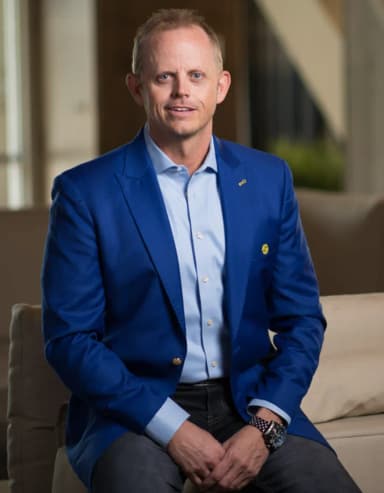
All right, welcome back to the Daily Mastermind. George Wright III here with your daily dose of inspiration, motivation, and education. And I'm really pumped and excited today. We've got just an awesome, awesome masterclass we're going to kind of give you today and an individual that I want to introduce you to. So, Jeff, Tomasulo, how are you? I'm doing well. How are you doing, George? Thank you for having me. Good. No, I appreciate it. And I know it's kind of late. You're East Coast. I'm West Coast, but this is the beauty of being virtual, right? So- Absolutely. So listen, I want to do a quick introduction for those that have maybe not known you before and just kind of give them a little bit of your background and then we'll kind of dig into it. So for those of you listening, Jeff is the CEO and head portfolio manager of Vespula Capital Management. It's a global asset management company, but he regularly appears on all kinds of media outlets like CNBC, Routers, Fox News, Cheddar TV. And he's asked to discuss the market and risk assessment. But ultimately, he's got 25 years of experience in all types of asset classes. We're talking equities, commodities, treasuries, currencies. And the distinction and the thing I love about him is he's got real world experience on Wall Street. He's actually managing a huge fund. He's doing the work, but he also loves financial education. He's been teaching all over the world. He shared the stage with a lot of celebrities, experts, and he really does have a passion for financially educating the masters. So with that said, Jeff, I really appreciate you being here. And I wanted to kind of dig in maybe just originally and say, how did you get into the financial services arena? Like, were you always just a money guy or did you gravitate into that? Where'd you come from and how'd you get into that arena? No, I mean, this is, I love this story about myself because I had no interest whatsoever to be in finance. And one of the reasons is because I am dyslexic and I was horrible at school. And this is one of the things that I think is really why I'm into financial education. We'll We'll get into that in a second. But no one's ever going to push you in school to be a hedge fund manager or go work at a bank if you're horrible at math or you're just horrible at school. Yeah, not a good combination. Right. They push you towards things that you're good at. So I was always pushed towards history and I was a good athlete. But the other thing too is that I didn't grow up with any money. My father was a corrections officer at Rikers Island, which is one of the worst jails in New York City. and my mom was a stay-at-home mom. So we never had like businesses or finances. I don't remember my father ever talking about the stock market or my mom because they were just trying to make ends meet. And if you don't have that in your, you know, around you, or you don't have a friend or a rich uncle, well, how do you ever really experience the stock market? Where do you get the interest in it? And I, it never even crossed my mind. And again, because of school. So I, you know, I went off to the to the University of Rochester and I went to go play football there and I was going to study I studied political science and history and I was going to be a lawyer because you know I I quote unquote could speak well and and I had this passion for politics so everybody kept saying you have to go to law school you have to go to law school and then you know I went and I took a job right out of college for an assistant to a lobbyist in DC because I wanted to study to get a better LSAT score because I was dyslexic. I did horrible on my standardized exams. But while I took the job in DC, I was making 19 grand a year. So I had to go and bartend and wait tables. But here's the crazy part. I was dating a girl from New York City and she would fly down and she would have to sit at my bar and watch me wait tables. And she got annoyed. So little did I know her brother was a head trader at a bank in New York city. So she went back and she must've complained him and she was upset. And I get a phone call from him and he said, listen, he goes, my sister's upset. He goes, I'd love for you to come to New York and be my assistant for the next six months. He goes, I heard you're going to go to law school. He goes, if you do well, I'll give you a little bit of a bonus. So I was like, you know, my, all my, My family lived up in New York City. So I was like, sure, why not? I'm going to New York City anyway in nine months to go to law school. So I took the job. And here's the crazy thing, George. I showed up on April 1st, 1996. And I walk into this trading floor. He brings me in and he's in front of about, I would say about 60 guys. He starts to explain what they do. And he goes, he starts off like, we trade the NASDAQ. And I raised my hand real quick. And I said, hey, what's the NASDAQ? Oh, dude. He was like, what? And he dropped a couple of New Yorker. He goes, do you even know what a stock is? And I'm like, no. So I literally started on April 1st. You knew nothing. Zero. Wow. Absolutely. And here's the worst part. I failed my Series 7. I studied for three months to get this Series 7, and I failed it for the first time. So finance, it just didn't click with me right off the bat. Like it just wasn't in, it wasn't like, you know, I traveled with Kevin O'Leary and that guy was investing since he was like five, like Warren Buffett, they invested in their, when they came out of their diapers or the wound. Right. Like I literally had no knowledge and it was really just using the network. And the crazy part was, is that, you know, I got around these 35 year olds at the time. And I was 22 and I was watching these guys make millions of dollars. And all of a sudden bells went off in my head being like, wait, if they can do it, why can't I? And when you have the right training and you have the right mentors around you and you have the right tools, what happened was in six months, I got my first bonus check for $45,000 for one month's work. That was more money than my father made at Rikers Island for a whole year. You know, what's interesting, I kind of, I'll make a note here is, so not only did you not have, so, because look, there's a lot of people out there that listen to our show and others, even though they're high achievers and people that are kind of striving to create more in their life that complain they don't have the right background, the right context, right connections. And here you come from, you know, zero financial background, learning disability, no exposure to it at all, a random chance event, but you were obviously looking for opportunities and you basically were around the right people and created and had that drive like many people that listen to this show do and created the opportunity. What's interesting is that probably is why I could imagine that's what feeds your desire because most people just don't have any learning when it comes to financial education. So, you know, call it a lucky break. I always say there's a lot of luck for people that are hard workers, right? But you've got a passion for this whole financial education and financial literacy. And I imagine that stems from the fact that most people don't get it, right? 100%. And, you know, it actually stemmed from all these experiences because the bell went off in my head where when I got that first check, and now you have to understand. I grew up with no money. My father, like $45,000. That's like an annual income. Right. He worked overtime in a jail. He worked overtime, maybe made, I don't know, $70,000, like, you know, and you're raising three kids. So when I sat there and I got my first bonus check, meanwhile, my father, when I showed it to me, he was like, hey, are you guys doing something? Yeah. Is this legit? Hey, blue is mine. Yeah. But it really, a bell went off in my head saying, wait a second, how was I able to accomplish this? And then I realized I looked around and it wasn't just me. There was other guys doing exactly what I was doing. But why? And the question I always say to myself, why? Like I have this, this innate thing of asking why something happened, right? Whether it was good or bad. And then I tried to answer it. And then when I tried to answer it, I realized, hey, I had a great manager. This guy taught me really well. But then I was also surrounded by guys who were teaching me. And then I was around this organization that had all these tools that were teaching me along the way. It was their incentive to make sure that I was successful. But then what ended up happening was that I ended up leaving that job and following the guy who gave me my job because he went off and started his own firm. And we ended up growing a trading firm from seven guys to 175 traders. And in 2001, we sold it to E-Trade for $150 million. Wow. So I was, you know, 28 years old and I had, you know, I mean, I had eight figures in my checking account. I got to mention though, because, you know, success definitely leaves clues and you made that comment, you were questioning why. And, you know, I always seem to say over and over on this podcast, especially that, you know, questions are the answers. And I think it's that curiosity that probably kept you accelerating, but also what kind of helped you to focus on what was most important, right? Because you obviously had some right connections and contacts, which I'll remind everybody that's listening, you didn't have originally. It's not like you went into it saying, oh, look at these amazing contacts I have. You just happen to be aggressive and looking. But it also brings up a really important point that I tell a lot of people, and that is, you know, there is this world of money, right? And, you know, people hustle, they grind, they try to make money, but they really never, they never learn how to let money work for them, right? They're always trying to work for money, not letting money work for them. And you kind of got into that pretty easily. But I remember you mentioning, you know, this whole concept, this whole difference between becoming rich and being wealthy. And that's a topic that I wanted to kind of ask you about because I think from your perspective, you probably have from behind the scenes, right? Managing a huge, huge, huge fund, a perspective on what that should mean to people in general when they're thinking about money. Because most people are hearing what you said and they said, man, where do I go make a $45,000 bonus check? Or where do I go do this? Where do I go do that? Now that's a legit good question. But help me help everyone that's listening to kind of understand really your perception around money in general? Well, there's two ways I look at money, right? And I learned this by later on because I went through a really bad time after I sold the company. So I learned the reason I had a big financial education gap for myself, right? You can make a lot of money, but if you don't know what to do with it, right? And even though I was surrounded by very rich people, I didn't know very many wealthy people. Like all these guys that I was trading with at the time, they were really rich. And I'm going to get to this example of what rich and wealthy is because now my clients that I have, a billionaire of guys that are worth $500 million, $600 million. There's a difference between that wealth and being rich. And I didn't understand that until I got a little, obviously a little bit older. And I wish I would have learned that when I first got my first $45,000 paycheck. Yeah, most people don't know the difference. And most people think money is money and they see all these people. I knew a lot of guys that were making a lot of money, but they were not wealthy. Right. And that's when I, listen, I made a lot of money, but when you're living, I know guys who make $5 million a year and they're living paycheck to paycheck. They need that $5 million. And the difference between one of my largest clients is that that guy can stop working and he can stop doing everything he's doing right now, but his money and his assets will continue to feed what he needs. And that's what I'm trying to say. I didn't realize, hey, I could have taken that $45,000, invest it and start to have income coming in. True wealth comes down to having more income coming in than you're spending, where you can stop doing everything you're doing right now. You can leave your job. I can stop managing the hedge fund and all my other assets that I have, whether it's cash, whether it's real estate, whether it's businesses, I can stop doing everything. And my monthly expenses are $20,000 a month, but I have $50,000 a month coming in, doing absolutely nothing. That's true wealth. The fact that we have to work to pay these bills, that's rich. For me to be able to buy a Ferrari, I see many guys buy Ferraris and they're not wealthy. They're just rich. They have enough money to buy or make that payment until they can't make that payment. And I learned this the hard way. Listen, I went through a really tough time where I had a car repossessed. I had to sell assets to pay debt back. And that's the other thing. How much debt do you have versus how many assets you have My clients they can sell all their assets and then pay off all their debts and they going to have a huge amount of money left over to live off of right A lot of people they don't realize that they have three houses with all these mortgages on them. And if something went wrong in their life, how long could they last paying off those mortgages? And a lot of people don't put away enough money, right? To be able to say, hey, if I stopped working, I can pay these three houses off. Most people can't do that. Yeah. It's funny you say that because I've just, I've been learning a lot from individuals over the years like yourself. A friend of mine, Bill Danko, who wrote The Millionaire Next Door always talks about, you know, this viewpoint he has on money and whether you need those shiny objects or you don't. And, you know, what you're saying with, you know, have, you know, your active income, passive income, you know, people just don't, they all think of it as money and they don't realize that money, you know, number one, you can work for money or you can have money for work for you, or is it, is it coming in regardless of whether you're working? So I really love that you say that, but I feel like you have, you have kind of, you've, you've learned that lesson. A lot of people probably would, wouldn't learn that lesson until they made money and lost it all. And they probably still wouldn't know. But what was the shift for you? Like what made you shift or what did you shift when you had the struggles and realized that you didn't really truly apply the money principles you should? What did you do differently? Well, when you hit rock bottom, right? That's the other, I hit rock bottom. I mean, and we don't have time to go on how bad it got. But when you hit rock bottom, you have kind of two decisions you have to make. Either you're going to roll up in a ball and kind of, you know, what most of the naysayers I had in my life, they're like, hey, you had a good run, go get a job, right? That pays you a steady salary and has healthcare benefits. Or you could choose the other road, which I did was I wanted to learn from my freaking mistakes. I saw all of us making money, right? And then, you know, during 2000, there were the people that didn't change and didn't adapt and they went off and got real jobs. And then there were the other ones that adapted. And the same thing happened in 2008, right? The one thing that I have, and I think that I have this resilience that I want to learn more, right? And again, it comes down to that. If not me, when I look at you, right, I say, why not me? I say that all the time. Like, I don't have anything in my head thinking I can't do it, right? I mean, literally, when I was a senior in high school, and I think this has to do with the family I grew up in, I thought I could be an NFL football player and I'm barely five foot eight after I see a chiropractor, right? Like, but I had this, this family and these people around me and this in innate thing in my mind that I could do it. I could do it. I just need to figure out how. So after I went through this whole thing, I wanted to learn why I failed. I mean, I really became a self-proclaimed expert in failure. I wanted to know not only why I failed, but I wanted to know why all those banks on Wall Street failed. I wanted to know every reason, all these investments that I made outside of trading. My trading, I never really lost huge amounts of money in, but it was like I went outside and I realized and I connected it to the lack of financial education. And when you have a lack of financial education, you also have this insecurity about money when you don't grow up with money, when you don't have the people around you, and then all of a sudden, you're surrounded by all these quote unquote, rich people and some wealthy people, you have this insecurity. So I never really questioned anybody who made more money than I did. I just handed them my money and said, hey, you must've made a lot of money. Go do what you want to do with it. That's not good due diligence. That's not smart investing. I never asked anybody what their edge was. I just saw someone made a lot of money and I was like, he had a great idea. I was like, here's money, right? Here's some of my money I made. So really trying to educate myself was the first thing that I started to do. And then once I started to get that education, I started to surround myself with the right team. And that meant sometimes I had to pay to have the right accountants, the right lawyers, because prior to all my money issues that I had, I had so many freaking yes people around me and not enough people challenging me. And you want to have people that think differently around you because when you have too many yes people around you, you guys make the same decisions, right? And that's bad. I want to look at a stock or I want to look at an investment and I want people to tell me why it's bad to invest in it, why it's good to invest in it, and then let me make the decision after I have all the information that I need. So once I started to change that and I started to really start to be like, all right, I'm going to protect my capital instead of trying to grow it so quickly. And really when I was going to give anybody or put my money to work, I needed to know what the edge was. So anything I do now or anybody, I need to know what the edge is. And I will never put money to work unless I know what that edge is. I love that. I want to highlight a couple things you said to make sure that I really emphasize this because I've always prioritized, I mean, everyone that listens to the Dealing Mastermind knows that what I value is personal development, financial education, and business entrepreneurship, right? They know I'm an entrepreneur, you know, I'm a marketer. And I've always identified financial education as something that's important. But what you identified is critical because people learn strategies to create revenue, whether it's investing or business or whatever. But what you're saying is one of the solutions to growing wealth is financial education. And I've always thought about it not as an, I mean, as an important thing that most people don't get. That's why I believe in it. But I've never really viewed it in that column of, and that's why lifelong learning is so important, but as a solution to doing things. The other thing I wanted to note is that, like I say, a lot of success leaves clues. You know, we have these prosperity pillar posters that I created. It's 12 principles that over time I've learned from all these different individuals. And it's funny because you are like knocking them out like bullets. I surround myself with successful people. I take personal responsibility. I believe in lifelong learning. Like literally all those things are things that you're saying that are now validated again. And I love that. So you talked about, and you mentioned as you kind of finished there, you really want to make sure you identify the edge. And I know that you're partial to options. You really heavily focus on options in all asset classes. Most people think if they have heard of options, they've heard of like some kind of a program that talks about options and stock. Maybe they've heard a little bit with Forex or currencies. Tell me why options, and I know we don't have a ton of time. I can't really, we'll have to do another class just literally on this, But tell me why that's a focus for you and why it should be maybe for, or maybe it shouldn't be for the people listening to this. Well, there's a couple of reasons. But, you know, one of the things is I, you know, when I first started trading back in the mid 90s, I didn't use any options. Right. I used, there was a certain strategy we learned and it stopped working in 2000. So all of a sudden I was sitting there and I was like, wait a second. I learned a certain way. And then in 2000, it stopped working. And then also, if you would have asked me what my edge was back in 96 to 2000, I couldn't tell you. And when something went wrong- Because it's changing? It kept changing. And we were using things like, which people use today, like they use moving averages and stuff like that. But there was no like a hardcore like, hey, this is why you're putting this trade on. It was a lot of times it was about feeling, It was about what we were seeing or, you know, there was just, I needed something more concrete. And it wasn't until I really, I started, someone introduced options to me and they put math behind it. And now you're talking to a guy who was horrible at school. So when I heard math, I heard probability statistics. I was like, I'm out. I can't. The first thing, and this is what you do a lot, which I respect is I went to the negative mindset immediately. I was like, I can't do that. This is way too complicated for me. Right. Like I started, you know, hearing about, I, you, you bring up an option chain and you see all these numbers. And I literally, my heart started palpitating a little bit because I started to sweat. And I went into that negative mindset was like, I can't do this. Like, I'm never going to be, I'm going to stick to what I know, even though what I knew didn't work. But when then all of a sudden I was sit in there and someone said to me, hey, you're going to be like, I want you to look at options as a casino. And now casinos were so like, when you heard casino and gambling and trading, you're like, no, that's not us. But the way this person explained it to me was, hey, you want to be like the house. You don't want to be like, you don't want to be the gambler. You want to be the house. And what options is going to do with you is going to put the odds in your favor. And I was like, wait a second, what are you talking about? He's like, hey, is two plus two four all the time? And I was like, yes. And he's like, I'm going to show you how option price and models work to give you a probability that a certain trade is going to work within a certain time period. And I was like, that's impossible. Like I've been doing this for at the time, think I was doing it for 10 years. And Amy said, and you could do it on all asset classes because one of the biggest, I went to a conference and one of the trading principles that we use at Vespula Capital and Tactical Income, I heard from Ray Dalio, who runs the largest hedge fund in the world. And he said, hey, you want to be a consistent investor? Find me 13 non-correlated assets. And the first thing that came to my mind was what the heck is non-correlated? Yeah. And it's really like kind of what we're in right now. You see a market in the S&P 500 stocks going down, but you have oil going up. Right. Or you have soybeans going up. And it really didn't click with me until I started to start to trade in about our options and trying to get an edge. Be the casino, be the house, have a mathematical probability and statistics. But guess what? Right. When you get scared about this math, I was like, I can't do it. But I realized, holy cow, the computers can do it. Right now, if I had to write down the math, there was no way I could be managing $150 million with this stuff or 128 what I'm managing right now. But, you know, the computers and everything. I mean, I can get my mom who has no, she went to high school to be able to follow this process. That's how easy it is with the computers and the technology and the tools that we have today. Yeah, I can attest to the fact, even personally with investing, I do, but I've now seen it over and over. And I think what's interesting, maybe COVID, maybe the market, maybe the generation growing up, but I think more and more people are realizing that number one, this technology was not available while you were coming up the chain, right? But nowadays, with the power of technology and computers and things, stuff is just at your fingertips and you don't have to do the diligence, but you do need to understand the strategies, right? And you do need to surround yourself with people like yourself, right? Right. And you have to understand a process. Like we created a process, right? And this process is that I want, and this is what I wanted. All this that I've created, right? I wanted as when I first came out, because there was all these rules and if this happened, I wanted a step. If A happened, I did B. If B happens, I did C. When I travel around with the sharks, one of the biggest questions you get from retail investors is, what stock should I be buying? When should I be buying? And when should I be selling? And I was like, well, how do you answer that? And we were able to create a process to answer. And we were able to create tools that the average person, like my mother or my sister or me and you could figure out. A guy who's dyslexic who came from no background in anything with finance could follow that and put the edge in his favor, put the odds in his favor, right? Yeah, I think most people know that the average really successful investor doesn't just pull out the newspaper anymore and be like, hey, I think this and that. No, they're using advanced algorithms and search engines. And I think that's something that more and more people are starting to understand is part of the secrets and the keys. And like you said, as long as you have that process, right? So is that why, because I was going to ask you why you've got this massive fund that you manage, but you also have this amazing, you know, education and training and you travel the world teaching, you've developed some of these core things. What's the real motivator behind that for you? Because you're clearly educating thousands of investors and individual retail investors. Is it kind of a drive in your core to do that? And is it just parallel with what you're doing in your fund as well? Well, it's absolutely parallel. Everything I give to our subscribers is basically access to exactly how I did it Because to me the motivation comes down to the fact that I know there a better way Because when I lost all my money at the time, right, I had a skill. And it was amazing. It was because, and this goes back again, why options? Well, options, what it does, you don't need as much capital. When you try to go buy a stock. If you go to try to buy a hundred shares of Tesla right now, which is trading in like, say, $800 and $900, you need a lot of capital. And when I lost all my money, the one thing I had a skill, right? I understood how the markets work, but I didn't have enough capital, right? So options allows people who don't have a lot of capital to be able to access the market and take advantage of these markets moves. And then when we teach them how to put the probabilities and statistics have the edge, right? Have the odds in their favor. They can start to grow accounts. And it also is this thing that everybody thinks of investing as, hey, I'm going to buy a stock, hopefully over the next five or 10 years, it goes up. I don't look at it that way. I look at individuals. I needed to make a car payment at the time. How do you take $1,000 or $2,000 and create $350 a month to pay your car payment or $200 a month? There are people out there that need that help. Well, guess what? There are tools and there is a process in able to show those people. And then there's the other people who want to be able to do both. And there's a process to do that. And there's this other kind of idea out there was like, hey, you're going to take $10,000 and you're going to make 5% or 10% or 20% a year. Well, that's great. But there are ways to take that 10,000 and 20,000 and do it safely and turn it into $20,000 in a year. Warren Buffett talks about this all the time. You give me a million dollars, I could turn that into two. Now you give me 5 billion, it's a lot harder to turn 5 billion into 5 billion. Most of us sit here with accounts of 5,000 to 150,000. Why are we using techniques that Warren Buffett, who's managing $100 billion, or Ray Daly, who's managing $250 billion, why are we taking those techniques that they're using to really make 20% where we can use the techniques that are available to us if we knew how to use them and create money more efficiently and grow our accounts more efficiently and effectively? And I want people to have access to that, right? Whether they use it or not, whether it's right for them, I want them to know that there's this knowledge out there and to do that. And I'm showing them exactly what I do with my money and my client's money. Yeah. That's a big distinction with you. And you know that look, there's all kinds of guys and gals in the marketplace that are teaching on different things. And I love the power of education for sure. But it's also, for me personally, it takes on a different flavor and different value when I see someone that's managing $150 million or just tons of money, but also teaching. And I want to highlight, I just want to make a note and see if I get this wrong, you need to correct me. But for those of you listening, I know we don't have a lot of time. We're going to get you some resources to learn more about options and things. But the whole power of options, what you're saying is that you have the ability to leverage capital. So you can make bigger moves than what you may be personally able to make. So leverage, but also create cashflow, not just a buy and hold long-term. Now that's not to say there's not some of that that you need to be doing, but to be able to create cashflow, people don't think of equities, currency. They don't think of cashflow and options allows you to do that. That's why I'm a big fan of options as well. But this leverage and cashflow and learning the strategies for me always seemed a little simpler with options as well than some of these complicated strategies. But is that kind of what you're saying here with that? The one thing that when we were talking about wealth and rich, the one thing that I've learned from working on Wall Street and watching these hedge fund managers like the Warren Buffett to the world and Ray Dalios and Paul Tudor Jones, I mean, the guys who are really taking it to the next level and my clients, the guys who are worth $100 million, $200 million. The one thing, the way they were able to create their wealth, and if you look at anybody, whether it's in real estate, whether it's in the stock market, wherever they're doing, whether they're starting a business and starting to grow it, the way you create super wealth is you use leverage. The problem is out there is like, and you know this really well, George, the regulators and people are so afraid of telling, I don't know who those people are, regulators, I guess, telling retail investors, normal people, right? People who grew up like I did. And they say, oh, you can't leverage your money. Leverage is bad. No, no, no. Or leverage is dangerous. Well, crossing a street can be dangerous. Yeah. 95% of all businesses fail. That's about as dangerous as you get, right? So it's like risk. Right. And the problem is, is you have to get educated on leverage. But if you look at any wealthy person, anybody, they use leverage to make that money. Right. And I understand my thing is I want to educate you so much that you know when to use leverage and when you know not when not to use leverage and you know how to properly lever your money up so you can take your $5,000 account and you can grow it efficiently and effectively and safely. Right. And I want people to be able to do that and learn how to do that because, listen, I came from nothing and I want other people to know there's a better way. And that's what really makes me, I curse a lot, but it makes me angry about our financial. No, I get it. I mean, our financial education, our school systems. We teach none of this. We don't teach our kids how to read a balance sheet. We don't teach them how to do their checking accounts. We don't teach them about interest. And we sure hell don't teach them about leverage. No, we teach them how they can get credit pretty easy, but we don't. Yeah. I mean. Think about that. How easy is it for an 18- Student loan debt, and it's backed by the government and guaranteed. I mean. But they can't go and get a business loan. Yeah, I know. At 18. Right. It blows my mind. Well, and I agree with you because not only do I think this whole concept of leverage, I think people have to understand is what the wealthy use, but it's this whole mindset of getting money to work for you. Most people feel like, I got money in the savings or in the bank. right? Money's not working for you. It's working for the bank. Your money's working for the bank. The biggest mistake I made as a, I mean, I made a lot of mistakes, but when I started to buy real estate, which was a great thought, but I didn't use leverage at all. You know, I was so afraid of having a mortgage and so afraid of taking a mortgage, even though these were rental properties. I paid cash for these apartments in New York City. Yeah. Successful people don't do that. I mean, they, right? They leverage. If someone had told me back when I was 24, when I was buying these apartments, Jeff, you can buy 10 of these instead of buying three with the capital that you're laying down. You have renters that are going to be able to pay your mortgage for you. And in 25 years from now, these 10 will be all paid off. And you now have this $10,000 or $15,000 a month coming in from rental properties. That's wealth. No, you know what? That's a great... I'm sorry, I don't mean to interrupt you. I'll tell you, that's a great example of leverage and what an option is. I mean, you think about it. You can tie up, you know, 10 apartment complexes or three. You know, the income's going to come in, same amount of money. Which one's going to give you more return on your money? The 10 leveraged apartment complex is not three in cash. So why not have the exact same amount of money and get rental from 10 instead of three? That just makes sense, right? And that's what we try to show our our students and our subscribers about using options. Right now, I guess I should actually say, Jeff, I didn't do a service because I know we brought you on to kind of get some of the background and money knowledge, but I didn't mention that one of your big passions is your company. You've got another company called Tactical Income, tacticalincome.com, where you teach and train and educate, you provide tools and resources. I didn't mention that before, but obviously that's a passion of yours. Tell us just a little bit about that company. Well, I started it because I realized when I was traveling around with the sharks, speaking about financial education, I couldn't get over the lack of the real knowledge. I said, yeah, there's knowledge out there about index funds and dollar cost averaging, but the way real hedge fund managers make money, like this concept about leverage. When I bring up leverage or I bring up options to the majority of the people, they're like, oh, that's too risky. And I laugh because everybody, when they look at the markets, they think about the way they, I want to buy a stock. I want to buy Apple. Well, what if I can show you that you can use a lot less capital and make a lot more money trading Apple with options than trying to go and invest at $150 a share or wherever it is, $175 a share, right? And I want people to think differently. Think outside the box, right? People talk about side hustles. You just brought it up and you proved my point. Why not use the stock market and the futures market and the currency market to be your side hustle, to create the cash flow that you need, right? To pay for the car bills or the college, the camps or whatever you need. That's what I really want. That's why tactical income is there. And the way I created tactical income was I was taught a certain way. Remember, I said the bells went off in my head. So how could I do that virtual? Because I sat behind a guy on Wall Street for 30 days. I saw him trade. So how was I able to do that virtually and then give them all the tools that I have at my disposal and give people the tools and then giving them support? And that's what we create a tactical income. We give them our trade alerts. So you're like, you're sitting behind me. So every time I place an option trade in my fund, you get it sent directly to your cell phone because I want you to see exactly the way I'm doing it. And then you get a coaching call with me and my partner once a week. So I go over all the trades, just like I did when I was working at that bank. We went over all the trades at night. And then I got the tools. You get my proprietary algorithm that helps you pinpoint the stocks and the asset classes you should be focusing on. So all that research you're doing, you're getting my main scanner that I use every single day in the market. You have access to that. And then you get access to my head of education. Once another coaching call, they help reinforce all of the principles that we're trying to teach you. So we're just giving you this constant, and then you get our trading platform. The trading platform that I use, you're getting, right? So you are seeing the charts and the algorithm, everything is built into this trading platform for you to be able to have access and to be able to easily navigate the market and place trades efficiently and effectively. That's amazing. I actually didn't know that you did all that. So that's really good to hear because I've been a big proponent of anything people do, especially with investing, having the education, but having the application and the mentoring, because, you know, it all sounds good. You learn it all, but then you can try to do it on your own. But then, you know, so having that additional mentoring and even getting, you know, seeing your option trades and stuff. I mean, that's another thing that separates the teachers from the, you know, the people that apply it. So I got to ask you this question because I want to talk about that a little bit more, but I know we're really low on time here, but I had two questions. One is, because I know what a lot of people are thinking. They're like, number one, the current market, God, man, is it just like a complete like crap shoot right now? What's the market doing? And number two, and I know we don't have a lot of time. We might have to do a part two to this interview, but the other one is what are the mistakes that most people make? Like what's keeping people from really having success? Because I've seen a lot of options education out there. what's keeping them from success and is the current market conducive to the strategies right now those are the two things i really wanted to kind of hit you with uh before we ended yeah let's talk about what people do and then i want to talk about the market because to me the market is you know absolutely you know people say it's crazy it is definitely crazy but it's great it's great for us on the way we trade using options because we can define risk and we'll get into that in a second Okay. But the mistakes that I see, and everybody does this, every new person does this, is one, they never get educated right. That's the number one thing. They have a hodgepodge of, hey, I watched this YouTube video. I read this book. I listened to James Kramer. And then they try to put it all together. One of the things that separates really good traders and investors is they have to have a good process. And you need to learn this somewhere. And I'm not saying this is the one thing we say all the time, my strategy isn't the end all be all. There's no perfect strategy out there, but if you're going to learn, right? You want something that you know is consistent. You want something that you know is going to be able to make you money you know over time Right And whether you have to go like this and if you that can you can consistent doing that that great but you have to have a process doing that And that one thing that not a lot of people have right And the other thing is they don have an edge I always ask people, hey, you bought Apple, what was your edge? Why'd you buy it? Right? And not many people can tell me what their edge is, right? And to me, I will never put a trade or an investment, whether I'm doing it in real estate or I'm doing it in the market without knowing what my edge is, because I want to be the house. I want to be the casino. And then the lastly, what people do, wait, there's two things they do. They trade way too big, right? They'll have a $5,000 account and they'll put way too much money to work. I always have the thing when I'm starting out and we talk about leverage, but when you're starting out, it's always to trade small because the main thing you need is capital. Capital preservation needs to be the number one priority, no matter what, whether you have a hundred million dollars or whether you have a thousand dollars, because once that money is gone, you have to go back to your job or whatever you're doing to create capital to be able to invest. And a lot of people hate their jobs. And how long does it take you to replenish the money that you just lost? Yeah. I love Warren Buffett says rule number one, don't lose money. Rule number two, refer to rule number one. Right. And then lastly, people give up way too soon. This is not, hey, listen, it is so doable, but it's not easy. And we try to make it as fast as possible and easy as possible for people to start making money and start getting success right off the bat. There's certain strategies within the options world that you can use that starts to show you that, hey, I can create a little bit of income and I can define my risk. And this goes into the market we're talking about, But people give up so quickly and have to understand that, you know, this took me 25 years to do, not to say you can't make money right away, but you need to have that attitude that I'm going to learn, right? I'm going to keep learning even when it gets a little tough out there. That's why you should keep it small and you have the right mentors and you have the right education and you have the right tools, right? Yeah. And it goes back to the market we're in right now. I can't tell you. So, Jeff, let me just highlight. I want to make sure, I mean, this is like so much great stuff. It's going to be over, people are going to have to rewind this and listen to this again, because I love what you said, you know, having a strategy, getting the edge, risk management, proper risk management, right? And I do love what you said with being committed and consistent, because you know, not giving up is the reason most people just don't end up getting it. And so those are really huge success principles. I want to make sure everybody really caught what you said. But you say them like they're just second nature, but those are important. It is. I can't tell you how many people call me up and they blame, I suck at this. I'm horrible. I can't do this. And most of the time, it's just they don't have the right knowledge, right? Or they are using the wrong strategies for the market that we're in. So a lot of people made a lot of money over the last year, right? They traded crypto. They GameStop, the meme stocks, and then all now they can't make a dime. And why is that? And a lot of people will be like, I just, I can't, I'm not good at it. It doesn't work anymore. The market's rigged. I had this whole conversation that the market is rigged. No, it's having understanding and having the experience to know that, hey, something's changed in the market. I need to switch and go to this type of strategy or try this strategy, or I maybe need to take a step back and use a paper trading account to find out what strategies really do work and what don't work in this. And it's called about adaptability. There's a reason why that the original firm that I started with seven guys, there's only one guy still trading. Right? And that's me. And the reason why that one guy is still trading or professionally trading, I'm sure some of my guys still invest in the market is because I was willing to adapt and willing to understand that this is a long process. Not to say I'm going to take years to make money because the other thing that you brought up that I still like shiny things. I don't want people to think I don't want to buy the nice things and I don't want to have these great vacations and buy the nice things. I want it both and you can have it both. But you get your wealth first and then start buying the nice things. Or as my father said, every month, buy yourself a little gift, right? You're not going to do this and deprive yourself. You got to reward yourself. A hundred percent. I don't want people to think you have to really deprive yourself to do this. No, no, no. You want to have the goals and the lofty goals to do it, but understand the difference. But the market we're in now, I couldn't ask for a better time. We are actually, our fund is having a great quarter. People are down money. And my fund, and I don't want to jinx myself, but we're up over 8% for the quarter when the rest of the market is down 10, or the S&P is down 10, the Nasdaq is down 20%, or 17%, I think, after the last couple of days. So these markets, my attitude is I want to be able to make market. whether the market goes up, down, and sideways. And I want to be able to teach my subscribers and people how to use the different strategies that we have using options to be able to do this, but also controlling our risk. Because right now, if you're not careful, you could lose a lot of money. So there's certain option strategies that help you define your risk. What does that mean? If I only want to lose a hundred bucks, that's all I'm going to lose is a hundred bucks. And these are the strategies that I'm using right now saying, hey, I might only make 75 on that, but the most I could ever lose if it really goes bad is $100. Or in my case, it might be $100,000 or a million dollars, right? But that's it. So when you have these unpredictable markets that we're in right now, there are still major opportunities to make. You just have to make money. You just have to know which strategies to use, which ones are more conducive to making money and protecting your capital in this market environment. I love to hear that because one thing I have learned over time, and so that resonates a lot is whether it's real estate, equities, marketing commodities, whatever it is, when you find someone like yourself that's very successful at what they do, they always kind of say the same thing. They say the right strategy at the right time on the right conditions, you know, in the right way is the key. It's not just like someone's one size fits all approach. So it's not about the market as much as the strategy. And I like to hear that because it sounds like there are situational specific strategies that you have given the market conditions. And so that's good to know. Look, I mean, we see the patterns of white people fail and that's good to build that in. And obviously ongoing education helps, but also to know that there's opportunity in the market. And I know there is, I've got a lot of good friends that are really crushing options right now. So I love to hear that. So before we go, because I know we're kind of out of time, before the call, we talked a little bit about it and we didn't get into details. It's one of the reasons I had forgotten that you had all these tools, but you talked about doing something for our listeners. And so could you kind of talk about that for a minute? Because I really want to do everything we can to help people get more educated. So what is it that you're going to be able to do for them? Well, right now, what we offer is give you a 30-day free trial to our premium package, our subscription package. And that includes all the tools that I'm talking about, right? You're going to get access to our trading platform. You get access to our algorithm. You get the two coaching calls a week, one with me and my partner. You're going to get access to the trade alerts for 30 days. So you can see, you know, and these are real trade alerts. I get people, George, complain all the time when they don't see a trade for me for like three or four days. They're like, what's going on? I want a trade alert every day. I'm like, no, we don't send out trade alerts for shits and giggles. We're not doing it for you. We're just doing it ourselves. Doing it for making money. It's my money and my family's money and my, you know, client's money. So you get all the tools necessary to see, you know, and, you know, what we're actually doing in tactical income right now. And then, you know, so I, to me, it's a great way to kind of get your feet wet at seeing exactly what we're doing. Yeah. No, that's huge because most of the arena I've been around, you know, people charge five, 10, 15, 20, $30,000 for the education. What you're saying is your members to your program basically have the tools, the strategies, the alerts, and the coaching all included. And then after, so you're going to provide anybody, I'll get a link from you so we can provide that for 30 days. And then after that, it's what? A couple hundred bucks? $197 a month. That's great. That's it. And what we try to do is make it as affordable. And what we do also, and you'll see when you're on, we'll also have every few months, we'll do a bootcamp, right? We'll charge X amount of money for an option bootcamp for people who really want to delve into certain subjects. Sometimes it's good to immerse yourself and just get all that in a few days kind of thing. Yeah, that's a great idea. Yeah, or we'll do it over. We have this basic option bootcamp that we do that it's a four-week live, and we also archive it. So if you're missing it, every Tuesday night, we're ahead of it, educate two hours. So we do these things, or we'll focus on one class on volatility, right? Or something like, you know, or, you know, we'll spend a class on understanding the platform, you know, and how to use the platform to your ability. There's just all the little things that we do to try to just give our subscribers everything that they need to be successful in the market. Just kind of like it goes back to what I was receiving when I worked at that prop firm and the bank back in the 90s. Well, I'll tell you, you can't, I mean, when you're making those trades for your clients and your hedge fund and you're actually making the trades, you can't hide behind success. I mean, it's either there or it isn't. So, that's no pressure there, right? Our success rate for the last year, I think it was 2021, we had an 86% hit ratio. So, we sent out, I want to say we sent out probably 170 something trades over the course of the year. Maybe I might be off on that. Don't quote me on that. But our success rate was 86%. percent you know obviously we do lose right this is you know the way i don't want people to think we don't lose yeah it's not a magical game yeah you know look it look if if people are interested in getting and they should be in managing money making money work for them options is a great way to do it for sure i love um you know kind of the principles i love to see how i love to hear your story of how you've overcome it and learned and grown and built this around how you did it so that's amazing. What I'll do is I'm going to put, I'll get a link from you. We'll put it in the show notes. So if you're interested in getting a trial subscription for 30 days to the program, you can do that. You can hit me up. I can kind of give you guys some feedback as well. But listen, Jeff, we really appreciate your time, man. You obviously are very good at what you do. You've got a tremendous background. I love the overcoming, you know, all the obstacles and the ups and downs and And you really do represent what we kind of, you know, try to emulate here with the Daily Mastermind in the community. So whether you're, you know, an entrepreneur, a small business owner, an investor, you know, sole household, single mom, whatever it is, these are strategies that I think can help everybody. And so I really appreciate you sharing them with us. Is there anything else that you want to say before we let everybody go? And you bring up a great point, which it is, I've created it because I don't want people that think they need a certain education, right? They, like you said, house, you know, you know, housewives or stay at home moms or anything. Anybody can do this, right? If you look at me and you see where I have come from, right? As a, I struggled at school. I mean, I can't tell you, my math teacher would probably be really proud of me or shocked and more shocked than proud. Probably shocked. Yeah, that I am actually doing this. And it was one of the reasons I wanted this is because I've always had that doubt. I always doubted myself. And I don't want anybody to ever feel like they have to doubt themselves or feel like they're alone. Because again, when you have the right, I call it the specific knowledge, you have that specific knowledge, you have the right team around you, you have the right tools and resources, and you understand why you want to do this. and you're unstoppable. And we're going to give you the support to make sure that you're successful because that's kind of what I want. I want people to realize, hey, I can do this. And no matter what kind of education background or anywhere you come from. So yeah, well, I love that message. And I also, I just want to, as we close out here, I want to remind everybody that, look, it's never too late to start living the life that you're meant to live. It's never too late to start leveraging and learning and growing and making money work for you. And so, you know, make the commitment to learn some more. If anything else, you know, get some education. And Jeff, we really appreciate you. Guys, if you haven't already, subscribe, hit the like and subscribe. Share this episode. This is information that people need to learn and know about. And I look forward to talking with you more tomorrow. My name is George Wright III. You've been spending time with me and Jeff, and we're really excited. So have an amazing day and we'll talk with you soon. you