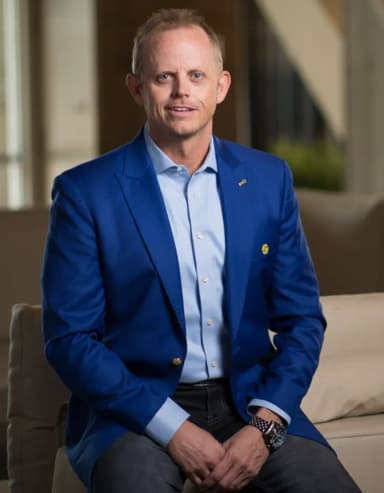
Welcome back to The Daily Mastermind. George Wright III with your daily dose of inspiration, motivation, and education. And today we're going to talk shop. I'm excited to have Colton Page here with me. How are you doing today? I'm doing great. Happy to be here. I know this is good. It's been a couple of busy guys get together and I'm excited because we, on The Daily Mastermind, A lot of the CEOs, owners, entrepreneurs, business owners that we talk with, they love the mindset, they love the fitness, they love the lifestyle, but it is about business and we really want to get down to business. So today we're going to talk about something I haven't featured, which is payments. And so for everyone that does not know Colton, let me give you a quick introduction. Colton Page is the chief sales officer and co-owner of PlatPay, which is a cutting edge merchant processing company with over 20 years of experience. Now, PlatPay has done over a billion dollars in transactions, and it's definitely a leader in banking and providing redundancy and tailored payment solutions. Colton has also been instrumental in securing some of the company's largest clients and driving innovations. So with a dual bachelor's degree in international business and finance, Colton brings a global perspective to his role. I want to talk a little bit about it today, but he started as a door-to-door sales rep and then managing 40 reps, generating $6 million in sales. But his hands-on approach has also given him a lot of understanding in leadership, resilience, and relationship building. So he's pretty passionate about technology and financial systems, which we'll talk about today. So welcome to the podcast, man. I appreciate you being here. I know you're a busy guy, so a lot of things going on, right? Oh yeah, we got tons going on, but I always make time. You know, what's funny is I love the industry you're in because you're in an industry where you see all different types of businesses, right? You see everybody that's doing all kinds of different things. So you sort of have a pulse on what's working and what's not in the industry, wouldn't you say? Yeah. I mean, for getting for worse, we get to see behind the curtain, right? Yeah. And so we'll go to a lot of these masterminds and we have a lot of people say, hey, this is what's working. This is what's not. but ultimately we get to see what's actually working. Yeah. Because they might, I mean, and it's not a dig on them. It's like they're trying to do their best, but numbers don't lie. And so that's what we'll see, right? I love that because that is something, especially in today's marketplace with AI and you don't know who's real, who isn't, who's doing business, who's not. Everybody looks like a success. And that's a good thing. Like you said, that's not, you know, I'm not, you know, making fun of anybody in particular, but you do have a sense on actually who's doing sales. So before we jump into that, I wanna kind of back up a little bit. You started in door-to-door sales. I mean, at the end of the day, you've gone from door-to-door sales to a chief sales officer and co-owner of PlatPay. So how did that happen? What was the transition that took place there? So door-to-door started when I was, let's see, I started late actually, I started when I was 25. So I was already married in school and did that with my brother-in-law. And so we created this team. And so, you know, after four years of building the team, owning a couple offices, understanding the day-to-day, the operations, because when you get to a point where you own the offices, then now you're dealing with technicians and trucks and product and your reps, and then you're still selling yourself. So, yeah, there's a lot. From sales to logistics and actually managing a bunch of other things to coordinate with. You're literally taking off hats throughout the day. and so I think that helped a ton um and it got to it was I mean we were so busy got to the point my wife's like I'm not even coming out to the summer with you I'll just come visit you because that was like eight in the morning till like 11 o'clock at night so every day um but without a transition is I got to a point where I was like you know I I love recruiting and I love hanging out with all these guys but I'm like I don't want to I'm 30 years old I don't want to be recruiting uh 20 year old kids yeah and depending on them for my financial success um so at that moment i kind of pivoted and i actually had i had recently worked at plat pay a long time ago okay um just learning the business just kind of helping everyone and so i came back chatted with jed and we kind of built this strategic plan saying hey come on in um let's build this together type of thing. And from there, yeah, it's been a great like two and a half years so far. It's interesting because I got my start in sales as well. In fact, I think that's one of the things a lot of young entrepreneurs are missing now is they don't have that sales 101, working with a client, working with a customer. They just immediately want to be influencers or have the ability to just market online with funnels or whatever it is. So do you think that that's a skill? Do you feel like that's something that's really helped you a ton to build the success that you guys are building right now is that communication skill sales skill oh i i think so because i mean in in one aspect it's it's what got me in the door to even talk about you know co-owning this with jed and our partners and and really building it and then two i mean like you learn a term that i think anyone should go do summer sales yeah like even if it's for a summer and even if you suck like it will teach you so much because when you're on the door literally it's just you you are you are completely alone with your thoughts and so you have to learn how to control your thoughts you're alone you're talking to strangers I mean the ability to walk into a neighborhood and be like out of a hundred people I'm gonna get like five to six of these random strangers to give me their credit cards like at the end of the day yeah yeah and it's a lot of no's in between right like it's just a ton of no's I mean yeah and you'll figure out like Hey, for every 20 people, I'll get a sale. And then it's a mind game. But my point with that is the discipline and the mental tenacity that you develop goes into like the day-to-day now. So even like not just sales, but like helping our underwriters or our onboarders, like helping them like word and or talk to customers correctly. Like, cause like you have the stigma of like, hey, well, I'm just customer service. I'm just going to do it this way. Or I'm just an underwriter. Like I just need these documents. So I'm just going to ask them. I'm like, well, there's a way to ask. And then it will help them give us more documents or information that we need. So I think day-to-day and then on the bigger picture, like it's helped a ton. Yeah, I can't agree more because I have learned and starting out in sales and then going into management and ownership and, you know, things like that. The art of persuasion, which is really sales. I mean, sales has kind of a tough stigma because people are like, I don't want to be sold. I don't want to be a salesman. But at the end of the day, everybody's selling. everybody's selling their products or services you're trying to communicate um and i think those are some of the biggest lessons you can learn by far um and and you know for those of you that don't know what he talks about when he says summer sales i mean door-to-door you know alarms pest control there's a lot of companies that sell prod products door-to-door and um to be able to go and you made a comment here and i wanted to kind of just put a pin in that and that was that you you knew the numbers. So at some point, all of business is a numbers game. It's a number of contacts to get, you know, presentations to be able to get sales. And so there's that, there's the persuasion. Were there any big pivotal moments for you, like in your entrepreneurial journey, or was it just an evolution over time to wanting to be able to do more and leverage more and things like that? Was there any big moments that kind of changed things for you or situations? I mean, that's a good question i would say it depends on how i look at it because i can look at it and say it's just been over time it's been a slow grow in a sense of like i look back i'm like oh wow i was way different yeah yeah but then there are pivotal moments where you know like going in to before door and then and then going into door to door and then owning an office i mean like you kind of have to just buck up and like no one really tells you like how to run an office right um they'll give you kind of like the the bones and the structure of like hey this is how we do it but then really it's up to you no one tells you how to have a meeting with someone and how to fire them and or help them through something or you know like you have to learn how to fly so there's there's things like that and then i'd say like definitely like as cliche as it sounds like having kids yeah um that was pivotal um but and and i say that because it happened right in my transition got it so i think for me having my first child and then transitioning into plat pay and pivoting it was just like okay new chapter yeah i've learned a lot now let's kind of level up um but then again it's day to day like i was talking to mitch my brother yeah and i was just saying it's funny because like you you hear all the things like all the quotes and what like all the stuff that you're reading it's like it's all the daily daily um transactions the daily like things that you're doing that lead up to the big moments and you have to be disciplined and go through like the boredom yeah i'm trying to think what book it was i think it was like ryan sirhan and he just said like the daily stuff that you do the grind yeah the day-to-day yeah the people that can last through the grind and the boring part in the minutia evidently or eventually get to the end right and so that's what i think about every day because like there's some days where i'm like so jam-packed and i'm like i feel like i was really busy but then i don't feel like i got stuff done but when i look at the bigger picture i'm like no i was doing it because here's the end goal and i was doing this because here's the end goal and so sometimes it's hard to you get you you like lose focus and sometimes the day-to-day like why am i doing this well it's you you know you said so many things that when people listen to this they're going to hear those like consistent success principles where you know when you look back on it you you notice the lessons but during it you're in it you've got a grind it's the consistency it's the reps and it is the person that lasts and stays consistent the longest. So now you've evolved to PlatPay, which has been around 20 years. And payment processing, I'll be honest, I've been with a lot of different payment processors over the years. How do you guys differentiate yourself? Because that's an industry like many, that there's so much competitive businesses out there that you got to, because you're so successful, you have to have found a way to differentiate yourself. How have you done that? So back in the day, so how, how we, how we did that at the beginning was my dad owned a huge telemarketing company and they kept getting shut down on their merchant accounts. So they're like, well, I mean, long story short, they're like, we either got to go make our own or we got to go partner with one that understands our business model. So that's first how PotPay evolved in the work. Okay. We, we know how to do high risk. we know how to do coaching and continuity. And we have the banking relationships that understand those business models and like those business models. Then going forward, we went to a lot of masterminds. So I feel like a lot of payment processing companies, they'll get leads online or they'll just like go door knocking around, which is not bad. That wasn't our style. But you went and connected with people at masterminds. You went and talked to them. Yes. We'd go speak on stage. We'd go connect with them. It was all about relationships and then referrals, right? Having people want to be referral partners. Got it. And then I would say the last like four years, obviously with COVID, there wasn't a lot of master wins to go to. So we had to pivot and go more like digital marketing and then also just value adds and saying, hey, here's all our strategic partners. Like how can we, besides just taking payments, how can we give you an opportunity and add value to your company so you can do more revenue? So obviously that would benefit us, but basically if we benefit you, then we'll get benefited later down the road. So how do we add more value to you guys? And I think that's been like the key. I like the value, but also like you said, relationships. So clearly you're creating relationships and the value, and then it becomes what? Not all about the best deal, right? So now because you have a relationship, you're creating value. But you guys talk a lot about banking redundancy. What does that mean? specifically when it comes to merchant processing, banking redundancy, and what, how does that benefit a business overall? Yeah. So, I mean, from what I've learned and I know that, because I've been to, I've been in meetings with bankers and I've been to banking conferences. And so there's so much that I don't know that goes over my head, but from a processing standpoint or from a merchant standpoint, it's like people think, oh, I need to go get a lot of processors. Well, I literally, like quite literally this week, I just dealt with a guy that's like, hey, I got you guys, and then I have like two more processors that filled out apps. And I was like, okay. I'm like, let me know where, because we don't want to go to the same place and throw red flags. And all three processors, their first option was the same option. That's including us. So even though they were diversified, they were not redundant. It was the same place they were going to process. Got it. That's where I try to teach our merchants saying, hey, like, by all means, you can go use as many processors as you want, but be very transparent with me because I'm going to try to build redundancy on the back end, not at a processing level, but at a bank level. And then even then certain banks are on the same vein, if you want to call it, of like, if you like, look at it like a pyramid, you have like the big five, right? Well, those banks, and then there's veins of banks. And so that all go through the same sources and channels, right? Yeah. So you want to be strategic on where you're putting your your client especially your very big important clients because if anything were to ever happen I mean it's your throat to choke yeah and just so and and obviously if you're running a business and you've got processing you know this but the key and reason for redundancy is because for whatever random reason customer chargebacks refunds um maybe you're just processing too much too fast and your merchant account gets shut down or held or frozen, you got to have a backup basically. And you're saying, if your backup is another processor that uses the same one, you're out of luck, right? So that makes sense. Yeah, I think about it. Like you get shut down in one bank and then, or one processor, that processor is connected to these two banks and your other bank was the one that's connected to. I mean, like that's not going to be true redundancy. And so then you're SOL, right? And so it's being strategic on this. Well, that kind of really reads to what I was going to ask you next, which is what are the biggest challenges? You know, if somebody is running a company right now, and I think it's as important to address this stuff before you run into the challenges. So what are the biggest challenges? Somebody's processing, they're doing great right now, or they're starting a business, they're growing. What are the things they should look out for that are challenges they're going to face when it comes to processing cards and sales? Because that's obviously where the money is going to be, right? Yeah, I would say like the system, because I think everyone, like when they're starting it, the last thing they're thinking of is processing. So they'll go get Stripe, right? And then they start building everything around Stripe, but then they don't understand that Stripe is an aggregator. It's not really your actual merchant account. You're grouped in a group with hundreds, if not thousands of people. And so if there's one bad apple in that, that can lead to an internal audit with Stripe in that whole group. So I got dealt with people, they're like, they're referral partners, they refer people to us, but they're like, I'm too far down the road. I've built my entire system around Stripe. Granted like Stripe has really good integrations Yeah And they make it easy right I mean they just like turn it on you good to go they more fintech than actual processor right they more the just the tech part of it so but then so now it's one thing is like be careful like it is a heavier lift at the beginning to go through us or any processor than stripe because stripe drive doesn't even look at your account there's they auto yeah they'll look at it later and violate their laws then they'll hold your funds and then then all of a sudden your entire system is built around your stripe you violate their laws or your business model is not actually approved by them but they don't catch that till later and now you're sol and then you're like oh well i need a new processor but now we got to go work on integrations and now you have to have your dev team involved yeah there's so many different things so that's one thing i'd be like when you're building around either a crm or whatever um or a website just like make sure that you have multiple integrations and you don't build around one little thing, right? Because then you're not being redundant in the sense of internally. So, you know, most people don't think about it when it comes to processing with their business. They don't think about this till after the fact, but one of the biggest things that affects processing I've found over the years is chargebacks or fraud. Fraud is a big thing right now because it's becoming easier and easier to fraud, you know, to create fraud or to, or to have your business deal with it. What do you do with stuff like that? What, like from your company standpoint, what do you do for your clients that helps protect them against this, educate them on this? Like, what do you do a little bit to help them with that? Cause that's a big one, right? Yeah. So that comes into like the gateway level of like the processor in the gateway, it's like a handshake, right? So, um, with that being said, like there's different settings that you can do in the gateway there's different studies you can do on a processing side there's there's things that the merchant can do just being proactive now if they're a bigger client or not even a bigger client but if they have more transactions or their transactions are below a certain like dollar threshold yeah then yeah there's there's companies out there that we can refer them to we actually did and getting back in the day it was called chargeback 9-1-1 um and so we would help back when it was like the wild wild west we help people with their charge backs with their reserves everything now there's companies out there and there's a few that we really work well with that are dedicated to helping companies with that yeah i don't even help they don't help with processing they it is a platform where you can see all your accounts and you can mitigate the chargebacks and and you can set certain thresholds and you can actually go even see you know like because like let's say you charge back something right and you have one card it says george on it but then you can go get a different card but i mean this this system can go all the way back even to the ip a little flag it yeah so it could flag it by george right it could flag it by both your cards that you used and ip and then it let's say you go to a different ip but then you're still using your name or it's and now it's a third new got it got it still knows your name. And so it's a whole complete system to where like you can find the offenders. So especially if you're doing e-commerce or you're doing stuff online or international business, stuff like that. So the space, banking and finance is changing so rapidly, right? With AI, blockchain, you know, fintech, everything out there. What are some things that you think, maybe it's stuff that you guys do differently or people should be aware of, how does it how do you adapt to that so fast I mean this this everything's changing so quickly what do you do differently yeah I mean it's hard I mean that's that's what we've been trying to figure out and big focus yeah yeah is because every day it's changing so every day we'll talk about new things coming out obviously like FedNow is coming out which is a big deal and not a lot of people some people like it some people don't they're right now they're just kind of inserting themselves so you have the whole process and they're just inserting themselves just saying hey we're just here to help and look right look yeah um but then you know at one point they're going to be like well we can also be a processor and we can give you instant payouts and that's going to be their their carrot is that we can instantly transfer all your money but now the feds can obviously look at everything so there's that there's fed now so then you have visa trying to adapt to that and they have visa net and you have everyone also adapting trying to adapt to the blockchain, right? And so it's really just trying to figure out like, so that's why we've been attending a lot more banking conferences. So you guys have to stay up to speed. You got to go and be up on the regs as well as relationships and everything related to that, huh? Yeah. I mean, we're learning as much as we can. And that's why if we can strategically partner with certain banks, then as, because I think there's going to be a banking consolidation at one point yeah um the next five years because i i mean i don't i don't know it's just my opinion but i think the bigger banks are going to try to obviously consolidate all the little regional banks yeah right so you want to strategically be with those guys but they also want to fight back and so it's this it's this whole thing of like saying hey how do we stay more up to date how do how are we more proactive what can we do um can we get into more of a niche right yeah like with Payment Cowboys, like a lot of that, a lot of the banks like Payment Cowboys because it's a niche and it talks to an entire community and it's not just e-commerce, right? Yeah. And so explain what that is. So Payment Cowboys, I mean, we'll probably be talking about that in the future, but why did you do that? And what is it? What was the purpose behind that? So the purpose is, well, one, we're really good friends with Casey Field. So he's a six-time world champion bareback rider. and we like that world a lot like um i'm not from that world in the sense of like cowboys western whatever but it's a big thing right now obviously you know from hollywood to mainstream right yeah and so you saw that trend as well and you're you have some good connections and yeah and i know jed and casey been friends for a while and casey retired and so we just said hey we'd love to partner with you and make um you know powered by plot pay make payment cowboys so we can bring all of the tech and the support but we want payment cowboys to be established around a handshake grit hard work um doing what's right um and to really help and to focus on those people in the western world or you know in that like the cowboy world because there's a lot of people and then on top of that um some of our profits will go to what we call cowboy charities which will then disperse it into certain avenues. And so not only are we trying to give back, but it's just like, we want to make sure we help that because those like how I understand it. And again, I'm a little naive, but the, you got a ton of forwardworking people that kind of almost don't understand and, or don't have time to sit there and be like, can you figure out, um, a new process or a gateway or this and that, like they have a, a brick and mortar business and they have to be out there selling whatever it is they have. Yeah. And so I think some people they get taken advantage of by processors or banks or whatever, because they, they, they're like, you know what? It is what it is. I got to get out and work. Like they're working with their hands. So we want to come in and kind of disrupt that and say, Hey, we want to be transparent. We want to show you everything that you're going to do. We will help you. We'll help you onboard. We'll help you get a new, um, POS system, like whatever, maybe just trying to make a difference in that realm. Cause I think The plat pays like in the masterminds, the group. So we want to help that area. But that is so interesting because I think that a perfect example of how you could take a product that pretty much generic out there when it comes to payment processing and find a niche find a brand create a strategic relationship create a cause and impact that you can do with that business And so you know so many people are struggling when you know it just takes some creativity and innovation to be able to do that So I curious because you guys are really focused on growth You growing rapidly. The marketplace is growing rapidly. How do you maintain what I believe you guys have as one of your, you know, superpowers, which is your relationships with your clients? How do you manage? It's like gas and brake, right? Like, how do you, how do you grow while maintaining relationships because growing involves expanding and new things and new focuses, but that's the kind of the opposite of tailored attention. So how do you do both? That's a good question. I've been trying to figure out what I'm going to say. Working process, right? Yeah. No, I mean, so we're a lean team. And so we're wearing a lot of hats. So, but at the same time, we have systems implemented to help us do that. But you're right. Like my main focus is like, yeah, I want a lot of automated systems so we can have better customer service for like the immediate things. Yeah. But then it's like, how do I make sure that like, they still feel like we are thinking about them. And that's where like, as of right now, like I'm sometimes I'm up, like I go home, hang out with family and then I'm working again. Cause there's so many new ideas and so many things. And there are people I want to take care of or someone I thought about. And I'm like, I'm trying to hurry and text them. um what what what it really is is i focused a lot on growth like even though we're 20 years old um as a company like i still treat us as a startup yeah and so with the startup mentality it's like hey we need to go get more more clients bigger needs um so we can reinvest back in the company and getting people that with certain systems and people that will um power says for back to lack of a better term like they'll just try harder like right yeah i want if like we we're very selective on who we bring on to our team yeah and so i want people that the work ethic the dedication it's it's interesting because you're right it's sometimes i think businesses they get technology to create systems to make things easier but rather than using that is the ability to free yourself up to focus on the most important thing like relationships. They just double down into creating more innovation. And so I can see that that's a big priority for you guys. Just like, you know, that customer interaction is a big priority, but I think you're right. It's like you do whatever you got to do, right? And then, you know, when do you know when to expand the team, when to bring in more resources? Is it, is it kind of just an equation for you guys, or do you just, you know, manage by the gut? Because at certain points you have to hand things off and you start to build your leadership team. That's when you really scale, right? Is when you start to build a leadership team with you. Yeah. And I, and I guess to make it clear, like I want to keep growing, but there's a certain point where I don't want to get past. Yeah. It might sound counterintuitive, but like you see the big payment companies is when they get past a certain point. Yeah. Then the customer service goes way down. Yeah. And, and, and I don't want to, I want to get as high as we can, but maintain that because once we go past that, like level then that starts going down then there's just levels of management and the client and the customer just doesn't get that same touch and feel I get I get that that's like we get clients from those people because they're like hey I want something like that so it's that's why it's really important for me for customer retention understanding every account that we have and understanding yeah who it is what they do um but I mean on on your question of like expanding um at the beginning it was just you know i can get to 100 and then when i get to 115 120 at one point there's a breaking point where i'm like okay now i'm dropping deals yeah and that's where we need to go get someone got um and so that's how i've gauged it in the last year and a half but then going forward i mean there's also a financial aspect to it saying hey you know what does it make sense economically right yeah yeah how far can we push ourself before things start to slip and or retention or like service starts to slip a little, well, then that's when we need to have someone else on. But I want to keep it to where like when people call in too, like if we only have two or three people answering the phone, like I want them to know them, right? Yeah. So, I mean, there's pros and cons to everything. It's growing at an appropriate rate. Yeah. You know? I think I've learned that same thing. I think when you do enough business, you get to a point where you realize that there are things that you can delegate or delete entirely, you're doing stuff that doesn't make any sense, right? Or you could just deprioritize them. But when you can delegate, it's great. And then there are times that I think a lot of entrepreneurs just don't push themselves far enough, right? They're like, oh man, I'm tapping like 80% of my max. I better hire somebody, right? And then now they're financially putting their business in jeopardy. So yeah, I think it's another reason why having mentors, masterminds, things like that, people that have already gone where you're trying to go can help you. So that's why I'm a big proponent of that. So, well, you know, look, we don't have a lot more time. I wanted to ask you a couple more quick questions. First, what's your vision? Like, what do you see happening? What's your goal over the next like three to five years? And do you see any big changes coming down the pipe for the business that you're in? So goal for the next five, 10 years, obviously it would be, I still want to, we have certain growth goals that we want to hit. So I think I look at it in a couple of different ways. There's like three different categories. There's our like fintech category of what our goals are. There is our operational relationships. So that might be like our inner workings, but also our banking relationships. Like who are we strategically partnered with? Got it. Our fintech and then our sales, right? And so right now it's as simple as it sounds. is we're going to keep growing and we're going to keep kind of honing in on that niche of payment cowboys and then also some of uh the the niches that we've got in with plat pay our fintech is just we're different gateways that we're talking to um trying to bring a little more i don't want to say stripe s but a little more um fluidity into the onboarding process to make it easier simpler a little easier to get yeah and then also being strategically aligned with certain banks that we think will last through consolidation and last through the times, right? Yeah. That's our goal. That's my goal is to, I mean, I'm just going to keep looking at it as a startup. Yeah, I love it. Until we get into a certain point. Because at the end of the day, if your goal is big enough, your vision is big enough, you are a startup no matter where you're at, right? So it's like, I like that vision. Because when you're in a startup, you just approach things differently. And that's huge. now. So, um, I'm going to put some links in the show notes for anybody that wants to maybe check it out. Um, maybe get you guys to give them some help, give them some feedback, but what's the best way for people to get in touch with you? If somebody wanted to kind of follow what you guys got going on with payment cowboys or, or plant pay, or even just ask you questions, what's the best way for them to connect? Yeah. I'd say let's just add it to the video, but I'd say either, um, we'll give the link, um, and you can schedule a call with me or I'll put that this show. I'll just put my email in there. I don't really care. I'll talk to anyone. I know you will. So that's cool. I appreciate that. Well, listen, guys, if you have a business, maybe you got a processor or something like that, these are some big, big priorities and topics that you need to be aware of. There's a lot of things happening in the marketplace. So that's one of the reasons why we wanted to feature this. We appreciate you being here today to give us some feedback. Once again, follow the show. Make sure you hit us up on the Daily Masterline on Instagram, Facebook. You can email me. All of the links are going to be in the show notes and share the show. I look forward to talking with you more again. Appreciate you guys joining us today. We'll talk to you soon.