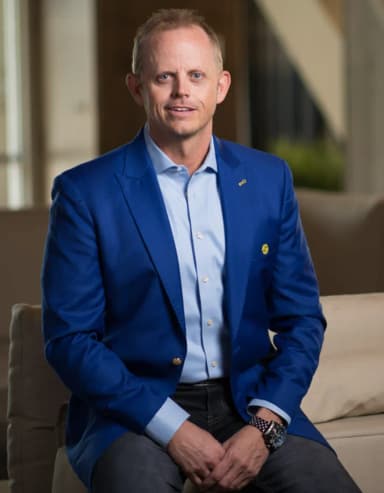
In a world that constantly pulls you in a dozen directions, knowing when to pause and revisit the basics can be the most powerful move you make. On this episode of The Daily Mastermind, host George Wright III does exactly that, walking through the 12 Prosperity Pillars he has developed over years of mentoring, coaching, and personal growth. These are not abstract ideas; they are concrete, actionable beliefs designed to anchor you when life gets noisy.
George opens with a Thomas Edison quote that sets the tone perfectly:
I have never failed once. It just happened to be a 2,000-step process.
That reframe, turning failure into a step in the process, threads through everything George shares. When you stop seeing setbacks as endings and start seeing them as part of the path, you shift from reactive to creative.
Why the Fundamentals Always Come First
George draws a comparison that hits home: you need fundamentals in life just as much as you need them in sports, business, and relationships. The 12 Prosperity Pillars are not a self-help checklist you complete once. They are beliefs you return to, especially when things get complicated. Reviewing them regularly is a form of recalibration that keeps your mindset, decisions, and energy aligned with where you want to go.
How Your Beliefs Shape the Life You Create
The first two pillars, "I create my life" and "I take personal responsibility," are the foundation everything else rests on. The moment you accept that you have the power to shape your circumstances, you exit victim mode and become proactive. George is clear: reactive thinking is a default setting for most people, shaped by past experiences. Personal responsibility is the override switch.
Pillar three adds a practical layer: "I act in spite of my mood." Consistency when you feel motivated is easy. Consistency when you are tired, discouraged, or distracted is what actually separates the people who reach the next level from those who stay stuck at average.
It's not about doing really well when you're in the mood. It's about doing what you need to do when you're not in the mood. That's the differentiator. That's what separates the successful from the average.
Building the Environment and Mindset for Success
Pillars four through seven address the environment you create around you and the mental lens through which you interpret life. Surrounding yourself with positive people is both a mindset and a strategy: the energy and belief of the people you spend time with either lifts you or drags you down. George calls this "belief transference," and it works in both directions.
Pillar five, "I focus on solutions," draws on advice from his mentor Jason Brown, who taught him to "start from solution." Rather than getting caught in the why of a problem, jump straight to what the answer looks like. This shift in starting point changes what you attract and how fast you move.
"I create an attitude of abundance" (pillar six) and "I choose to be happy" (pillar seven) are closely linked. Abundance thinking removes jealousy and scarcity from the equation. Happiness, George insists, is not a feeling you wait for; it is a decision you make. Choosing happiness changes the filter through which you see every situation.
Thinking Win-Win and Committing to Lifelong Learning
Pillar eight, "I always think win-win," challenges the common belief that every negotiation or situation must produce a winner and a loser. George argues that thinking in terms of "both" rather than "either/or" opens up possibilities that competitive thinking closes off. Balance in finances, relationships, time, and communication becomes achievable when you stop treating life as a zero-sum game.
Pillar nine, "I'm committed to lifelong learning," is not just about accumulating knowledge. George describes it as a recognition that you are constantly changing, so what you need to learn changes too. He mentions listening to a podcast by Ed Mylett featuring a neuroscientist, absorbing ideas that would not have resonated at an earlier stage in his life. Growth is a moving target, and learning keeps you aligned with where you actually are, not where you were five years ago.
Creating Daily Rituals and Attracting Success
George calls pillar ten, "I create daily rituals," his top personal strategy. His advice is practical: do not try to do everything at once. Identify the one or two rituals that trigger everything else. For him, that is a morning workout. For you, it might be journaling, gratitude practice, prayer, or family time. The key is to choose rituals that fit your actual life, do them when they will benefit you most, and celebrate the small wins rather than only tracking where you fell short.
Pillar eleven, "I attract success," is about operating from the present tense. George makes the distinction clearly: you cannot attract success from a place of wanting it someday. You have to live as if it is already happening, because attraction works at the level of being, not wishing.
Action Steps
- Review the 12 Prosperity Pillars regularly, especially when life feels chaotic or unfocused.
- Choose one or two daily rituals that move the needle most for you and commit to them consistently, even when you are not in the mood.
- Practice starting from solution: when a problem arises, focus on what resolution looks like rather than analyzing the cause.
- Audit the people around you. Are they building your belief or draining it? Make intentional choices about who gets your time and energy.
- Write down a clear, specific vision of what you want your life to look like. Visualization is not passive; it is the first step in creation.
The final pillar, "I visualize and manifest my life," ties all twelve together. A vision is not just a wish; it is a process of clarifying what you want with enough specificity that you can actually move toward it. George leaves you with a question worth sitting with: what do you want your life to be like? Write it down. Dream build on it. Then use these 12 pillars as the daily operating principles that get you there.
It's never too late to start living the life you were meant to live.