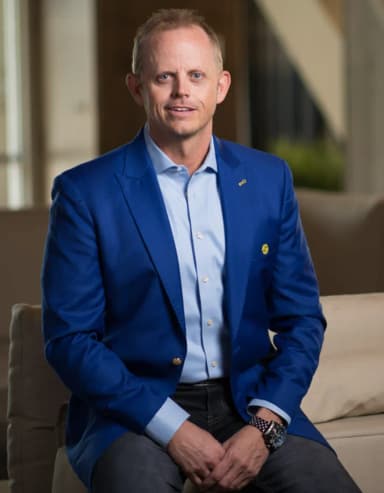
Welcome back to The Daily Mastermind, George Wright III with your daily dose of inspiration, motivation, and education. And I'm excited today because we're going to have a new topic, one that we haven't discussed yet with connected TV and streaming. And you guys know I've been a big proponent of authority and getting seen by the public. And we have an amazing individual here today. Let me give him a quick intro. So Sean Stockwell is the CEO of Your Home Digital, but he's also the founder and executive producer of Your Home TV and the publisher of Your Home One Source. Now you guys have heard me talk about our new upcoming show. So I'm excited to have him here because Sean is business partners with Kathy Ireland worldwide. They provide digital media, marketing strategies, program streaming opportunities for tons of leading brands and influencers. But just last year, just the stats, I'm sorry, this year is they have over 6.3 million new mobile viewers and also 53 million views. These guys have a ton of stuff going on. So, Sean, welcome to the show. Great to be with you, George. Thank you. Yeah, we're excited because you're bringing a whole new channel, which is really the up and coming growing channel of streaming and connected TV. And for even people that are not marketers, they're obviously viewers. And so let's do this just for people that don't know you and they don't know your background. Give us a little bit of the backdrop because you didn't come from the digital world and streaming. You came from banking. So I want to kind of hear what you did. Give us your background and then we'll kind of go into some more details. Thank you. Thank you. Well, I grew up in the Midwest, um, in St. Louis County, Missouri, and I got into the savings loan industry, um, after working with my, my father and his real estate company when I was in community college. And, um, so, you know, first was licensed in real estate, then I had my, my broker's license in real estate, then got into the savings loan industry. And that was in 1984. So I'm kind of showing my age. And I was always in the mortgage banking division of that, not only savings and loans, but then moved into wholesale mortgage banking, community banking. So 32 years, I started in the Midwest and then relocated to Tampa, Florida, 27 years ago. But yeah, 32 years in banking and community banking and mortgage banking before I I really focused on the digital media space. So there had to be a transition or a pivot point, right? Because that is a completely different industry. And now I've known you as kind of a marketer and a guy that's on innovative trends. And so what was the point that created that pivot for you? Which, by the way, the reason I bring that up is so many people today, because the marketplace is going all over the place, they're facing a pivot. they're facing new challenges and new industry moves. And so I'm curious, did it force you into that or did you identify an opportunity and move into it? Great, great question. So, well, yeah, absolutely change is required no matter what you're doing. And we all watched as the internet, you know, began to change our lives in 1996, 1997. And definitely by the year 2000, And everybody was realizing no matter what business you were in, you better be active online if you're going to be relevant in the future. And so I was one of those guys that I learned over the years to listen and to read and to study and to observe and then to act, right? Choose the path forward. So I kind of raised my hand in the banking groups that I was with, South Trust Bank specifically, and then in Bay Cities Bank in Tampa and said, you know, hey, I'll help in the, you know, development of and deployment of websites and online interactions with our customer base. and I loved it. That right there was the turning point. I really enjoyed the creativity of it and just something new, a new direction. I still maintained my, you know, going to different meetings in person. I maintained that, but you had to be able to do both. And so I did. I got into the technology side. I just kept learning more and more. the last bank, I opened their lending division and also developed their website. And by the time we sold that bank seven years later, 80% of our mortgage business was done through the website that I helped develop. It was fun just watching. So I'm quite curious though, because the skill sets of banking and digital, is it just something you just stumbled across because you wanted to get into it and then you just since then you've kind of loved it or did you did you do anything with tech or any of that while prior to it I did there was there was a number of things so I've always been kind of a entrepreneur and and uh way back in 1993 um this is a funny story I was actually on vacation uh in Virginia with my family and uh an old friend that we used to play football together in our younger years and he called and said Sean I have this idea he said I was thought I was almost asleep you know it was you know late at night he said how would you like to develop basically a system that would allow people like TurboTax to be guided through the home mortgage process and i just thought about that for a few minutes and i was like that's a great idea you know so we did it we spent all of 1994 and 1995 i had a little team and this was evenings and and and saturdays side hustle yeah exactly i was working you know full-time in banking but uh we were doing these very creative and strategic development initiatives uh usually two to three evenings and then every other saturday and that went on for a while so the product that we developed just to tell you how early on that was these were floppy disks we literally yes it was called lone source and this was back when we had a series of five floppy disks that you had to insert into a tower you know cpu one at a time load the program but it was beautiful it walked people through all of the terminology, how to be qualified. In fact, this is before credit scoring. That's what I'm talking about. So I was actually engaged in technology development 1994, 1995, before the internet was even on the scene. It's interesting because I think sometimes people, as an entrepreneur, you're looking at a bunch of different things, you're exploring, you're trying to learn. Sometimes you do things that you don't realize later on will benefit you as you find opportunities. And so, so many people are trying to make or break things they're doing or not spend time on it, but these things stack up over time. So, okay. So fast forward, banking, you start to really dig deep into digital, but you had a pretty heavy learning curve, right? And with your team as you, so take us through kind of the transition into this digital and then TV space. Okay. And, and what happened? Cause obviously as with most things, it was not just a smooth downhill glide into what you're doing right now. Right? Absolutely. Yeah. There was some, some, some difficult times. And so I had already planned on creating some type of an online platform to engage home industry, uh, consumers, because that was my background. And then came the housing crisis, which, you know, a lot of people think it happened in 2008. It actually started before that. But we thought we start coming in late 2005 and definitely six and seven, it just kept getting worse and worse and finally hit the wall in 08. And so I was fortunate to be with a bank that had capital because at the time, a lot of the banks had no capital and they were forced out of business. You know, so anyway, without getting into that, everybody was trying to figure out what they were going to do because so many people were losing their jobs and companies were being consolidated and closed down during the housing crisis. I thankfully had already started working on this pilot, your home one source, oh, at least a year or so, probably more like two, two and a half years earlier before the housing crisis. But I stayed at our at our community bank and just continued to build the residential lending division while I was working on your home loan source in the evening So I kind of repeated what we had done with loan source you know roughly 10 years earlier And so I was positioned now what I had learned was to surround myself with people that were a lot smarter than me. So I put together a board. I invited a number of people that I really respected and we put together a board that's just outstanding. And to this day, we have an amazing board, our chairman, uh david mccain um who's been with me from the beginning um he was the former chief legal officer and ceo of lennar corporation of the largest at the time largest publicly traded home builder in the country so you know we have some phenomenal board members so that was another piece of the puzzle was getting the right leadership team and what did you do in the early days how did you attract that leadership team because so many people are like have these cutting edge innovative ideas but they don't think that they could go get a team, a board like that. And I thought that was a really interesting strategy. What did you do to really kind of create that opportunity? Oh, thank you. Great, great question. So I built, you know, because I was a writer, I would write pretty concise, you know, business development plans and put it into the form of a presentation that was highly illustrated really great graphics which was one of the hallmarks of your home on source when we built it was the graphics that would really attract people no matter whether you were discussing interior design or home building or whatever it might be landscaping so i built a a presentation that wasn't too long because you don't want to have something that's that's too long right but you know let's say 10 slides but you know between illustration and and narrative uh i could tell the story. And then I would go and meet with people. I would make an appointment and I would go and meet with them in person. Um, and I would explain usually within 30 minutes to one hour lunch, whatever, bring the laptop. And I would explain to them what my concepts were. And I always approached everything as an alliance because, you know, smart executives realize that they don't have all the answers. So I would always ask for feedback and I would always ask for people to join me and team with me and that together we would be able to figure it out. That's kind of what we did. I love it. I love it. Well, so that's a great way to do it because you don't necessarily have to have big salaries for your board and things like that. When you, number one, can create a story, I think people like to align with people. So doing a presentation and really being, um you know sharing your vision um and i like this idea of an alliance okay so so keep going um how did this slowly morph into kind of what you have today with with your home well the first thing was when um i was a what's called a key man at the at the last bank the community bank in tampa and when that bank sold uh that created a cash event for me and our children were grown i've I've got four grown children. And I told my wife, I think I'm going to take that little nest egg, if you will, and I'm going to go a new direction and I'm going to go full time into this digital media company. And so that's what we did. So that ended that right there, officially ended my banking career. That was in September of 2015. And we launched Home Digital and your home one source platform January 1st of 2016. So that was the real turning point. And then the board, we just slowly but surely over the years added more and more leaders that were from different segments. We had e-commerce. So one of my advisors early on was the former general manager of Home Shopping Network. So we had that. Then our CMO had led e-commerce strategies for Hyatt, Hilton, JCPenney, Verizon, West Marine. So another brilliant guy. And so we just kept adding. But a lot of it was simply what we decided to be. We decided to be educators. We decided to put helpful resources on one website because we were looking at an industry, online technology for homeowners, that was very fragmented. So if you wanted a mortgage, you would go to Ditech or LendingTree, right? This is even before Wiccan. This is before Quicken. Quicken kind of was coming on the scene. And then if you were going to buy a home, it was either realtor.com or something else, right? But everything was fragmented. And we came up with the idea, let's educate and let's engage home consumers on all home industry topics on one website. other words let's take the walmart or the amazon approach which is all things in one convenient location because that's what consumers prefer and that's where your home one source was born and um we ended up we had over a period of our first five years we had 40 brands that we wrote articles for including including home advisor lowe's home depot um adt was one of the sponsored our home security page, BobVila.com on DIY. I mean, we had some amazing alliances that we put together in that first five years. What made you decide that to be an education focus? Because, you know, obviously, you know, you got to be thinking revenue for the company and things like this. But I think you were, from what I understand from our conversations, you know, you really just wanted to capture the attention, the eyeballs, like obviously it's the ultimate goal in any business. But was there a point and a reason why you decided to be that education? Was it that whole idea of being an alliance for all these brands? And what was it that made you choose that path? And you ask a lot of great questions, George. So that's a- Because you could have gone a couple directions, right? Like you could have definitely with your online digital platform, it could have gone several directions. Yes. Yeah. So, well, here's what, you know, number one was the belief that, you know the home uh the financial collapse the housing and industry financial collapse could have been it you couldn't avoid it necessarily right but it would have been diminished if more people were properly educated and informed maybe maybe some of them wouldn't have made decisions in haste and and would have been a little bit more cautious if they were fully informed so some of it was born out of that a desire to protect people uh believing that if If they were better informed, they would make better decisions. The other side of the coin is something that I learned over all of those years in banking, which is people do business with those that are number one, trusted advisors. And secondly, people who provide a high level of customer service. If you're not trusted, people aren't going to work with you. And if you don't have a high level of customer service, you know, they're either not going to work with you or they definitely are not going to return. And so we decided to put both of those, the answers, you know, to those challenges into our, into your home one source where we were educating people to help them make better decisions. And the service level, if you will, was just through the roof. I mean, the resources we had at the end of five years, it was massive. It was a 900 page, you know, website landing pages. We had all these 900 pages of content with nearly 400 articles. We had checklist calculators. We had outbound links to there were 22,000 outbound links to everybody from realtor.com to the National Association of Realtors to the National Association of Home Builders on and on and on. uh american institute of architects we had fema for people that were involved in a natural disaster where to go for help um we formed so many alliances that there were there we we had i don't know how many companies teaming with us to educate consumers in one place and i think a lot of people forget and they don't realize that long game you played it's not just about the content out and just alliances, but the online SEO backlink network that you created, because I mean, let's be honest, this has been an eight or nine year bill, right? This isn't like you just did this yesterday, internet entrepreneur overnight. But you also establish a ton of trust with this education. I think people, I'm learning more and more, and I'm seeing it more and more with authority marketing and media that we do, that when people trust you, they're going to stay with you. They're going to buy from you. And that mirror effect takes place where they see you and they hear you and they read from you often. You're just, your brand loyalty is just extremely high as well which then catapults to you being able to attract new brand partners too I would imagine Yeah absolutely I would agree 100 And the other thing too is that we removed barriers to entry. That was another thing. We did a lot of similar studies and there were a lot of websites that required people to sign up to answer questions. They had to do something, pay a fee, whatever. And the bounce rate on those sites was really high. People didn't like that. And so we removed those barriers. That was another thing was not only providing all of the education, but it was free and it was accessed without hassle. And the thing is, is everybody would, in the early days, they would say, well, that's a error in judgment. If you don't require them to register, you can't capture their IP data, but that's not correct. That was true 20 years or 15 years ago. But once you got into the days of Google Analytics and other types of things, just the interaction of the IP address from whatever mobile device, laptop, whatever, their Wi-Fi connection revealed the same consumer data. You didn't have to force people to do anything. And so we just made it easy. We removed the barriers, made it free and provided a great interaction. Yeah. And then from there, by the way, those home industry brands that were participating on the resource, the education side, some of them then started to hire us to help in their, in their digital strategies. And that was then, that was right there, the, the first pivot. We went from a B2C model, your home one source, to more of a B2B where we were a digital agency creating content that would deliver the consumer experience or interaction to the home industry brand. And so we started campaigns and did the search and display and YouTube campaigns for the home industry brands beyond just having our B2C portal. Yeah. And becoming a, and I don't know, was that your original vision was to create those relationships or did that happen because of the relationships? We wanted to create the relationships from the resource side. Got it. Right. We never dreamed early on that we would end up, you know, helping in their digital strategies. That just, we thought, you know, everybody, especially some of these larger companies, they have their own teams. They don't need our help. But it turned out that we would present ideas or concepts that were new because we were, you know, out of the box thinkers. And some of the executives were like, you know what, let me why don't we just team with you? And entrepreneurs and business owners, they don't realize that some of the biggest opportunities come by executing on what you're doing. And so you don't have to have it all figured out. You know, you're going to you're going to morph into that over time. And that kind of brings us to this conversation of, you know, your home TV. And you guys have obviously always been innovators. I loved how you, you know, took the education piece, dropped the barriers and boundaries for people to be able to connect with you by developing that trust. Obviously, the B2B relationships expanded. um what decide i'm curious why you decided to pivot into the the tv and streaming space versus audio versus um you know building your own products or building a you know just a uh you know whatever whatever it may be because you you're pretty diverse now we don't have to jump all the way to that yet but you're not just a home shopping network kind of a tv so tell me what what what bridged you into that why did you choose that vein because that's a very fast growing opportunity you guys are in. Right, right. So, well, early on, in fact, it was the first year that we were in business, 2016. I acquired the domain, Your Home TV, that far back. And I knew that I wanted to have a library of educational videos. And we did. We built originally Your Home TV. I formed a partnership with Content Puppy, which was out of Atlanta, Georgia, and a dear friend, Harry Hayes, who has since passed, but he was brilliant. He had been with some of the largest advertising agencies in the country over the years, 30 years. He represented brands like like Anheuser-Busch and TWA and Georgia Pacific and many others. And he was an expert storyteller in video. So Your Home TV originally was storytellers in video for the home industry. So we had over 200 videos, short-run videos, for home industry brands like Anderson, E-Series, Windows, and just on and on. We had flooring and all these different topics. uh we knew people preferred to watch uh the you know the the beautiful images and listen to a story rather than read read an article we were trying to be all places digital that was even our our phrase for a while was was all all all uh all things home and all places digital so anyway what happened was that your home tv uh aspect of your homeland source and those 200 videos led us into more and more video production and we started creating video commercials for home industry brands and placing those commercials not just on your home one source but on streaming outlets right so three and a half years ago we were teaming with tegna and Odyssey in media and working with their folks to place these commercials out on streaming outlets. And we were doing nationwide placement of over 100 streaming outlets, including YouTube and HGTV and many others. And one day our CMO said, Sean, have you ever studied the growth of streaming and i said no i haven't studied it i know i know it's i know it's growing rapidly yeah like 30 year over year and it's projected to continue at that rate for 10 10 years or more and i said he said so why don't we you know maybe we focus more on on getting into streaming and um i visited with the uh leadership team of kathy arland worldwide one of our you know equity partners they had breed and we started research we didn't just jump right into it we spent 12 months we were 12 months in research of how to do it with whom to partner and all of that what do people want uh the viewers what do producers the creators what do they want and after a year of study we came up with the model for your home tv and it was launched in november of 2022 as an independent ott streaming platform. We're not connected TV, even though we're on Roku in 20 countries. Yeah. Most of our viewers by design are on mobile devices in over 80 countries now. Yeah. It's interesting. So for those of you that don't know your home TV, it's a free global streaming network. And it offers live stream as well as video on demand. And it's very family friendly, but in 80 countries. And you showcase everything from trends and opportunities and home services, real estate, home finance, building, all kinds of things. In fact, that's where our authority show will be as well. So it's very interesting to see how your background has gone from where you were at into digital, partnering with clients and moving on. And I think success leaves clues. You definitely have some principles that you've carried throughout the process. And I've seen that myself with the way you work with partners and your channel partners, as well as your relationships. I mean, it seems like the individuals everywhere from Kathy Ireland worldwide to some of your current channel partners all fit into a very good culture. And it does seem like an alliance building something bigger than just a product channel. where do you see the the streaming industry where do you see that going because you've talked about how fast it's growing for your home tv over the next you know three to five years what's the what's the vision of what's going to happen and do you see any trends or nuances that are happening that you know people can capitalize on yeah i would i would say number one is you know there's been a lot of articles and a lot of discussion in the last couple of years about cord cutting I think that will continue but people will continue to pay subscription fees as well You know George if you were to think that you know if you ask somebody 20 years ago when the internet was coming on the scene what going to happen to newspapers or whatever you know mailers in the mailbox right yeah you know so many people said well they'll they'll go away well that's a partial truth there's definitely been you know diminishing on the side of print newspapers as we know but there are still people that want to read a newspaper and there are still people that want to pick up a magazine at the store and there are still people that look at the offers these beautiful postcards and images and offers in the mail right so yeah but back to streaming it it's it's just going to be probably a combination of things you're going to have some platforms that focus on movies and documentaries and television reruns self television series reruns and you'll have others that are like us that is more short run programming that's kind of our focus is short run programming yeah while we have shows that are as short as three to five minutes and we have some that are about 60 minutes but the i would say the average is 17 to 20 minutes and uh so it's totally different than going on to netflix paramount plus Disney and others where most people are watching movies. So yeah, the content has shifted a lot too, right? Like it's, it's also been, you've seen this with reality TV and things like this. We were talking about this just before we got started today. The, the type of programming that people enjoy watching doesn't have to be such a high, high production and type of deal, which is why you see a lot of influencers and YouTube streamers and individuals like that creating content for streaming TV, not just on their YouTube channel. And, you know, we're going to be talking over the coming weeks as more and more opportunities present themselves for our listeners and for businesses. But I've started to see more businesses really create their own authority and branding and relationship with their customers. Because if you're going to be trusted, you want to increase your trust and your authority, you've got to be seen. And right now people are streaming on and on-demand content on their mobile devices. And so would you say you've seen more and more, you know, it's like anything else. It used to be just the high production value. Then you see things like this, you know, Tyson, Jake, Paul fight, where it's like, how does, how is that not like, how did they partner with Netflix and they're getting these things done? It's because it's all about influence. Do you see it becoming, I've seen you've dropped the barriers, but more possible for businesses to get into this market without there being big barriers to entry, like having a TV studio and having all these production values and things. Is that something that's become more and easier? And can you speak to that? Yeah, absolutely. In fact, you know, the smart business leaders, people that are leading digital media within these large brands, they would be wise to get into streaming more so than just commercials 30 second or one one minute spots on streaming outlets they would be better to have their own uh fast channel or our our ott type channel like on our network and um now that doesn't mean they have to go it alone in fact that's our model you mentioned it earlier your home tv is a collaboration so instead of everybody going out and saying, we're going to get into streaming and we're going to have our own streaming platform. Well, good luck. You know, it's going to cost you millions and millions of dollars and take you several years. And you'll probably lose more money being an independent streaming. You may should have just stayed, you know, with whatever your core business is. Right. But if you let a company like ours, we are basically a technology host. We provide the technology platform. We even provide marketing services. for the brand. So whether it's an influencer, a brand or a filmmaker, they don't have to go out and do all of this themselves. They can come to your home TV and we provide all of that for them. It's kind of turnkey. So I think it's collaborative, right? Like I think a lot of people don't realize that you try to do it on your own. You've got to hit all the roadblocks and obstacles. What you guys have done is innovative because you've lowered the barrier to entry. You've created the collaborative environment where people can work together as an alliance, right? To bring their information to the marketplace by capitalizing on these principles you've talked about, education, building trust, being seen continuously. And I think so many people overthink how difficult that is to be and to do. And I think you guys have done a good job of making it simpler. And I'm certainly going to, in our show notes, I'm going to include some of that as well. um but as we kind of get to the end here um are there any final thoughts that you really feel like you'd like to share with anyone who might be considering getting into the streaming space what would be your advice to them if they know nothing about it right now yeah well i would say a few things for um producers or creators is make sure that you control and own your content um you don't want to get into whether it's short-term or long-term licensing agreements of your content that turn the control over to someone else because then good luck getting it back they they may promise monetization it may never come um i think that that's another thing about our the way we're structured is that the creator the producer they own the content they set the production schedule if they want to do one show a month that's fine and if they want to put one up a week they can the timing if you you know you go with some of the larger networks you know it's like 27 30 or 28 30 and there's all these rigid requirements i would say to people stay with a company that is very flexible that doesn't have rigid requirements uh because or you know you know we like real people real stories and a lot of that occurs on mobile devices and that's why youtube you know everybody thinks okay netflix is the biggest or paramount plus no they're not youtube is the biggest by far youtube has 2.7 billion users if you take all of the connected television uh networks out there if you were to add amazon prime and and netflix and disney and perm you know all of them just add them all together you got about 450 000 households but on on youtube 2.7 billion and then if you look at streaming on mobile devices it's actually 3.7 billion total around the globe so i guess what i'm saying is you want to have your content on mobile devices the connected tv which is really looking you know to an audience that's sitting on the sofa at eight o'clock at night yeah that audience is not as uh you know um what would you say uh relevant these days yeah you know everybody's on mobile devices so that's that over the top yeah yeah and plus i think i think that's great advice to so many people don't they've got to open up their mind to the fact that you can control your content your timing your frequency um if you if If you pick the right partners, you go in the right direction. And I think it's easier than ever for someone to be able to create relationship through viewing, streaming on-demand content for their ideal client, their ideal customer, and creating a community around that, not just in a social media aspect or even in your own database, newsletter type aspect, but I think in a viewing, storytelling, educational way, which is why I'm a big fan and why we're pivoting that direction as well. So, well, this has been awesome. We're out of time, but I'm super glad that we had you here and I know we're going to have you back. We've had some interaction with you on our mastermind and I know there's a lot of people that have questions on this. So I'll tell you what I'll do. If you're listening to this episode, I'm going to put in the show notes, some links to some information. You can get ahold of myself and Sean, where's the best way or place for people to connect with you and follow your home TV? what's the best way for them to connect with you? Yeah, just go on your browser and type in your home TV. That's it. You'll find us, your home TV. That's beautiful. I love it. I love it. Okay, cool. Well, thank you for being here. And guys, do me a favor, share the show. Our goal is to help you to be able to level up in every area of your life. Obviously, I always say, and I believe it's never too late to start creating that life you were meant to live, the one that you want to live. And so part of that is just innovating. And so I'm glad you're here with us today. Hit us up on The Daily Mastermind on Facebook, Instagram. You've got my contact info in the show notes, and we'll talk with you more tomorrow. Have an amazing day. Been a pleasure, George. Thank you.