TDM Anthony Perera
Anthony Perera: [00:00:00] If I were, if I were to go back in, in time, starting over and doing it, I would say, "Okay, let me, let's look at every [00:00:05] process I have in the business and how can I automate that process using AI," right? How can I take [00:00:10] AI- Yeah ... and automate that? R- right down to your month-end closing, your month-end financials, your [00:00:15] daily emails to your teams, your compli- I mean, every single facet of these companies, whether it be home [00:00:20] service, I mean, a- anything can have AI automation or AI augmentation rather, to [00:00:25] help improve results[00:00:30]
George Wright III: All right, welcome back to The Daily [00:00:35] Mastermind. George Wright III with your daily dose of inspiration, motivation, and education. And [00:00:40] I've been trying to get Anthony Pereira on the show for a little while now, so I'm excited about it. Anthony, welcome to [00:00:45] the podcast.
Anthony Perera: George, thanks for having me, man. Looking forward to being here.
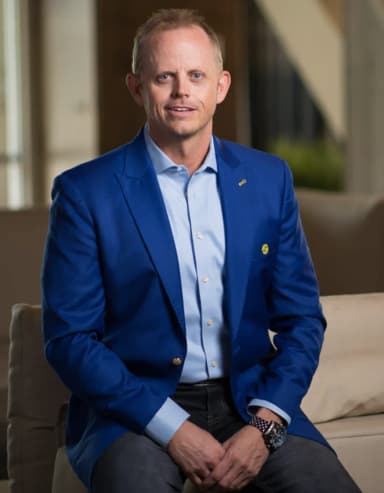
George Wright III: Yeah, this is good, man. I got a ton of [00:00:50] questions for you. Sometimes I do these episodes, uh, for my own benefit, other times, obviously, guys, I, I, I [00:00:55] do it for yours. But let me give you a quick introduc- uh, introduction to, to Anthony, because he's a [00:01:00] real, uh, operator, investor, um, Ernst & Young Entrepreneur of the Year winner, uh, [00:01:05] 20 years experience in building and scaling companies.
He built, uh, Air Pros USA from a [00:01:10] single HVAC truck to 200 million-plus nation-wide company over six years. And [00:01:15] now today, uh, has his family office, Exuma Capital Partners, with a portfolio over 300 [00:01:20] million. And, um, just so you know his background, he's managed organizations of more than 1,000, you [00:01:25] know, employees, uh, 800-plus service trucks, uh, founded and [00:01:30] acquired, you know, seven, eight companies spanning home services, technology, logistics, real estate, hospitality.
[00:01:35] So you have got a ton of experience, and I, I think we're anxious to kinda dig into it. So thank you [00:01:40] again. I appreciate you being here.
Anthony Perera: Yeah, man. You know, it's funny when you s- when you said, uh, 20-plus years, man, it feels like [00:01:45] yesterday when I, when I got started in business, and it, it's, it's crazy to say 20 years now, but it's been a long [00:01:50] time for sure.
George Wright III: You know, it's a good sign, though. It kind of shows... I, I, I thought that the other day, too, 'cause I have, [00:01:55] uh, I'm gonna have my, like, my seventh grandkid, and, um, I h- I thought, "Man, where, where has the [00:02:00] time gone?" But, uh- ... you love what you do, so it just shows that you love what you do. So, you know, look, you, [00:02:05] you were an entrepreneur, operator, now investor, uh, but you didn't come from Wall Street.
You [00:02:10] know, you built companies. Uh, you, you've been basically an operator. So how has that fundamentally changed [00:02:15] the way you evaluate business? Maybe give me an idea of just what took you up to where you're doing right now. [00:02:20]
Anthony Perera: Yeah, I mean, listen, I, I got started when I was 19 years old. Um, it was an [00:02:25] industry I knew nothing about.
I was actually in the publishing sector, so kinda like you, I was a publisher back in the day. [00:02:30] Um, and, and, you know, and, and we just, we found a niche that, that, you [00:02:35] know, all, all businesses are, are kind of common in how they operate, just diff- the products you're selling are [00:02:40] different, right? So, so the way you, you structure your organization, the way you build your leadership teams, the way [00:02:45] you, you know, um, attract your KPIs, no matter what industry you're in, as long as you have systems [00:02:50] and processes, it- it's all the same concept, just different industries, so.
George Wright III: Yeah. [00:02:55] Well, and, and that's obviously, um, it's true in business, but it's also one of the [00:03:00] fundamentals that you use for investing, and so that's, that's pretty amazing. Do you, um... Look, I, I was curious because [00:03:05] a lot of entrepreneurs dream about building a business and having an exit. Right. But you became an investor [00:03:10] instead.
So what sort of inspired you to transition into being an [00:03:15] investor and, and now going deep into these companies, and why are you still so involved in operating your [00:03:20] portfolio companies?
Anthony Perera: Yeah, so we kind of, you know, carved out a niche for ourselves, right? You kinda have this, this [00:03:25] interesting dynamic where you have...
there's not a whole bunch of equity invest- So let, let's kinda go [00:03:30] back a second. Of our family office, we act more like private equity than a traditional family office, but we actually [00:03:35] operate our businesses. So we're investing our own capital in acquiring companies and scaling them and getting them ready [00:03:40] to exit.
That's kind of our whole thesis here at Exuma. Um, you know, we're true operators, like you said, [00:03:45] George. You know, we, we, we come from operational backgrounds. And so, you know, kind of our, what we do here is, is we [00:03:50] find businesses that are we- that are typically smaller than what private equity teams or companies [00:03:55] would normally buy, right?
We're, we're finding companies that are between two and 8 to 10 million of [00:04:00] EBITDA, right? We, we buy those companies. Usually they're, you know, founder-led, founder-owned, so [00:04:05] we're backing the founder here. Mm. Helping them put in the structure, the infrastructure. They, they, they've done [00:04:10] something right to get to two million of EBITDA plus, but they don't, maybe they don't have the, the, the KPIs.
They don't have the, [00:04:15] the knowledge of how to scale and go or do acquisitions or, or, you know, put in processes that can get them from [00:04:20] two million to 15, 20, 30 million bucks, and that's kind of what we've been doing, right? So we're, we're coming to [00:04:25] these companies. We're helping them put processes in place.
We're helping them do organic growth and inorganic [00:04:30] growth through M&A, uh, and then eventually scaling them. So we're, we're investing in these companies to build what we [00:04:35] call a private equity starter kit, right? Companies that have-
George Wright III: Yeah ...
Anthony Perera: scale, that have a leadership team, [00:04:40] that are tracking the KPIs, that, that have the infrastructure, that have an ERP, a CRM, that are [00:04:45] ready to go, and then kinda go through the next big boy step of being acquired by private equity.
George Wright III: [00:04:50] Yeah, so when you go into businesses, because of your operator background, like, what are the first kind of... [00:04:55] And, and maybe it's always different, but I feel like a lot of the principles are the same at those levels. What are some of the first [00:05:00] things that you try to install or put in place that are usually missing by these founder-led [00:05:05] companies?
Anthony Perera: Yeah, it depends, and e- every business is different, right? As you said. But some of them, [00:05:10] like I, I, I need visibility. We need visibility. The first thing we gotta have is visibility. How are we performing [00:05:15] against our metrics, right? Are we tracking things like on the home service sector, for example, are you [00:05:20] tracking the daily call volume?
Are you tracking conversions? Do you have campaign attribution set up for your [00:05:25] marketing strategies? Like, all these various things that, that we try to get our hands around first, 'cause you can't [00:05:30] really have an impact on the business until you can actually, you know, track the business, right? So- Yeah
being able [00:05:35] to track what's going on, real time visibility. I use this saying all the time in our companies, we gotta lead our [00:05:40] businesses looking out the front window, not the rear view mirror, right? Mm-hmm. Like, a lot, a lot of guys, a lot of [00:05:45] operators, especially on the smaller companies, get their P&L at the end of the month and they're like, "Okay, well I did really [00:05:50] bad on this one category.
How do I fix that?" Well, it's too late. The month's already gone. You've lost the month. Right. I wanna [00:05:55] know how I'm doing every day, and I measure m- our teams every day.
George Wright III: Yeah, it [00:06:00] seems like you put a lot of, uh, those metrics, when you use the word KPIs and things, if you're listening to this, you know, there's a [00:06:05] lot of, uh, a lot of, you know, lagging indicators that businesses usually look at a little bit too late, [00:06:10] and leading indicators that help you to make, uh, decisions and call audibles.
But some of those things are critical, and I think [00:06:15] especially to scale and build and grow. Now, you talk a lot about, you know, fragmented [00:06:20] industries, and, um, y- you think that a lot of the opportunity is in these fragmented industries to, [00:06:25] to grow wealth. Can you explain a little bit about what you mean with that?
Like, what is a fragmented industry and, [00:06:30] and, uh, what is your philosophy around that for your investing?
Anthony Perera: Yeah, so another great [00:06:35] question. Um, so for... There's a lot of industries that, that we, we think haven't been consolidated yet, meaning that they're [00:06:40] not completely rolled up. Now, there's, there's been a lot of consolidation in home services as you've seen over the [00:06:45] years.
You know, e- every PE analyst is looking for the- with their search fund to go find a, a, an HVAC [00:06:50] business or whatever it is. You know what I mean? But- Yeah ... but a fragmented business typically is one that hasn't been [00:06:55] consolidated yet. Um, and so that's kinda what we're looking for. And then part of our other thesis is if we're [00:07:00] investing in, in, in an operating business or a service-based business, um, we like companies [00:07:05] that can't be, uh, I wouldn't say taken out, but like, like destroyed [00:07:10] by AI.
Like, can AI enhance this business? Sure. But I don't think AI is going to, you know, put [00:07:15] roofs on homes the next five to 10 years. I don't think AI is gonna go and unclog your toilet in the next five [00:07:20] to 10 years, right? Like, those companies are the kind of like AI, I wouldn't say proof, but AI [00:07:25] resistant, right?
And so- Yeah ... that's kind of part of our investment thesis. And then again, do we have a good operating team in [00:07:30] place? Can we help that company scale? Is there, is there, uh, is it fragment enough to [00:07:35] do some M&A and some, and some acquisitions? That's kind of our whole investment thesis.
George Wright III: Yeah, and I, [00:07:40] I'm gonna, I actually wanna come back to the, uh, AI conversation here in a minute.
But, uh, but I am curious, [00:07:45] like when you're out looking, what characteristics kinda tell you, uh, that an industry's ready for consolidation? [00:07:50] 'Cause you're, you're, you know, when we say this, you're, you're dealing with HVAC, roofing, logistics, technology, you know, [00:07:55] traditional sectors. And I'm curious just for people out there that are trying to see opportunity, trying to see [00:08:00] where, whether they're in their business or whether they're looking at businesses, what sort of things tell you [00:08:05] that an industry is ready for consolidation?
Anthony Perera: [00:08:10] So our whole last, I, I would say probably two or three years of investing has really been [00:08:15] around the home. We think the entire, the entire home in- industry itself, not just, not just home services, [00:08:20] but things that have to do with the home, right? Um, whether it be supplies for the home, whether it be [00:08:25] technology for the home, whether it be, um, you know, it's still the American dream.
People wanna own [00:08:30] and, and, and, and, and live in a house that they own and then have, right? And so we spend a lot of our [00:08:35] time and effort looking at companies that, that we can invest in that are kind of around the home. Um, but outside of [00:08:40] that, I mean, technology, uh, you know, I think companies and CRMs and that [00:08:45] kind of stuff, five, six, eight, nine, you're already seeing it happen, right?
AI has come so [00:08:50] far that if you're running a, a, you know, CRM-based business that's purely [00:08:55] not adapting to AI, you can rebuild Facebook, you know, tomorrow if you wanted to- Yeah ... with [00:09:00] AI. Now, you're not gonna get 7 billion followers or to come use it. Yeah. But the technology's [00:09:05] advancing so far and so quickly that I think, you know, we, we try to stay away from things that AI can have that kind of [00:09:10] impact on, if that makes any sense.
George Wright III: Yeah. Yeah, yeah, it totally does. And things are moving at such a rapid pace, it's hard to kinda- [00:09:15] It's insane ... you, you gotta, you gotta constantly be, um, you know, adjusting techniques, philosophies, [00:09:20] everything. But you know, I, I think it's, it is pretty interesting, especially for, you know, look, I've got a lot of [00:09:25] founders and investors that listen to our show, but a lot of operators as well, and, and [00:09:30] it's really in those spaces.
And you have said a few times, I've listened to a, a few of the interviews you've [00:09:35] done, that operators outperform financers. Um, and you know, I, I, I guess [00:09:40] I'm curious even just your perspective around, around this idea, and why do investors who actually have [00:09:45] built companies consistently create more value than those that just structure deals and do [00:09:50] investing and things like this?
Because I think it gives, you know, a lot of times business owners that are [00:09:55] kinda getting primed and prepped and wanna, wanna create real wealth, they feel like they gotta have this investor, [00:10:00] you know, knowledge and background. But yet the, like you said, operators do a lot of times [00:10:05] outperform these investors.
Anthony Perera: Yeah, and listen, a lot, a lot of, there's a lot of smart people in the investing world. I mean, these guys, you know, MBAs, [00:10:10] they, they go to college. I, I dropped out of college, right? So a lot of these guys have these [00:10:15] fantastic degrees, and they're super intelligent. A lot of them work here at our company, even at Zuma, right?
These guys [00:10:20] can run models and build spreadsheets faster than I can, you know, type in my name into a Google search [00:10:25] bar, right? But-
George Wright III: Yeah ...
Anthony Perera: but I, I, I think the, the difference is, like, when it comes down to making a tough decision or [00:10:30] having to, to, to pivot. You know, a, a quick example, when I launched Inspected, we actually built [00:10:35] that business from nothing.
We, we sold it to Bay Hawk Capital about a year and a half ago. That business, [00:10:40] before it became and got traction, we pivoted three different times. Mm-hmm. Right? So there's no, like, [00:10:45] MBA playbook that's gonna tell you how to do that if you go, go to school for that as an- Yeah ... as an investor, right? Um, you know, and [00:10:50] listen, the whole thesis with PE when they make their investments, they wanna invest in a company that [00:10:55] has, you know, a, a solid infrastructure, a good management team, that has a path to growth, right, that [00:11:00] has a path to drive, um- uh, returns for their investors.
As an [00:11:05] operator, you look at things a little different. The, the lens is definitely a little different, right? The lens is [00:11:10] how, how can I have an impact here? How, how can I, how can I impact culture, right? You know, most of our companies we [00:11:15] invest in, we don't hire a CEO initially for the first year or two. We usually hire a COO [00:11:20] or an operator that can train alongside of us- Mm
understand how we run our businesses, then we'll promote that [00:11:25] gentleman or f- or, or lady to be CEO after they've proven they can actually, you know, [00:11:30] accomplish the goals and missions we put forward, you know?
George Wright III: I like that. So do you find that that's, uh, [00:11:35] that's kind of something I, I d- I don't hear said a lot, that you, you bring in an operator, a [00:11:40] COO, uh, but that you could groom them into that position.
Does that, does that happen a- as much? I mean, a lot of [00:11:45] times, I, I at least from my experience, it seems that the CEO level has a little bit of a different lens or filter, but [00:11:50] do you feel that that's been pr- productive for you to be able to groom these COOs into a [00:11:55] CEO role? It,
Anthony Perera: it has, and that's the last four companies we've done, we've, we've successfully achieved this, [00:12:00] is because we want them to lead with an operator's perspective.
Mm. Right? And great, lot, a lot of CEOs have been [00:12:05] operators, but it's been, you know, a lot of these guys, it's been years since they've operated anything, right? Sure. They see things from a [00:12:10] 30,000-foot perspective, which is a, which is a great lens to look at, but they- they're not in the actual core functions of [00:12:15] that business.
Mm. They d- they d- they can't really feel, you know, the, the, the pulse of what's going on a lot of [00:12:20] times because they're one or two layers removed. But if you get a guy or, or a female that's, that's been trained [00:12:25] in that company alongside our operating thesis, how we look at companies, and you [00:12:30] train the individual to then step up to that CEO role, that's kinda how we typically do our, our, [00:12:35] our investing and, and grooming of our leadership teams.
George Wright III: Yeah, I love it. I love it. That's a, that's a [00:12:40] great plan, and then in the, in the end, then they can shift their focus into working on the business rather than in the business- Yeah ... but [00:12:45] they have the right perspective, so.
Anthony Perera: They've been, they've been in the business working on it-
George Wright III: Yeah ... so they know what needs- They've
Anthony Perera: been in it You know what I mean?
So
George Wright III: it's- By [00:12:50] default, yeah, sorta like in their blood- By default ... and so the rest is now how do we take it to the next level. I, I think that's great. And your, [00:12:55] your resources and, and strategies come in to help that. So I'm curious, outside of the reporting, 'cause I [00:13:00] think that that makes a huge difference, when you acquire a company, what, um, [00:13:05] operational improvements usually create, like, the biggest jump in the first [00:13:10] year or so?
Which are the areas that are, th- that show you the most significant [00:13:15] improvement and that these businesses maybe are not capitalizing on?
Anthony Perera: Again, every [00:13:20] business is different, right? Every business is looked at, you know, from a different lens because they operate differently and they have [00:13:25] different areas to improve upon.
And you know, a lot, lot of, lot of businesses... You know, I'll give you a quick [00:13:30] example. We bought a company that was a, a predominantly residential, um, uh, new [00:13:35] construction roofing business. And that business, great business, 30 years in business, [00:13:40] um, and growing, you know, nicely at a, you know, single-digit clip year over year.
Our [00:13:45] thesis there was how do we bring retail roofing into that company, right? How do we go to- [00:13:50] what's our go-to-market strategy there?
George Wright III: Hmm.
Anthony Perera: Business didn't have any CRM. They were dispatching [00:13:55] on pen and paper. Literally, I've never seen it in my life. Company that's doing $35 million a year and we bought it, [00:14:00] had pen and paper 6x9 postcards, like the ones you use in high school to put your- Yeah
notes on, [00:14:05] right?
George Wright III: Yeah.
Anthony Perera: That was, they would hand that to a, a, a, a sales rep or a, a repairman and say, "Hey, [00:14:10] here's your dispatch routes for the day." So, like, just the operational efficiencies is kind of the [00:14:15] first thing we look at. And that, and I, and I led with, you know, visibility to KPIs and tracking, all that good stuff because [00:14:20] that, that's what, that, that's really what tells you- Hmm
what's either right or wrong in that business, right? So [00:14:25] every business is different. Um, another quick example, we bought a small coffee [00:14:30] shop chain called Ella Coffee House down here. It had one location doing $10,000 a [00:14:35] week, and they never did any sort of social media. This company's been around since [00:14:40] 2016.
We bought it in 2023. Um, we started doing social postings [00:14:45] and, and, and engaging local influencers. Local branch, one store's now doing $30,000 [00:14:50] a week, and now there's five corporate stores- Wow ... 25 franchises. So every business is [00:14:55] different, it's just you gotta look at it from that kind of individual what, what's lacking and how can I improve [00:15:00] that business, you know?
George Wright III: Yeah, it's interesting because I think, you know, technology is just something that [00:15:05] usually lags behind, and so whether it's, you know, online, digital, or CRMs, [00:15:10] and, and, and honestly, that's a real key to reporting. And so that, that is something that's [00:15:15] big. So you mentioned before AI, and I actually feel like sometimes people in, [00:15:20] um, the service industries or logistical operational businesses, they, [00:15:25] they haven't necessarily seen where it would apply.
They feel like it doesn't really move the needle for them [00:15:30] as much. Where have you sort of seen the biggest practical applications of AI when it [00:15:35] comes to service businesses?
Anthony Perera: There's so many different ways AI can have an impact on service. But look, I [00:15:40] mean, AI agents, I mean, just coming out today, where they're gonna be three, four, five years from now.[00:15:45]
Y- y- the, the fact you can, you can automate almost everything in your company, right? I mean, [00:15:50] straight down from just SEO optimization to customer interaction, customer [00:15:55] engagements, lead follow-up, lead closing. I mean, scoring your, your technicians based on [00:16:00] how they're performing on certain type of leads. I mean, th- and this just doesn't take a, a, a engineering [00:16:05] degree to do this kind of stuff anymore.
And, and the amount of tools that- Right ... we didn't have this stuff when we were doing the Air Pros [00:16:10] business back in the day, right? Like, we had, we had manual people going through our call-by-call channels making sure that [00:16:15] they were compliant. Now- Yeah ... put a AI agent into a Slack s- as a Slack bot and go say, "Hey, [00:16:20] which one of these reps are compliant?
And what's... Are they doing the right steps on every call?" Like, it's just, [00:16:25] it's so im- im- impactful. So I, I, I would literally, if I were, if I were to go back in, in time and [00:16:30] starting over and doing it, I would say, "Okay, let me, let's look at every process I have in the business and how can I automate [00:16:35] that process using AI," right?
How can I take- Yeah ... AI and automate that? R- right down to [00:16:40] your month-end closing, your month-end financials, your daily emails to your teams, your compl- I mean, [00:16:45] every single facet of these companies, whether it be home service, I mean, a- anything can have [00:16:50] AI automation or AI augmentation rather, to help improve results.
George Wright III: [00:16:55] Yeah. It's interesting 'cause it also, I, I've seen it, it, uh, it increases the opportunity where, like [00:17:00] you said, in the p- in the past we had to hire really expensive designers and web programmers and [00:17:05] people like this that now you not only don't have to hire them, but you don't have to know how to do it either, um, to [00:17:10] still open the opportunities to have a better looking website or to, to have better communication [00:17:15] or, you know, respond to your customers quicker when you're out on the jobs, but you have something now that can [00:17:20] communicate with them without it.
That's, uh, that's, that's a huge advantage. It's a huge multiplier, like [00:17:25] leverager, right, for businesses. So, um, I think it- Y-
Anthony Perera: yeah, even like, even like think about like, like you, like [00:17:30] an Angie's List or one of these other companies that use lead aggregators you use, right? Mm-hmm. Uh, whatever, whatever they're called.
I [00:17:35] mean, speed to lead is name of that game, so building AI au- AI automation that as soon as that lead comes [00:17:40] in, listen, you and three other guys are getting that same lead. Whoever, whoever responds to that customer first is [00:17:45] gonna win that fight every time, right? Yeah. And there's so many tools that can do that now.
So just wanted to say that.
George Wright III: Yeah. No, [00:17:50] I agree. I agree. That's huge. Well, I think, and I think that there's, uh, you know, obviously this, [00:17:55] there's an indirect, and so if, if you're running a service business or you're investing in service businesses, this [00:18:00] whole topic of AI is gonna keep going deep, uh, for a lot of people in the automations.
But I think it's, it's something that [00:18:05] really does have a trail right straight through to profitability and [00:18:10] decision-making and all these kinds of things that, that are, that sort of are indirect intangibles, but they will affect all the [00:18:15] decisions in a business. So I think that's very wise to say that. So give me a...
I'm curious, give me [00:18:20] a, a, a story of maybe a recent business that, um, that you've had some success with, and then give me [00:18:25] an example of something that really, uh, caught you off guard. Uh, because I'm sure they're not all [00:18:30] just wins, right?
Anthony Perera: Yeah, listen, I'll go back to the company Inspected, which we spoke about earlier.
So back [00:18:35] in 2020, we launched a company called inspected.com, which was a, a, a [00:18:40] novel idea back then. I'm, I'm sure you're familiar with it if you're in the home service company or home service-based businesses. [00:18:45] Think about every time you go get a AC unit changed out in your house or a new roof, right? And in that [00:18:50] industry, I go to your house, I put a new system in your, in your house.
I put a new roof on your, on your home. I [00:18:55] gotta go back and meet the city inspector, Bob, who's gonna come, who's gonna come by a week from [00:19:00] today and give me a window from 9:00 to 5:00. They're worse than the cable companies. No offense, love them all, but [00:19:05] literally they'll, they'll give you a massive window and you're like, "Hey, George, you gotta stay home with me on Friday from [00:19:10] 9:00 to 5:00 to make sure Bob comes by and inspects this install."
You're like, "Go kick, go kick rocks. I'm not staying [00:19:15] home again. I waited home all day on Monday with you. I can't do that again." So we had this massive issue with, with [00:19:20] open permits in our companies, right? And so I had to, I had to, I had to fix this. So this is [00:19:25] 2020, right before COVID hit, and, um, and so we, we launched the business to, [00:19:30] to try to, um, uh, provide a tool for municipalities to do virtual [00:19:35] inspections, and everybody thought we were crazy.
I got so many doors slammed in my face. [00:19:40] Company ran out of money three different times. Uh, and then we finally pivoted and realized [00:19:45] that, that every state had a version of a private inspector or private engineering s- Think about [00:19:50] Lennar, Pulte, GL Homes. These big home builders- Mm ... aren't sitting there waiting for Bob and a pickup truck.[00:19:55]
They have an engineering company on site. I said, "Let's marry that technology to, to, [00:20:00] uh, to, you know, what, what they're doing, our technology, to what these engineering firms are [00:20:05] doing, and doing third-party inspections." Long story short, it, we, we had to literally go and [00:20:10] change the law in these states to allow for this to happen.
And now the company does, I don't know, [00:20:15] 12,000, 13,000 inspections a month. Wow. And it's grown by leaps and bounds, was acquired by a, [00:20:20] a big, uh, a big PE... Well, a majority acquired by a big PE company up in Boston. [00:20:25] Um, and you know, and so again, we talk about trials and tribulations. That company had to pivot [00:20:30] three separate times to get the profitability before it found its right course, right?
And so- Yeah ... as an [00:20:35] operator, most, if you weren't, if I was an MBA guy, no offense to the MBA guys out there, right? A, a [00:20:40] financer, as you said.
George Wright III: Yeah.
Anthony Perera: Most guys, "Okay, well, bad investment, let's move on." I believed in the [00:20:45] idea. We believed in the idea, and we found a way to make it work, and it was a, you know, a three-year fight and, [00:20:50] you know, we sold it for, for multiple, multiple, uh, figures, you know?
So it was, it was a good outcome.
George Wright III: [00:20:55] Yeah, that's interesting because, uh, that w- and, and I, I use it a bunch because I think the word pivot is so applicable, [00:21:00] especially for operators because as an operator you have to learn to pivot because you're in it to win it. Like [00:21:05] you, you, you're trying to find a solution and, you know, that is maybe that nuance sometimes [00:21:10] that distinguishes successful operators from not is knowing when to pivot [00:21:15] and knowing when to just keep pressing through and having perseverance versus, [00:21:20] uh, looking for another way, another, another path, right, to, to take the direction.
And so I know that [00:21:25] that's probably, uh, something you have to deal with on an ongoing basis. How, how involved are you with the companies that [00:21:30] you are with? You're very deep into the operations?
Anthony Perera: Yeah, so we're big believers in EOS. I mean, you [00:21:35] know, the EOS methodology and- Yeah, yeah ... well, traction, you know, Wickman, all that stuff.
We, we, [00:21:40] uh, so we have a weekly cadence meeting with all of our, all of our, all of our portfolio companies with the leadership [00:21:45] teams of those companies. Um, we have a team at Exuma, we call them the operating partners, [00:21:50] that help, you know, like expert marketing, expert in operations, expert fleet [00:21:55] facilities and risk and insurance, expert in BI.
And so they, they help support [00:22:00] every one of these companies, uh, help them grow. Uh, we have an M&A team for acquisitions. [00:22:05] Um, so yeah, so I, I would say we're pretty actively involved in all of our portfolio companies, um, to the extent [00:22:10] they need us. Like I don't, we don't like, we're not in their shorts 24/7.
Yeah. But if they need advice or [00:22:15] help and like they have a sounding board in us here at Exuma to help them drive.
George Wright III: That's [00:22:20] awesome. That's great. Well, I appreciate you sharing all your thoughts with us. I, I, one of the big questions I was gonna ask you [00:22:25] is what do you see... What's, what's the big priority for your business right now and the fu- the [00:22:30] future outlook for Exuma?
Like, what is it that you are really excited about?
Anthony Perera: Yes. I, I, I [00:22:35] think, you know, what, what really gets me up in the morning is, is the ability to create and grow something [00:22:40] special, and so I get to do that now all the time. Like, no matter what company we're in, what we're buying, what we're doing, whether it [00:22:45] be real estate, we're trying to add value.
Like, I, I, I love the, the, the change [00:22:50] of, of, of, I wouldn't say issues, but the change of being able to one day [00:22:55] I'm talking with a, a, a roofing business, next day we're with a coffee business, now we're a technology [00:23:00] company. So there's always something new and, and, and created to go and, and work on. So I think that's what excite- [00:23:05] excites me the most, you know?
George Wright III: Yeah, those challenges, but also that, uh, that opportunity to take it to the [00:23:10] next level. I love that. That's, that's... I'm very much the same way. So, well, that's awesome, man. I really appreciate you spending [00:23:15] some time and, and, uh, you know, I wish we had some more because I actually had some real detail level stuff I was gonna ask you.
But with [00:23:20] that said, how, how can people connect with you, kind of learn a little bit more about your company and, and, uh, and, and connect with [00:23:25] you if they wanted to follow you a little bit more?
Anthony Perera: Yes. I'm on LinkedIn. You can go to exumafunds.com and, uh, I [00:23:30] think my email is on there as well. Happy to, happy to be helpful any way I can.
George Wright III: Great. That's awesome. [00:23:35] Well, listen, guys, I appreciate you being with us today. Do me a favor, share the show. Um, one of the key things that I wanna do, [00:23:40] and, and I know we kind of go back and forth between that operator mindset, the clarity, the discipline, but then also [00:23:45] into details, tactics, and strategies. But I hope today this has given you kind of a glimpse [00:23:50] into, um, you know, how Anthony thinks because I think this is, you know, s- the success leaves clues.
There's no question [00:23:55] about it. And so, um, Anthony, I appreciate you being here with us today. Um, and I hope that [00:24:00] if there's anything that you are... If you're listening to this show, if there's anything you have questions with, make sure you hit us up at the Daily [00:24:05] Mastermind. I look forward to talking with you a little bit more.
Have an amazing [00:24:10] [00:24:15] day.