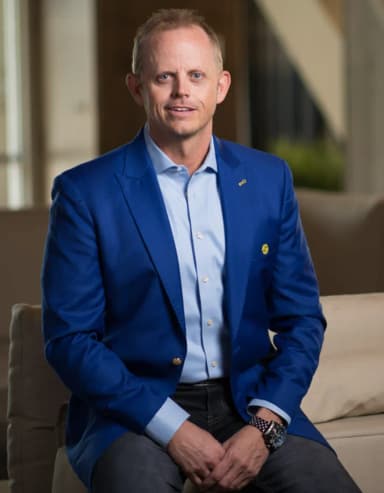
As the year winds down, it's easy to feel a collision of emotions: pride in what you accomplished, regret over what you didn't, anxiety about what comes next. George Wright III of The Daily Mastermind knows that feeling well. In this solo episode he cuts through the year-end noise and gives you seven practical habits you can start using right now, both to close out this year strong and to set yourself up for an extraordinary 2025.
George frames the whole conversation around a single idea: you can pursue your goals aggressively and still have a life worth living along the way. Quality over quantity. Presence over hustle. These seven habits are the bridge between where you are and the life you were meant to live.
How to Hack Successful People
The first habit isn't about technology. It's about people. George calls it "hacking people," meaning you study the patterns, rituals, and disciplines of people already living the life you want, whether that's financial freedom, more time, or better relationships, and you model what they do.
"I'm not going to try to figure it out myself. I'm just going to go and ideally follow the patterns, the rituals, the disciplines that the people are doing that are doing what I want to live."
You don't have to reinvent the wheel. Find your model. Watch what they do. Start doing the same.
Why Quality Sleep Changes Everything
George makes a point that many high achievers miss: the goal isn't more sleep, it's better sleep. Mental recovery is what powers your decision-making, creativity, and energy. To get quality sleep, address your environment first: cooler temperature, no work devices in the bedroom, and a consistent wind-down routine. Your body will adapt to the time you have available. What it won't adapt to is a chaotic, low-quality sleep environment.
This principle extends beyond sleep. George applies it to the whole year ahead: stop chasing more of everything and start demanding better quality in everything.
The Power of Creating Memories on Purpose
Think back to your best vacation, your best holiday, your best birthday. Chances are it wasn't the most expensive or the most elaborate. It was the one with the strongest emotional connection.
George's third habit is intentional memory creation. Emotions are what embed experiences into your mind, so your job is to be present enough to generate them. One practical tool he recommends: keep a book, list, or journal where you record memories as they happen. When you actively build a life full of meaningful moments, quality of life takes care of itself.
Starting a Meditation Practice That Actually Sticks
Mindfulness is something you can do anywhere. Meditation, in George's definition, is something you schedule. That distinction matters. A five-minute meditation in the morning or evening is not a luxury; it's a tool for centering your thoughts, reducing the mental noise of everything competing for your attention, and reclaiming a sense that your life is about you, not about everything pushing you around.
"If you can learn to be mindful... meditation, in my mind at least, is a thing. It's a period of time. It's something that you schedule into your day."
Don't overcomplicate the method. Guided, unguided, visualization, breathwork, whatever form works for you is the right form. The only requirement is consistency.
How Time Blocking Produces Breakthroughs
Task-switching is one of the biggest silent killers of productivity. George's fifth habit is time blocking, and his preferred unit is 90-minute blocks dedicated to a single task or project. The goal is to give one thing enough sustained attention that momentum builds and breakthroughs become possible.
George frames it with a simple principle: follow one course until successful. Block time around your "big rocks," the most important things you need to accomplish, and let smaller tasks fill in around those anchors.
Why Making Decisions Faster Is a Life Skill
Indecision drains more energy than a wrong decision ever will. George's sixth habit is to say yes faster and figure out the details as you go. Most of the time you won't know the best answer until you're already in motion.
"I would rather you failed your way to success than found a couple of really perfect ways to do things. There's no perfect thing. There's just progress to perfection."
Stop over-planning as a way to protect against bad outcomes. Let opportunities lead you rather than stress you out.
Journal for Focus, Not Just Expression
George's seventh and final habit is journaling, and he's specific about how to do it. Instead of using the journal as a place to dump problems, he uses it as a training tool for his brain. He starts by writing what he's grateful for. Then he records his wins. The goal is to condition your mind to scan for evidence of progress and possibility, not problems.
Journaling with specific intent, on paper, has measurable benefits for stress, productivity, and goal clarity. Schedule it like any other big rock. Don't try to fit it in around other things.
Action Steps
- Pick one person living the life you want and spend time this week studying their habits and daily routines.
- Audit your sleep environment: lower the temperature, remove work devices, and create a consistent pre-sleep routine.
- Schedule a daily meditation block, even five minutes, and put it on your calendar for the next 30 days.
- Identify your three biggest priorities for next year and block dedicated 90-minute time slots for them now.
- Start a daily journaling practice that opens with gratitude and records at least one win per day.
The end of the year is not a verdict. It's a transition point. George Wright III's message is clear: it's never too late to start living the life you were meant to live. Pick one of these seven habits today, and build from there.