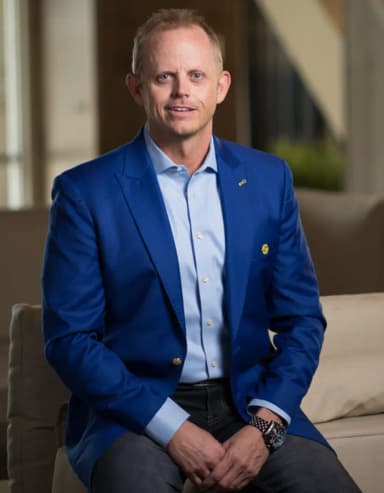
George Wright III, host of The Daily Mastermind, opens this episode with a message aimed at anyone who wants to grow their life or business at an exponential level: you will not get there on effort and control alone. Leadership is the missing lever, and the kind of leadership that creates 10X results is built on trust, not management.
The episode draws from concepts in *10x Is Easier Than 2x* by Dr. Benjamin Hardy and Dan Sullivan, but George goes further by offering his own take on what it actually means to lead in a way that multiplies your impact through others.
Why Trust Is the Foundation of 10X Leadership
The core principle, as George frames it, is simple: trust and transformation. Before your team can perform at a high level, they need to believe you are invested in their growth as individuals, not just in hitting your numbers.
"True leadership is a real abundant mentality that allows you to help people to grasp the vision of what you want to do and help to build and leverage and grow exponentially what it is you're working on."
When people feel trusted, they show up differently. They take ownership. They solve problems rather than wait for direction. That shift is where real leverage comes from.
Who, Not How: Rethinking the Path to Growth
One of the most practical mindset shifts George offers in this episode is moving from "how" thinking to "who" thinking. Most entrepreneurs and managers ask: how do I get to 10X? The better question is: who do I need to put in place?
"You need to figure out who it is you need to put in place, not how you're going to get to 10X. Because the people, the scalability of people through leadership is really going to be a huge, huge factor in your growth."
Scaling yourself is limited. Scaling through people is not. The moment you stop trying to figure out every process yourself and start identifying the right people to lead those processes, your ceiling rises dramatically.
How to Let Go of Control and Build a Self-Managing Team
Letting go is one of the hardest things for an entrepreneur or manager to do. George is direct about this. If you are micromanaging, you are limiting growth by design. A team that cannot make decisions without you cannot grow at 10X speed.
The shift requires giving your people autonomy: the freedom to make decisions, the permission to make mistakes, and the trust that you will not pull the rug out from under them when they take a risk. That kind of environment is what allows a company to self-manage, and self-managing companies are the ones that can scale.
Why Culture Is a Leadership Tool
George points to culture as one of the most underused levers in leadership. The policies you have in place, the way your team communicates, the collaborative environment you build or fail to build: all of it sends a message about what you actually value.
A culture of trust and respect does not happen by accident. It is built through consistent behavior. When you invest in your people's growth, reward innovative thinking, and recognize those who pursue solutions over problems, you are actively constructing the culture that makes 10X possible.
How to Reward Innovation and Creative Problem-Solving
One of the clearest signals you can send to your team is how you respond when someone thinks outside the box. George encourages leaders to actively reward that behavior, not just tolerate it.
If someone brings a creative solution, recognize it publicly. If someone pursues a passion project that aligns with your mission, support it. These signals communicate that your culture is one of growth, not compliance. That is the kind of environment that attracts and retains the people you need to scale.
Action Steps
- Identify one area where you are micromanaging and consciously hand it off to someone on your team this week.
- Invest in your people's growth by sharing your vision and asking what they want to accomplish.
- Build systems that give your team the autonomy to make decisions without requiring your approval at every step.
- Recognize and reward creative problem-solving publicly, consistently, and specifically.
- Audit your culture: do your policies and communication style reinforce trust, or do they signal control?
Leadership is not about being the smartest person in the room or working the hardest. It is about creating an environment where others can grow, make decisions, and move your shared vision forward. As George puts it, it is learning to step back so that attraction can do what effort alone never could. It is never too late to start living the life you were meant to live.