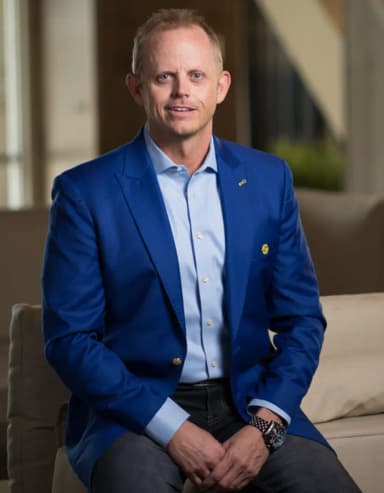
All right, welcome back to The Daily Mastermind, George Wright III with your daily dose of inspiration, motivation, and education. And we're joined in the studio today with a good friend and somebody you are going to love, Ricky Frank. How are you doing, brother? I'm doing great. Thanks for having me. It's awesome. Yeah, this is good. It's been a coordination for us to put this together, but it's going to be well worth it. You've got a company and you've been doing this for like 37 years. We're going to jump right into it. When you talk about unlocking the ultimate edge for people, this is a topic that I think resonates really, really much in the business arena and with our podcast and our listeners, because we're always talking about unleashing your potential and creating your best life. And you've literally been living and breathing and doing that for like 37 years. In fact, you had a company that grew to number one on the Inc. 500 list. Everybody talks about 10x and things like that you went 36,000 that's what three zeros it's 36,000 so do me a favor and I'm gonna let you just tell our listeners a little bit about yourself what kind of led you up to this because I mean that could make for many many podcast episodes but just give us kind of a little bit of your backdrop so they understand where you came from sure sure I never would expect that I'd be in this arena for sure it kind of I think sometimes your career finds you yeah in a million years I never would have thought this but um I was trying to pursue an NFL career and And really, if you know, the NFL stands for not for long for most of us. For some people who had longer careers, for me it was in NFL not for long, but I had just been cut by the Dallas Cowboys. And I found myself in my Volkswagen driving back to New Jersey where I'm from going, what do I do now? Like a lot of people, right? Who come out of sports. Yeah. And I'm living in grandpa's basement. He said, you know, I didn't have a whole lot of money. And my uncle worked for Southwestern Bell and had a, was the GM for a beeper company. So Beeper was the big, the Beepers were the big technology back in the day. Okay. So he got me a job as an account executive, which is just a salesman. And I got a bag of Beepers and I just traveled around the tri-state area. Sometimes it was two, three hours to an appointment. Just think, I'm only going about 10 miles, but it would take you two, three hours. Oh yeah, for sure. And I had a clutch in the day, you know, and I'm just like going, oh my gosh. I mean, for me, it was hard because I'm like, I was just trying to be an NFL player. Right. And I'm a Beeper salesman in a parking lot selling to who knows who. And then I was in a high rise in New York City selling to some Fortune 500 company. And I had some friends that said, you know, you got to come see this guy. He's just this personal growth and development. Like I grew up in New Jersey, Archie Bunker. My grandpa was Archie Bunker. You don't need that stuff. Get a job. Get good grades. Go get it. You know, that was the plan, right? The 40-40 plan. 40 hours a week for 40 years. That was, you know, planted in my brain. And I was very resistant to it. And I finally, after a month of my friends bug me, I went down and I saw this guy begin to speak. And I'm still like New Jersey's the show me state, by the way. And this is after a major setback. you get cut by the cowboys you're like all right i'm just here trying to figure this out here i am trying to be an elite athlete got it i had trained and you know all the weight lifting and speed training all that stuff so the letdowns it's real so you're going from here to here going okay i got to survive what do i do so i i wasn't the happiest of people in that regard but i had a job but you were open enough that you went to this event to kind of hear what this guy's saying right exactly but it took a month for them to convince me to go all right i'll never forget it was the holiday in Bridgewater, New Jersey. It's like your first kiss. You don't forget your first meeting. Yeah. So I went and again, arms crossed, typical New Jersey, New York attitude. Like here I am broke. I'm making like eight or 900 bucks a month selling papers. Yeah. And here I am with the successful dude in front of the room. He was dressed Perry Ellis and nice stuff. And I could tell, but I'm still, and he said one thing to me, says, Ricky, if you keep thinking like you're thinking and doing what you're doing, where are you going to be in a year, five years, 10 years, 20 years. And I was like, I looked at my grandpa who was living on social security, which was nothing then. This is 1987, 1988. I looked at my dad and the track he was on and I went, you know, he's making some good points here. So long story short, from there on, I began to listen to him. And when it was done, I followed him into the bathroom like a moron. And I said, I got to talk. He goes, can I finish my business? We'll talk outside. But it hit me. There's a saying, when the student's ready, the teacher will appear. Yeah. The teacher appeared for me. I mean, out of left field. And this was like the start of your personal development growth journey too, right? Total. Now, I had read some books earlier. My first book I had read, As a Man Thinketh, by James Allen. Phenomenal book. Act as a Blossom of Thaw, you know, Useless Weed Seeds. I had read that. So there was something fermenting, but I didn't know how to express it or what to do with it. So this guy was up there talking and living it and I went, I got to be around him. So he said, listen, when I'm done, we'll meet in the restaurant and we'll figure out a game plan. And that's a a whole other story of having that meeting with him and how it worked out working together. But that is what opened my mind to listen, if I want more, I got to be more. I got to change how I'm thinking. And even though my design on my plan was this career. Well, but it was peak performance, athletic performance, ultimate potential there. Exactly. And now you're pivoting into this whole world of personal development, ultimate performance, correct? And finding someone who could teach. that's something i realized yeah good thing about being an athlete we're coachable and teachable yeah we're like trained seals sometimes you know you know they'll throw you a fish go and perform because a coach you know you want the pat on the back and the attaboy you don't want to be screamed at yeah so it was it was it was perfect to come into a guy like that going okay i'm ready to perform coach put me in what do i got to do where's the playbook yeah so a lot of similar from from an athletic standpoint when it's good that you you you make it sound like you're a very uh teachable learnable person. And just for those listening, obviously, you've gone on to speak around the world in front of big audiences, some of the biggest names, and become a peak performance coach and trainer and platform speaker and individual that's been very, very successful in those arenas. Yep. And because I was willing to be coachable and teachable. One thing my mentor did in the beginning when we go to training is it was, I want you to write down 10 things you want to learn today. And every time and every single time on my yellow line notepad, I would write how to stay coachable and teachable, how to stay coachable and teachable. I wanted to stay in that frame of mind to be coachable and teachable, to ever learn, to get better and get better. It's like reps on the football field that we had. How do I run faster? How do I catch better? How do I block better? How do I do stuff better? You're an individual that you're still growing today. And I think a lot of people get tapped out and they start to realize they start getting the ego, especially if you're having a lot of success and you don't actually continue to be teachable, which you were. But I want to back up for a second because you've got a great personality. You've got a lot of energy. A lot of people thinking, oh, the guy was an NFL player. But you had a pretty big setback. You had a huge setback. And obviously, one of the most important principles in business is resilience. And I know you train and teach on that. So I'm curious, were you just so open to opportunity or was there a reason that you decided you wanted to kind of step back and do things. What was it that helped you to be resilient and kind of go into this new career path that now for 37 years you've been dominating? That's a good point. In sports failure is fertilizer You failing a lot You might lose that last rep but then you got to forget it right We always call it next play next play I got to go hey he just beat me or I just beat him but that play's over and gone, next play. So sports just training. I played all the sports. So that's what it was, next play mentality. And I didn't realize what I was doing. I was 25, 26 years old. But you had been conditioned from sports to be resilient. I had been programmed through sports my whole life, and then at the college level, than trying to play in the professional level. So you had that background, but like as you were talking to people throughout, so we have a lot of entrepreneurs, CEOs, founders, high achievers in our, and in business. I mean, look, you're talking setbacks every day of the week. How do you work with people like that that don't have that training background? Because I want to get into some of these other things, but you had that. How do people that you're working with in business build that same thing? Is it the same? Is it just conditioning and practice and things like that? So in one of my taglines with my company, forward fast, accelerate your success. It's build a mindset and a skill set for life. And I ask people, what's more important, your mindset, your skill set, and you'll have 50-50 of what it is. But it is mindset and you can train your mindset. One of the things I say at a lot of my trainings, it says, we've been born to succeed, but we've been programmed to fail. I'm telling you, by the age five, most people have heard no more than they've heard yes. They've been doubted more than they've been promoted to do something. So you can rewire. I spent a lot of time rewiring people's framework in their brain. And the programming they've had up to that point. And the programming they have, which a lot of it is stinking, as Norman Vincent Peale says, one of my mentors, stinking thinking. So how do you rewire? How do you reframe that sort of information for people who are used to, I failed, okay, it's done. It's like, I met a guy one time. Can I share this story really quick? Yeah, yeah, do it. This is a really good story. This is one of the most principles. So I served a mission for my church. This is 1981. I am knocking doors in the middle of Kansas. Freezing cold day. I just wanted to get into a warm door. We failed at every door that we went to. We're knocking and it slammed the door, knocking, slammed the door, nobody answered. And all the houses in Kansas were like a half a mile apart. I'm freezing. I didn't have a winter jacket. I had one of those little FBI kind of London fog jackets. My companion, he was all dressed up nice and warm. I'm cold. Anyways, we knock on one door. This guy, the profound, this is one of the things you got me to think about. He opens the door and he looks like the guy from Tool Time. Oh yeah, yeah, yeah. Flannel shirt. He goes, come on in. And I was just like, oh, I'm out of the cold. Oh my gosh, this is great. I didn't care about the message. I was supposed to be there. I just was freezing cold on this cold November, December day, whatever it is. Anyway, I walk in and this is going to sound weird, but I'm an artist. Okay. My whole family is an artist. Hallmark cars wanted me to come and just, it's a family gift. So I walk in and all of a sudden I see all this artwork that he has on all of his walls of his living room. This is a little, we're in Kansas. This wasn't some expensive house. Yeah. And then he had little carry-o cabinets with sculptures and i'm just looking around i'm going from picture to picture to picture to picture and i go and i remember this is the profound for me 1981 i said how did you get so good and this guy looks at me go son you're gonna make a thousand mistakes hurry up and make them fail faster fail faster yeah and i realized you know this is a lesson you're learning in the middle of nowhere for nothing right yeah and i realized you're good That's the one thing I'm not afraid of. And I teach my football players that I coached in high school. I don't mind throwing a thousand balls right now. I know in those thousand balls, I'm going to get better and better and better. Or particular plays that we run. And it's the same thing in business of a mindset. If you're doing a pitch to someone, how to overcome the nervousness, the obstacle. When they give you an objection, what do you say? What do you do? How do you look? How do you feel? What's your energy? All those kind of things. It's interesting because your ability to do that. At the end of the day, we all want to win. And the goal is to win a lot of times and how you frame that is important. But how you view failure is really a huge principle in business, in life, personal business, family, whatever it is. How you view failure and how you deal with failure and not just from a resilience level, but how you view it. And you just said, you know, view failure as the gateway to success. You've got to get through it as much as you can. You've got to stack them on top of each other. They are in order to be successful. You've got to fail. And I just early on realized, I think from sports that you're going to fail and you got to bounce back. You can't go pout, you know, and you're, and, you know, you're kind of semi attention seeking and you have this thing of, I want to go compete. And some people don't have that, that, that killer edge or that ultimate edge. I'm trying to get people, it's okay to, to turn that on. You got to be hungry. How do you define ultimate edge? Because that's obviously a core framework of what you teach. Sure. When you say ultimate edge, people might be thinking like, oh, you know, the ultimate life. How do you define it? I think it's not seeing yourself as you are, but it's seeing yourself as what you can and should be and helping people to get to where they should be. A lot of people, again, in their mind, I tell people this, I do in one of my trainings, in their mind, I say, pretend you're playing a video. What video or what movie is going on in your brain? Is it Friday the 13th or is it Rocky climbing up the steps and doing this? And a lot of people have the wrong video playing. And the perception that they're giving people is not Rocky, I'm a champion. this I'm self defeated I'm not powerful enough and that sounds kind of corny and minor but you've got to get you've got to reprogram and rewire people's mindsets so that they can start seeing themselves as they can be and should be and not with mom dad teacher or even I've had some bad coaches for their life yeah I had one college coach that made me feel this small and and he helped me in the end of who how I teach and and and what I do today as I said I never want to make another human being feel like this college coach made me feel and it helped me in not only coaching the thousands of people i have over the years but also the football players that i coach and how i try to keep people i don't want people to feel like that you know what's interesting is i found over time is um the more i can get focused on and and that clear picture of who i want to be or who i'm going to be or who you're going to be or who you're trying to attain right yep and operate right now from that framework, that's where you don't accept the excuses. Because right now, people are dealing and building their business and operating in life with their own current beliefs. And where you are is where you've gotten to because of what you can do. But where you're going to be in the future is going to be at a higher level. And if you operate in that particular arena, you're going to perform more. So tell me about what do you do with people when you take them through your framework with ultimately, basically getting to that state? You got to meet them where they're at, you're dealing with a lot of people that are, you know, and correct me if I'm wrong, but I've met some eight, nine figure people that have the same issues that five, six, seven figure people. Sure. And it's not a money factor. So where do you start with somebody? What do you do with them? And what's your framework you kind of work with? I have a, my first thing is I have a wealth wheel. It looks just like a wheel. And in it, it has emotional, spiritual, mental, physical, financial, So full life, full life picture. So it's a natural wheel and then on it is just a graph from zero to 10. And I say graph this out. So think of a graph paper the little lines on a graph So where your financial life Okay you a nine But where your emotional life A three Where your mental life I a four Where your social life I a one And then I have them draw it out and guess what it looks like Most people lives look like a star So you're right. Some people might have great financial parts of their lives, but everything else, their family, social, emotional is so down and dead. And it helps them realize going, okay, I really am there. And all those areas affect the other areas as well, right? A hundred percent. I like how you said wealth wheel, by the way, because your wealth is all those areas. it's not just your income. Exactly. Rich is all of those things. Now, sometimes you got to get out of balance to get in balance when you're pursuing some different things. But I see a lot of people, like you said, high figure earners who are out of balance. It's all about money, money, money, but they're so unhappy and unbalanced in this area is that they're not going to be able to achieve what they want to achieve. And there's other people who are happier this way, but they don't have any financial goals. And then the next part of what I do is I jump right into people's goals. Chapter four of Think or Grow Rich was the big life changer for me. When I got involved with what I did 37 years ago, I had started reading it and I went from making eight, nine hundred bucks a month, about 14 grand a month. So it was amazing, but it wasn't me. And people say, that's great. I go, no, I listened to what someone else said. And guess what? I did what, like my coach, I did what I was told to do. Now, did I do it really well? Probably not. I did 2,200 meetings my first year, 2,200. They probably were all terrible, but a guy gave me a You fell faster though too. These seven steps and I followed these seven steps and I did it over and over and over again. So a month into it, I finally get to chapter four. It's auto-suggestion. Oh yeah, perfect. It's the blueprint for it all. People go, oh, I don't like Think or Grow Rich. I'm like, how do you not like Think or Grow Rich? Yeah. Chapter four talks about all- One of the most sold books of all time outside the Bible. Exactly. But chapter four, literally. So when I get people through the wealth field, okay, where are you at? They're like, yeah. It helps them to go, yeah, I'm out of balance. I need some help. Yeah, they recognize it. So now we go through some goal setting here and I say, chapter four says, write down what you want specifically. You want a drink? What do you want to drink? Your brain's a super computer. You got to tell your brain an X and O, one and a zero, whatever it is, right? Kind of a thing. So you got to write down what you want, what you're going to do in order to get it, the timeframe, you're going to do it, and then go adjust. I'm kind of paraphrasing, and then you're going to read it twice a day, especially. And when you're supposed to read it in the morning and at night, because your conscious mind is sleepy, which is all the programming and all the garbage that blocks out all the good stuff. Because what runs us at the end of the day, our super computers run by the subconscious mind. So however we've been programmed from little kids on up, we got to try to break that. So I followed chapter four, auto suggestion to a T. And I wrote these things down, I put a car on the mirror, but I had these little cards. And as soon as I got up, I was tired and I read them. And you know what? And after a couple of weeks, my second month of doing the business that I'd gotten involved in, my goal was to make $60,000. Now think about it. I was living in Grandpa's basement making $800 a month. Yeah, yeah, that was a stretch. Way stretched. Way stretched, and I made $14,000. Now here I am. Who am I to think, okay, I'm going to make $60,000? But I'm reading Thinko-Gurichico. Anything's possible. Faith, belief. If you put faith and work together, all those sorts of stuff. And I read these cards, and I'm thinking, I'm making $60,000. Now think about the people that were coming in to my office. I had all these ads going in the New York area. Attitude up the wazoo. People dressed in suits, but my ads were sales professionals wanted and I have people coming in there and I'm doing a presentation going. But there's a lot of people I know that are very well familiar with that step and yet they don't continue to do it. So what creates the difference maker for somebody that's consistent and somebody that continues to do it? Because that's the key difference, right? Continuing to maintain consistency. And the word is discipline. Motivation is temporary. Discipline is permanent. I don't feel like working out today, but I got to work out today. Yeah. Motivation is just that little instant gratification thing. Discipline is a thing that you got to get into and you got to understand and have a regiment too. And with those cards, there was a regiment. I read them in the morning and I read them in the morning. But here's what it does. It transforms your mind. After two or three weeks of reading, I go, I'm going to make 60 grand this month. Now think about it. So that's an important point I want to point out for our listeners. The activity is what transforms your mind then your mind itself is also operating at a different level so sometimes it's not necessarily the step you're doing as much as the practice the discipline and the the training that you do for your mind right which is correct best weapon and you're inputting correct information about it your mind will believe it yeah you know and and i believe that so so after a couple weeks when people come in and give me grief these these let me think about it i was a beeper salesman even though i was a big tall football player i was scared to death of these guys coming in the meetings all what's this about this is this that yeah but but all of a sudden i'm like oh wait a minute in my brain i didn't say this out loud but i went wait a minute i'm making 60 grand this month you just circled the help wanted what are you doing in my meeting and it gave me this i didn't come across cocky yeah but this belief system the rewiring yeah that we talk about and that helped me and you know the end of the story is we got paid once a month at that time what do you think i expected to see my commission check that month well you expected to see 60. yeah yeah no i failed they only saw 40. You know, my first response was, is why didn't I say a hundred? Maybe I would have made the 60. So there are a lot of little valuable lessons. Failure way to success. Failure way up. Yeah. Failure way up. So that lesson taught me a lot about, A, how to reprogram, rewire the mind. I realized that my mind had been programmed, not always on purpose by parents and teachers, but it was a system. Go to school, get good grades, get a job, do that for the rest of your life. That was the mentality for the age group that I grew up in, you know, kind of a thing. So what about, I'm curious about, so we talk about daily rituals as a really important factor on the Daily Mastermind quite a bit. What daily rituals do you use right now and how do you incorporate them into your day? Because I'm sure to this day you're still doing certain things that you've consistently done. What are some of the ones that you've had? I still have them, and we advance this, have these blue cards. And I have how I see myself and my affirmations on them and I read them spiritually, emotional. So that wealth wheel, I read them every single day. Wow. In the morning and the night. Wow. I exercise. ice. I ride my bike for 20 miles and I go hit the gym every day. So those disciplines from the physical side. And I think for you, those are the ones that have made a difference. And I also find that a lot of people, you got to play to your strengths, right? Some people can be more consistent in the morning, some in the evening, some it's about working out for me. I got to get into the gym and get going. And that gets my mind and everything going. Other people like to journal and meditate in the morning. Me, I got to get moving, right? Sure. I'm curious because there's there's the personal development side and then there's the business development side and you work with both with individuals how do you help them to balance that out from the business and personal side for for you know personal development growth versus business growth because they go hand in hand right sure so growing a company to number one in ink magazine and other businesses that i've owned you learn how to run a business yeah and there's a format and a process whatever it is i own cell phone stores on the amusement park i'm into food business along with other stuff obviously that i've done in the coaching space and then growing that company that we did so there's things you got to do as kind of an executive, as the CEO type business minded person, the daily things, that doesn change that you have to have your organization doing And that why we went number one We had the power of duplication with our sales force and our executives and our in and our outward facing to our consumers A lot of leadership growth Everybody did the same thing you know sort of thing But on the personal side, if you're self-disciplined, right, your appetites are in control of, of taking care of yourself, taking care of your mind, taking care of your family, having your priorities right. And a lot of people don't do that. They, and, and, and it's temporary. And like you, you made a fantastic point. How do you make, I call them daily disciplines. Yeah. You know, and I have one of my little segments I do in training is called Leadership Locker Room. And it's how do you make these daily disciplines as an athlete? How am I going to go out and practice and get better each rep? Where we tell, make these reps count. Because in football, you have certain periods. You've got 15 minutes. You don't get them back. And when the fourth quarter ends, you don't get a fifth quarter in football. You don't get an extra minute in that. It's over. How do you make all those counts? So from a personal side, I think it's important that you have your personal development in order. and then it's going to equate to your business development. And you're also set an example for your organization because you're going to go, wait a minute. As a leader, yeah, you need to. Or she is doing and it's going to rub off on them. And you're going to more important, you're going to attract the right people. How we became so successful is we attracted the right kind of people. And I go back to James Allen. You attract that which you are. As a man thinketh, so is he, but you also attract as you are. And as you work on yourself, personal development, growth and learning, all of a sudden you attract people who are in that same mindset and you want be around those people because they're more collaborative, they're more supportive. It's so interesting because timeless principles, right? I talk a lot on our podcast about one of my favorite quotes, a Jim Rohn quote, obviously, because I was pursuing success, pursuing success to create the life I wanted. And then I finally got to that point in my life where it was like, success is not to be pursued, it's to be attracted by the person you become. So it does go hand in hand. So I'm curious, a lot of people might be out there and they may be thinking, okay, I'm stuck. Maybe at a high level, maybe at an average level, but they're not making the change. They're not doing the discipline. They're not doing what they want. And most times I found they know what it is. Sure. What would you say, like maybe as maybe some parting advice, what would you say to help kind of shake people into taking the first step or where would you start? Because you've got people you talk to all the time. What do they need to do to start leveling up? What do they need to do next? Where do they start to build the momentum? No, that's a great question. I'm going to give you one quick answer. Find a coach. Find somebody who knows more than you who can show you how to do it. If you want to be a brain surgeon, are you going to go to the plumber? If you want to be a plumber, you're going to the brain surgeon. If you want to get better at whatever it is that you are, find somebody who can help you to do that, who's done that, who's been there and work with them. And that's what coaches and trainers do. And it sounds kind of true. At all levels, right? Elite athletes still have coaches and trainers and they do that for that reason. I think that's a great piece of The billionaires still have them. I have a rising achievers program. I have an elite program, elite mentor program. So I have different levels for different people of where they're like meeting where they're at or where they want to go. But no matter where you're at, if you think you're done growing, then I feel bad for you in the sense of wherever you're at. But find someone who can help you to do it. One thing I've realized, and I put a couple of reels out this week talking about accountability, just being able to come back, being able to report back. Hey, George, you're my coach. okay you know what I made 10 calls this week see one thing with the cards that I did when I read you know chapter four one thing is I was accountable to myself I mean I had my mentor yeah but I was going I will talk to 10 people this week I'm going to take 20 phone calls I'm going to do 13 meetings whatever it is so I had some of the self-accountability but when you have someone else to report back to hey I got to talk to George on Friday uh did I that I am I going to meet his expectations plus you said something that's really key and this is what a lot of people miss they go try to get an accountability partner, but it's not someone that is a successful where they want to be person. When you put those two things together, all of a sudden the accountability takes on a new meaning and that accountability will be in the right area. You don't just need somebody telling you what to do, when to do it and how to do it. You need somebody telling you what to do on the right things in the right area because they're there, they've been there, they've done that and they know where you're going from. They also could probably relate to where you are, right? Correct. I have this thing called BizFit Pro where I give people called BizFit Pro. It's a key indicators of daily activities that you should be doing and you can adjust them. But ones that I see that all successful people do. If you look at elite performers in sports and elite performers in business, there's commonality in their daily activities. So I put together a program that has those in there. So guess what? Again, find somebody who has what you want and do what they do. Begin to mimic and to begin to mock and to model and do the things that they do. and if you do it consistently and you'll do it, I call it consistency of effort. If you'll put the discipline into that, you'll see change and you're like, why can't you figure that out on your own? I think it's key right now. A lot of people are like, I just need to gut it out, discipline myself. A lot of times you just can't do it on your own. I'm not saying you can't, but I think that if you want to level up, finding a coach or mentor, I really like that. That's great advice. So before we take off, where's the best way for people to connect with you? Because I think we're going to be, just so everybody's listening and knows this, we're going to be doing some things. I've been talking to Ricky quite a bit about our authority media marketing company. So we've got a lot of training that's going to be coming out there. We've got some real big names we're going to be bringing on as guests. So we're going to be working together on that. But where can they find you right now? If they want to connect with you, just kind of be able to, I love the concept of belief transference. In other words, when you surround yourself around people that are successful, that have the energy, there's that energy transference, belief transference. It's like being around people that are super successful, you can't help but think it's easy, right? Right. Where do they connect with you? So you can go to Calendly and find me, Edutainer or Ricky Frank. You can go to 4FestNow.com. My phone number is on there. My Calendly is on there. Well, if you don't mind, I'll put those in the show notes as well. Is that cool? Yeah, of course. And I tell people, you're not going to get an AI bot. You're not getting an AI assistant. You get to me. Some of these other cats that are out there right now, they're so big, you're not going to get a chance to go and work with them personally. So you get direct response to me. You've got the experience, but you've got the energy and like I've learned it. I always like, you know, we could be going all day long doing things and get together and all of a sudden, you know, the energy comes. So I'll put links in there. And then if you don't mind, I'd love to even invite you back to kind of talk a deep dive with our Academy and some of our Academy members that we're going to be doing this weekend. So anyway, listen, for those of you that are listening, do me a favor and share the show. It'd mean the world to me. It'd help other people. There's people out there that are stuck, that are looking for things. We want to be able to do the message and grow the message. But at the same time, hit me up on the daily mastermind. Let me know what you're struggling with. Let me know what you're winning at. Let's celebrate some wins. And like I always say, you know, it's never too late to start living the life that you're meant to live. And hopefully what we've done today is give you just some energy, some positivity, some direction and strategies, maybe even some tactics that'll help you. So Ricky, appreciate you being on the show. Thank you for that. Appreciate you being here. Okay, guys, we'll talk to you soon. Talk to you tomorrow. OKAY GOOP!!!!