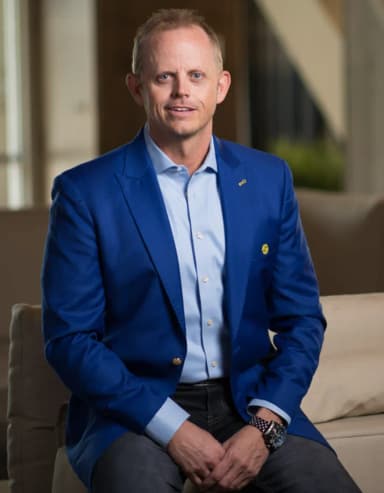
Welcome back to The Daily Mastermind, everyone. My name is George Wright III. I am your host with your daily dose of inspiration, motivation, and education. And we are joined by a guest today. You're going to be super excited because these are topics, as you know from my background in sales and marketing, that I really love. And so every once in a while, I like to get someone who's got the expertise in these areas. And Luis Baez is one of those individuals. And I tell you, I'm going to give you a quick introduction, but just so that all of you understand a little bit more about Luis, he's a sales strategist and consultant. He's really dedicated his life to helping business owners and employees really build themselves up. And in this whole vein of sales enablement, he's worked, you know, he worked, we'll get his background, but years in the Silicon Valley type startups, you know, you think LinkedIn, you know, Google, Uber, Tesla, But he now teaches business owners how to scale their revenues and have impact selling high ticket offers, as well as just really getting into the sales strategy. So he's the global director of revenue enablement at Deputy, and he's an author. He's a speaker. He's got some amazing courses. But overall, just a very, very skilled individual. So, Luis, welcome to the show. Thank you so very much for having me, my friend. And happy Thursday to see you. Yeah, you know, it's so great to be able to bring guests on because I always tell people, if you want to learn more and grow more, you've got to be able to grow yourself. And sales is one of those things people sometimes shy away from, but whether they're a professional salesman or not, our listeners are CEOs, high achievers, business owners. It's an area that really is critical to everything. And it does intersect with marketing, operations, finance, and everything else. And so we'll get into a lot of that about that. But do me a favor, help help our listeners just get the backstory on you. Give us give us kind of like where you came from and what took you down this road so they get a good frame of reference of who you are and what you're all about. Yeah, no, I appreciate the question. You know, the very long story short is that I was born in Puerto Rico, raised in the South Bronx, 10 minutes away from Yankee Stadium. shout out to my boys. I am someone that grew up in poverty and I did what I needed to do, worked as hard as I needed to work, asked for as much help as I needed along the way. And I'm the first person in my family to hold a high school diploma, the first to go off to college, the first to hold a passport, the first to own a business. And I've developed a career in sales after failing at being a doctor and failing at being a lawyer because I really didn't enjoy those path, I ended up in business and I built a career beyond my wildest dreams, falling into corporate sales, selling ads, selling software and renewable energy, working, we're recruited at companies like LinkedIn, Google, Uber, and Tesla. I've worked as an enterprise sales rep carrying a book of business over 100 million. I've also worked as a sales leader managing a team of over 100 across a continent. And now I dedicate my time to being that sort of trainer of the next sales Olympian. And I'm always looking to collaborate with businesses that are invested in their people and in their processes and facilitating really fluid experiences for their customers. I love that. I love that. You said something I thought was really key behind all those, you know, amazing accomplishments. You know, you said, and a lot of people don't talk about, I failed as a doctor, lawyer, but you also added to that because you didn't enjoy it. And I think that's one of the keys to why people are not successful. And I think you also brought up a great point is that you found something you were super successful in, and now you're pivoting into utilizing that skill to help other people and make impact. So I love that. And there's a lot probably we could unpack with the failure and the reason you pivoted into this. But what was one of that? Was there a big aha moment? And I'm just kind of curious that made you realize sales is something that I'm good at because you've got some success out of it. But doctor, lawyer, sales, like, I mean, that kind of is a big gap there. And I'm just curious, was there an aha moment? Because people that might be doing things right now, they don't enjoy, they don't love. They want to find something that they're passionate about, like you said, to be able to create impact. And they just don't know, how am I going to know when that's the point, right? Was there a point that you were like, ah, you know what? I'm actually pretty good at this. This could work. You know, I feel like the first aha was actually brought to me. It didn't like, it wasn't something that occurred to me. It was something that was brought to my attention. I had just dropped out of law school after realizing it wasn't for me. You know, that's for the birds. Right. And also working as an assistant to a judge, I needed to make a pivot. I'm like, not only am I done with law school, but I'm really just done with this industry. And my best friend at the time was working for the marketing department at WebMD. and you know i'm sitting there over glasses of wine going i'm lost in the sauce can't figure out the flavor don't know what i want to be when i grow up and she looks at me and she's like you don't recognize this about yourself because you're like mr introvert but you have this magnetism when you do show up and when you do light up people gravitate towards you they'll listen and hang on to everything that you say and i just wonder if maybe sales might be your thing you don't even realize it and so you know that's huge yeah like not something that i recognized about myself because in my mind i'm pursuing feverishly like all these other sort of life and career outcomes and so she submitted my resume set me up for an interview i do nothing about tech advertising sales working in corporate right i was out here working non-profit and government And I went through eight rounds of interviews not knowing what I was doing or what I was talking about And at the end of that experience I got the job And that was probably the first hint that I got at my capacity to at least sell myself and get my foot in the door. So I think that that was my first aha about like, can I do sale? Wow. You know, I, that is, there's some really great lessons in there if you're listening to this, because I got to point out, you know, you know, listen, guys, you hear me say it all the time, success leaves clues, right? So sometimes you don't know what you don't know and having someone else help to point out. And that's why mentors, consultants, you know, individuals, I always talk about this, not because I just think it, you know, it's a smart move, which it is, but sometimes you can't see yourself as well as other people can. And, and there's a, there's a fine line between being influenced by other people and, and, and soliciting feedback, but learning from someone else, what you might have. And then the other thing you said is like, look, you had no skills in that arena. You didn't know what you were doing or how you were doing it. You basically made a decision and you figured it out along the way. And now fast forward, you've got expertise. Like you said, you've managed to book a business, hundreds of millions of dollars, hundreds of people, and you're starting to kind of pull that together to help other people. So let's unpack that a minute. So when you say sales, A lot of people think of sales in a particular way. Do you mostly deal with sales people or do you teach sales all throughout the organization? What's your current focus there? Yeah, that's an excellent question. I teach sales across the entire organization, right? So everyone, the immediate sort of lens when I step into a company is our reps need to generate more sales. We need to close more. We need more leads, figure this out. Right. And like, I have to unpack some of that and get to the bottom of like, okay, well, first of all, do they have what they need to sell? Are they given permission to sell? Are they certified and trained so they have the confidence to sell? Right. And then let's unpack what's required to make all those things happen. Right. I need this for marketing. I need operations implementing over here. Right. We've got to build this connective tissue to then arrive at this ideal state of everyone humming along and closing. Right. And so for me to get all of this done, yes, I've got to implement a strategy and guide and coach and teach across all functions within a company to get all ducks in a row and everyone moving in the same direction. I love that. And I think there are probably a lot, I'm guessing most of the people listening to this episode are also either in sales or directly related to sales or they're business owners. They need to understand sales. And, you know, and I wish we had a time to really get into a whole bunch of strategies and tactics, but there's a direction I wanted to go that I kind of mentioned to you before, and I think would be very helpful for people that might be listening along these lines of sales. Because when it comes to sales, there's the setup, the techniques, the skill development, the training, which is all stuff. By the way, if you're listening to this, we're going to have some links and some resources you can go to. But one of the biggest challenges, and I like to be a problem solver. I know you're a problem solver. One of the biggest challenges people have in sales is burnout or stress or hitting roadblocks or, you know, what do you call it? Like just, you're just in a funk, right? So, and I know that's something that you have some comments and expertise and knowledge in. Let's assume that a lot of people, whether they're business owners, CEOs, or salespeople hit that. They might be struggling. There's a lot of people right now struggling with burnout or overload or stress or in the funk. What do you say to somebody like that? What are some things, some real specific things we can give people to help them through stuff like that? Yeah. When I'm working with an executive who is on the verge or currently experiencing burnout, the first thing we've got to do is like give that permission to just unplug. Right. So the first thing I'm looking for is can you call out? Can you carve out three hours? Like before we start to do the work, there needs to be time intentionally dedicated to doing the work. Right. So that's step one. And then step two is, right, like recognizing the symptoms of burnout. Right. And I'll go through a checklist. Like, how's the sleep? How's the appetite? What's going on here? What's going on there? Right. We'll do a deeper dive just so that they have a moment to look in the mirror and recognize like, wait, hold on. Like things are misaligned. Things need to be recalibrated and reassessed. Then you have to take them through a psychological process, right? You've got to take a step back and reconnect with why are you doing this work? Right. And has that why shifted since you started? Yeah. Maybe you built this business with the intention of solving a problem, but right now you're drowning financially and your only focus is trying to generate revenue. That's a desperation that I'm often up against when I'm working. And so we need to really reground ourselves and reground ourselves like around that, that why. Yeah. And let's think about where we headed. Like, where do we need to go next? What's the next logical step, right? In order to find you some relief and in order to make some progress and to feel a sense of momentum getting you out of this, right? So let's call in the therapist. Let's schedule the workouts with the buddies. Let's plan time with family, right? Those are things that are going to be really more immediate in a hierarchy of need before we get into trying to put out the fire in business. I love it. Yeah, I love it because you said it's a process and I think you're right. I think so many people are like, what's my silver bullet to fix this burnout? I just need to get a big deal. I need to get a revenue. No, I believe you're absolutely right. It's a process of pulling it apart, understand what it is. And then you also said psychological, and I think you're right. I think burnout stress overwhelm funk it almost 99 of the time mindset And it funny because as I was talking to the CEO of a million company actually here locally the other day I was doing an interview with him and this guy crushing it He got his helicopter He's got thousands of sales reps. I mean, they're killing it. And he's like, man, I'm burnt out. I'm just burned out. And he says, but I got a mentor. And the first thing he tells me every time I'm burned out is he said, you're too attached to the outcome. You're just too attached to the outcome. Meaning, you know, you got into this business. Like you said, you've got a reason you're doing it. You've got a passion behind why you're doing what you're doing or what you're trying to, maybe even it's not even what you're doing. It's what you're trying to create in your life. And you've lost sight of that and you're burned out. And it's because you're too attached to the wrong thing. You're attached to some future outcome. You're not getting the sales. You're not going to make money. You're dealing with commission, whatever it is. And so I think you hit it a hundred percent. You unplug, you assess, you get around the mindset. What did you, where are you at? What are you doing? You get refocused on what's important to you. and then the steps moving forward. So I couldn't agree more. I think that is absolutely a big thing. Do you find right now, especially now, maybe post-pandemic and even things like this, are people, and it might just be me, I'm just throwing this out. Do you find more and more people are getting burned out? They're more and more overwhelmed? Or is that just me? Or is that just a common thing, you know, in this sales arena? I think that post-pandemic, yes, I can say that there is, you know, a stronger prevalence of burnout. I wonder actually if it's accelerated by the macroeconomic climate right now, more so than the pandemic itself. That like desperation to hit numbers, keep the business up, keep people employed around you, etc. And harder. It's a little harder. So they're stressed more, right? Okay. Yeah, keep going. Sure are. No, they sure are. And I think that that's, that's really real. Right. And, um, I think that couple that with real isolation, right. I think a lot of folks, because we've cut budget and cost in every corner, we've also compromised on the connective tissue within a business or within an organization. And we've underestimated how valuable it is to work side by side with folks. Right. And it's not something that needs to happen all the time, but I think it does need to happen with some frequency. And so that people can feel a real human connection around what they're doing. Yeah, I agree with you 100%. I think sometimes we're under this false illusion that because I got all these social media conversations going on or I'm seeing and talking to people on Zoom all the time, it's still a lot of disconnection. And I think that disconnection brings me to this idea I wanted to ask you, which is, do you have any tips or strategies or suggestions for how people that are in sales or people that are running a business can learn how to focus their attention versus letting everything else around them, like not only distract them, but seep into them. So like, for example, myself, when I have things going crazy around me, it's really hard to not have that impact my ability to be a good communicator or salesperson. And I think people will feel the same way. Do you have any strategies or thoughts around how people can sort of get more grounded present moment when they're in the time that they need to be focused on selling or need to be focused on production? Yeah, that's an excellent question. I think that in order to get to that place of like focused and flow and to be able to arrive at that place, it's it is really just a matter of. Number one, like, yes, the right environment and also the right mindset. Right. I think there's also, you know, there's there's the environment, meaning like, you know, making sure that you have the right workspace. Yeah. equipment and all those things people underestimate even when you're selling the kind of confidence that you exude when you're standing up during oh yeah yeah yeah right um even if you're off camera right like walking around and pacing around and talking i think you you exhibit and exude a lot more energy and confidence and that certainly has an impact um and then to that and you know the mindset thing is really important i don't trust my brain not one bit right i know that things need done. I've got ideas. I'm aware of it all. Right. It needs to be whiteboarded, calendared, listed. Numbers need to be crunched and not assumed. Right. And it's only when those things go from being in my mind and they become these really tangible things to work with. That's the only way that I start to see progress. It's also the only way that I start to ease my anxiety and that notion of like, where do I start? Where do I prioritize? Everything is code red. Everything is urgency level 10. It's not. Yeah. Because really your sales will always come from the three things you do consistently, not from the 20 things that you're doing when you're doing the most. Oh, that's gold. That's gold right there. People listen, I got to restate that your production, your results, all that, it's not going to come from all the activity you're doing. It's those three consistent things that you do, especially in the area of sales. I like that a lot. And you made another comment that's just a subtle thing, but I think people underestimate the mind-body production connection because that body, like standing up, you know, I work with a lot of like very world-renowned speakers and, you know, just posturing up before you get up to speak brings confidence, brings energy and brings that, you know, so many people are just, you know, their whole posture and your posture by itself, you know, putting your shoulders back, you know, standing up straight, breathing, you know, those things will create, they call it the Superman effect, right? Like just standing up, put your arms on your hips and just stand up and be confident. And so I know there's a lot of other questions I have, but there's one more that I really want to hit you with before we kind of run out of time here. And that is how do you build confidence, especially in sales where failure is literally the gateway to success? So you are going to fail over it. You're getting no's right over and over and over and over and over. How do you and build confidence and resilience after failure Yeah definitely a mindset shift and a practice right It not easy to overcome and it takes time One of the things that I started saying to myself when I would face rejection, whether it was in sales or my dating life or wherever else, I would always say to myself, I've been rejected by people that are more important than you. Right? Because literally I've written to Oprah, I've DM'd Ricky Martin, none of these people have gotten back to me, right? Your rejection hurts a lot less than Ricky Martin's rejection, right? And that perspective is more important to maintain, right? And knowing also that rejection is required for the sale, right? I have to get rejected 99 times before I get a yes. And so let me breeze through these 99 calls. Let me get my one yes, and then pour my energy into that conversation when I arrive at it, right? Everything else has become water off a duck's back, but it's taken time. It's taken time because we take things so personally and sales is, you know, we're conditioned throughout our education and socialization and things like that, that, you know, what we create and what we do and what we produce is so intrinsically tied to ourselves, right? And our self-concept. And I could certainly make that argument for an artist, right? There's so much level of expression and creativity and vulnerability that goes into the way that they work. With the salesperson, I want to honor the same level of vulnerability and putting yourself out there that way. Right. And so we have to, you know, just have like that moment of like, you know, the, the, the, the disattachment from like the call itself and then redirect our attachment to those small wins. And that's actually how you develop that sense of confidence is tracking your small win. You want to close the big deal. But today you got the introduction to the director. Hats off. Have a cocktail. Tomorrow you had a great product demonstration. No hiccups. They said yes to the next meeting. Pat yourself on the back. Share that good news with somebody. Keep relishing in that good feel and that good vibe and keep kindling that flame and carry it throughout the sales deal. Yeah, that's some great stuff right there. I'm so glad and I appreciate how you put that too, because I think salespeople just have to learn to get their perception of what rejection is and failure and reshift it. And you're right. It is a mindset. You know, so many salespeople that are not successful. I found the most successful salespeople, they don't connect failure to their identity like unsuccessful failpeople. They take no's as personal. They take them like it's some kind of reflection of what they are. And the most successful, you know, salespeople do exactly what you said. Their perception of what failure is, that's just a means to the end. I've got to get that. The more I do that, the more I'm going to get to the sale, the more I'm going to get to the result. And I really like how you said, you know, so disconnect your attachment to what that is to attach it to the small wins. Find those small wins because we all have small wins. The small win might be you just you were able to present more today than you ever have. You might have been able to be in front of more prospects than normal. There's always wins if you train your mind to think and find the wins. So I think that's a good, I never thought about it that way. Like it's a healthy distraction from the rejection to focus on the wins while you're getting that. I think that's brilliant, man. That's great. Well, let me ask you this. So we're kind of out of time, but I want to be able to have people connect with you. What's the best way? Where's the best place for people to connect with you if they want to, you know, really hone their skills, get some better perspective and increase the results from sales? What's the best way for people to connect with you? Yeah, great question. So if you want to hang out with me, I'm on LinkedIn and I'm always nerding out there. But if anything that I said today has resonated and you're wondering like, what other secret sauce might I have? I literally lay out my entire leadership playbook, all my strategies, mindsets, everything. I lay that out in a free course that you can go sign up for at learnfromluise.com. Yeah, you told me about that before we got going, and I really love that. And that's such a value. I mean, guys, listen, all the knowledge, all the stuff that you can gain is free. And if you were to go to the web, and by the way, I'll put all of his social media contacts as well as that website in the show notes. So you can look in the show notes to get that. But I'd highly encourage you to go do that because at the end of the day, success is about exposing yourself to people that have been there, done that. You can't find somebody that's had more book of business, training, implementing, and also the art of putting it together in a way you can learn and grow than something like this. And so I highly recommend that. Is there any kind of parting strategy or thought you'd like to save or basically give to our listeners before we take off here, Luis? I appreciate your time big time. I appreciate you. The last thing I'll leave you all with is you never lose when you bet on yourself. never ever lose when you invest in your education your training love up on yourself you never lose I love that advice I love that advice and and especially in this area of sales it helps you to learn to be more confident and there's no better way to you know basically be confident than betting on yourself and if you get the skills you're even a better bet so I I like that a lot so So, Louise, thank you so much for joining us. And listen, if you're listening to the show, I want you to hit us up on The Daily Mastermind on Facebook, Instagram. You've got all my info. You know where it is. And just remember, if you're looking to make some changes, it's never too late to start living the life that you were meant to live. But you got to do something about it. Take action. Go check out Louise. Find out what he's got going on. And hit me up. Let me know if I can do anything for you. Once again, this has been The Daily Mastermind. We'll talk with you tomorrow. .