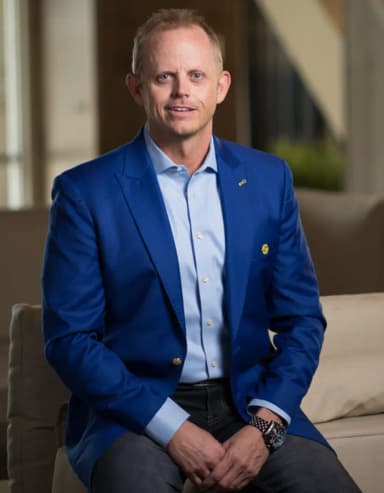
On this episode of The Daily Mastermind, George Wright III delivers a focused, practical message on what it truly means to lead. Not leadership defined by titles or positions, but leadership defined by influence: your ability to inspire people, raise the standards around you, and build a team that grows because you grow. If you want to scale your vision, build a fulfilling business, and create real lifestyle freedom, this mindset shift is essential.
George is direct about the stakes: you cannot build a big vision with a small team, and you cannot grow a powerful organization without learning how to elevate the people around you. True leadership is not a status you claim. It is a way of showing up every single day.
Leadership Is Something You Become, Not Something You Do
One of the most powerful reframes George offers is this:
Leadership is not something you do. It's something that you become.
This distinction matters enormously. A lot of high-achievers focus on leadership tactics, management techniques, and productivity systems. But the foundation is always internal. Leadership is a mindset and a presence, a way of carrying yourself that brings the best out in the people around you. When you grow as a leader, everyone in your orbit grows with you.
The Biggest Misconception About Leadership
George addresses one of the most common traps, especially for ambitious entrepreneurs and early-stage leaders: believing that authority, title, or position is what makes you a leader. He learned this firsthand in his early sales career.
Influence is not built through a title. It is built through trust and consistency, through who you are and how you show up, not through what you demand. People do not follow leaders because they have to. They follow leaders because they want to. And your team will never rise above the standards you set with your own behavior.
From Telling to Inspiring: Three Critical Mindset Shifts
George outlines three specific transitions every serious leader needs to make.
First, move from telling to inspiring. Managers tell people what to do. Leaders inspire people to want to do it. That means sharing the why, connecting work to a meaningful purpose, and helping people understand how their contribution ties to the larger mission.
Second, move from controlling to empowering. This is admittedly a hard one. Leaders who hold on too tight create teams that never develop real ownership. Effective leaders delegate authority, not just tasks. They give people room to grow, room to fail, and room to take genuine ownership.
Third, move from solving problems to developing problem solvers. If you want lifestyle freedom, you cannot afford to be the bottleneck. The goal is not to be the best problem solver on your team. It is to develop a team full of people who can solve problems without you.
Leadership is caught, not taught. People don't become better because you tell them to become better. People become better because they watch how you show up, and they rise to the level of your example.
Lead with Vision, Not Instructions
People do not commit to tasks. They commit to a vision. George stresses that great leaders are vision builders. When you share a compelling picture of where you are going and why it matters, your team steps up in ways that no workflow or process can produce.
Alongside vision, great teams run on trust and psychological safety. The most successful teams are not the ones with the most raw talent. They are the ones where people feel safe to speak, contribute, and learn. Create that environment and you unlock levels of performance that pure pressure never could.
Your Team Is a Mirror
One of the most honest observations George makes in this episode:
Your team is a reflection of your leadership.
If your team lacks communication, urgency, or clarity, the place to look first is your own leadership. This is not a judgment. It is actually empowering, because if your leadership is the root issue, you have the power to change it. Fix the root, and the results follow.
How to Elevate Yourself So You Can Elevate Your Team
George closes with a handful of practical habits that make a measurable difference:
- Be calm in the chaos. Emotional consistency is a leadership superpower. Your team takes their cues from your energy.
- Communicate with clarity. State the goal, the why, the deadline, and the standard. Vague expectations produce vague results.
- Listen more than you speak. This one habit alone will transform your relationships and your team's trust in you.
- Celebrate wins and challenge growth. Recognize progress and keep raising the bar at the same time.
- Invest in your people. People do not grow because you demand it. They grow because you invest in them.
Action Steps
- Identify one area where you have been telling instead of inspiring, and reframe your next team conversation around the why.
- Delegate one meaningful decision or project to a team member this week, giving them true ownership, not just a task.
- Ask yourself: where does my team lack clarity, urgency, or communication? Then look at your own behavior first before looking at theirs.
- Make a habit of listening more than you speak in your next three team interactions.
- Share your vision with your team explicitly. Do not assume they know it. Say it out loud, regularly.
Leadership is not a title. It is a responsibility. When you embrace that responsibility and do the inner work to become the kind of leader worth following, you transform not just your team but your entire organization. As George Wright III reminds us, it is never too late to start living the life you were meant to live, and great leadership is one of the most powerful paths to get there.