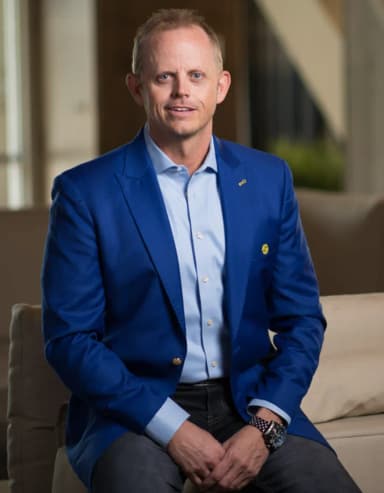
Welcome back to The Daily Mastermind. George Wright III here with your daily dose of inspiration, motivation, and education. And I am really excited today to have a special guest, someone that's got some great strategies and tactics that we are going to share with you. His name is John Harding, and he has got an amazing background with some stuff that I've been using in my business career for quite a while. So let me just give him a quick intro. John's a managing partner and founder of Lightrick Consulting, does a ton of B2B work with individuals and businesses, helping them to grow their business. But he's also an owner and board member of Franklin Planner. And what you're going to really love about this edition we're doing is that he's actually been with the company 30 plus years in various roles. He's spoken and trained. He's got all kinds of background as an MBA, CPA, a Stanford graduate. But what you have to understand about Franklin Planner is this system and this company has been serving like 80% of the Fortune 100, 500 companies. And so when it comes to productivity, also tied to what we love as mindset, this guy is absolutely a success phenomenon. He's a legend in the industry. So John, welcome to the podcast, man. George, good to be with you. And thanks for all the podcasts leading up to your thousandth podcast coming up. Oh, I know. I'm so excited about this. We've been meeting a couple of times and people are going to know why here in a little bit, but it's good to have you here, man. I know you're a busy guy. I know you've got a lot of things going on. Let me ask you this. Just so people get a little bit of a background on you, give them the lead up into what took you to Franklin Planner Corporation because you've had, look, you've been working with some of the biggest businesses out there. You've done all the roles. You've been a CEO, a business owner, a CFO, and you made your way to Franklin planner. And before we get into a whole bunch of strategies and tactics, why is that the case? Why did that lead you to that company? Yeah, thanks. It's interesting. If you look back on your career, whether it's as an entrepreneur or just thinking of your life, if you think, could I have guessed it would go like this? And I really couldn't have. And it's been amazing. I will say that I had a couple of priorities. I really wasn't one that said, I got to make a bunch of money or I got to be in charge. But what I did, I had in me this serious, I want to be able to provide, I want to be able to succeed. So I just looked at what are some of the good ways to do that. So I valued education formally and informally. Anyway, that took me from engineering to business to CPA at Deloitte, leveraged a lot of IBM and to a role where I was CFO and COO of a really interesting kind of small company, Shipley Associates, that became Franklin Quest's first acquisition after they went public. So that took me from being one of the leaders of this company and then onto the executive team of Franklin Quest. And that began my journey 30 plus years ago of really being part of this personal effectiveness, leadership, and just a bunch of great teams that gave me the privilege to be part of. Yeah. That's awesome. And I've gotten to know you a little bit as well. And I can tell, what's funny about the marketplace I've seen is that it used to be people really didn't get out of bed for personal development, but when it came to leadership and training and productivity, that's always been a staple. Now I'm starting to see people come back into where the mindset and the principles and trying to create your best life is really a key. And so it seems like your career, things I've done, everything have culminated to this. So let's do this for people that don't really understand where Franklin Planner or Franklin Quest came from. Take me back to the beginning. How did Franklin, and maybe even more specifically, Franklin Planners, how did they, how did it start? Talk to me a little bit about Hiram Smith and Stephen Covey, how that kind of came together as a foundation for what there is today. Glad to do it. And Hiram Smith is the first one I've mentioned. Hiram Smith in 1983, 84, really created Franklin Quest, started this company. And he had this vision of really helping people align their goals and values with what they did every day. So at the end of the day, no wonder what got done, you had spent time on those things that really mattered to you. And so I would mention Hiram Smith as just my first connection here. Now at the same time, there's another amazing individual, Stephen R. Covey. And in 1989, he published 45 Miles to the South as a really talented thought leader in interpersonal and personal development and leadership, The Seven Habits of Highly Effective People. That set of principles matched really well, even with separate companies, the Covey Leadership Center, Franklin Quest, was really a good match. So these two companies moved along. I was with Franklin Quest, of course. Hiram Smith also documented his natural laws, the 10 natural laws. So these two books really outlined principles and natural laws about how to create your best life, how to achieve your full potential, how to unlock the potential in you. And I'll just say one other thing, both of these individuals as individual people were just full of this high character and then also became very competent and then both created a tool set. There's a mindset to the Franklin Planner and the seven habits. There's a skill set or capability and there's a tool set and those just come together. And both these men were working at this and then in 97, 1997, these two companies merged. So let me ask you something. I want you to put a pause in that for a second because I really, I actually, I didn't connect those dots, mindset, skillset, toolset, but it's interesting you say that because my background was business and marketing and making money. And I got married really young, had kids. I was chasing the dollar and I had a lot of success. And it wasn't until I came across a gentleman by the name of T. Harv Ecker who wrote The Secrets of the Millionaire Mind that helped me to understand that there was an inner world that you had to apply to your outer world. There was a mindset and a strategy towards this stuff. So it's funny, the parallel that, and I have featured, by the way, Stephen Covey's Seven Habits in the past, and it's been an amazingly popular episode, but it's interesting how that all comes together with mindset, skillset, and a tool set to be able to come together. So do you feel it's, and that's why it's such an interesting correlation because I realized once you put the mindset and business together, for me, it went next level. So when you take a mindset, skill set, and tools together with this Franklin Planner system, how does that really impact individuals and organizations? Because that's where I think the magic is, right? You think about inside out, and this is a terminology used. I love it. We all have agency. And I think most fundamental is if you look at the individual to say a fundamental premise here is that there is unbelievable grain in all of us and brilliance and there's a leader in all of us and yeah and then if you match that so i'll get to the leaders and teams part but if you match that with agency that we actually what can we control right what's in our circle of influence and you build you respect that we've had a lot of the last four or five years about respect and all these things. If you just almost treat it wholly, the respect for people, the power within them, that's a fundamental, what, bedrock footing to this. Yes. Now from there you say, okay, there's a leader in me now. If you take a look at it from as an entrepreneur or you could look at it as a team Yeah Just had the jazz draft So we interested in how the teams have been improved As you look at a team leaders and teams, and then the leader of those leaders and teams, if you keep that in mind, that unbelievable respect for people, for their brilliance, the light, and what matters to them. As you then say, here's where we want to go as a company. Here's where we want to go as an organization. The way you approach it to inspire and draw out of them the lead versus a command and control rather than inspire and how to do that. And the Franklin Planner system is built really with that in mind. Individual sits down and there's an individual aspect. What matters to me, my roles, my goals, and who matters to me. But as a leader in a team, the planner is an unbelievable accelerator to implement the team's goals. Yeah, I love that that's the key. They bring those together. Yeah, it brings it together. I'll say this. I really love the idea, and people need to understand, look, our audience is CEOs, business owners, but also people that manage and lead, right? So what I've learned in my life is that it's like Jim Rohn's quote, success is not to be pursued. It's to be attracted by the person that you become. It's that inner game. I found more and more that the true leaders learn how to develop themselves, apply that to a team, grow it in a company. And very few people have a tool set to help them with that. And that's why I want anyone listening to this episode to realize that the reason I wanted to highlight Franklin Planners, not because it's a great time organ, which it is, and not just because it's a productivity tool, which it is. It's because it's a tool that allows you to also bring your inner leadership out, but also it helps us to create our best life, which kind of leads me to the next point. I wanted to ask you, let's talk about the values because there's this mindset piece for the planner system, but there's also like the tactics and tool set part. Talk to me about the values. What kind of goes into this? I always was brought up with the mission, vision, values. Can you walk us through all of that and what you need to personally put into the direction of what you want to use with the planner? Talk to me about that. Sure. I think there are different words you can use for it. So I'll just connect with what you said. Those that connect with what's your mission, what do you value, and where are you trying to go? So I think that goal's there. Hiram Smith would call them governing values, principles, timeless principles that you value. So the point here is you lead your life, right? Then we get to you lead your team or you help lead your team. But the values, another term that's been a cool one was, well, what matters most to you? And I think we've added and deepened around that just to help people get it. And it works for me because it's who matters most, right? And it's that combination of you. So values would be just simply saying, what do you care about? And maybe for younger people that are like, what's a mission? What's a vision? or younger workers, hey, what matters to you? What is success for you? What is winning for you? And then you might say, call those values and mission and where we're going, but simply with your life in that personal part, what matters? Does that make sense? Yeah, absolutely. And I think it's important for people to realize I talk a lot about having some passion and purpose behind what you're doing. And so I guess one follow-up question I'd ask you is over the time you've seen thousands of individuals use these things, why does having, obviously besides the obvious of, if you don't have a direction of what you're trying to do, what matters to you, you're just helping someone else fulfill their dreams and life. But why is it so important? Why did they make such a point to build values and what's important into you into a productivity tool? Is it because you become more productive? Is it because you now have more fulfillment or is it because it helps fuel you? I'm sure maybe it's all those things, but in your opinion, why is it that you started with values versus having time productivity and then trying to put some values on top of it? Is there a reason for that? No, that's a great question. I don't know if I got a great answer, but I feel it. And what it is, people are on fire, like the passion from the youngest one or two year old. This blows me away. I have twins, another little grandchild that are three. There's three of them that are their year and a half. They already know that what they want and what they want is more important than what they do. So from the youngest child to the more senior, George, this is about you leading your life, you taking control of what you can and you being inspired, recognized, acknowledged, and that's what you make your plans around, not what somebody else wants. Nobody controlling you, you gaining control, you taking charge. And we all know that there are tons of things we can't control. So I think this is only part of the answer, I'm sure. But part of that is that it's what matters to you. And if you align yourself, this is one other from just what you want. If you align yourself with timeless principles, positive value, then you step into this amazing, fulfilling, joy-filled, successful place. So it isn't just what you want, but it is aligning yourself with natural laws and principles. Yeah. That's why I like hearing values and mission and things like this. Look, let's be honest. Most people don't have direction and they definitely haven't thought about what matters most to them. But I think this goes back to the entrepreneurial journey as well. Meaning, look, we hear about, it's not about the destination. It's about the journey. You got to be in present moment. And in order to really have that be the case, you got to know where you want to go, but you also have to know what's important to you, what every day will fulfill you. And so I think it's not overkill to have that be the most important conversation before you start getting into tactics and strategies. But let's do that now. Let's pivot a little bit into tactics, the skillset of utilizing a planner, whether it's as a journal, a tool set, a time management tool, operating system, so that now you take your values and you start to lead your life. Talk to us a little bit more about the tactics or the skillset that you need for this. Let me just use a day. Let's use a day for a second and a week, and then we can think longer. So I'll just try this with you. So just think about any day, but let's say at the end of today, you do actually take them in and you think about what happened today. What did I spend my time doing? What did I spend this energy that I have or didn't have? And what got done? Who did I connect with? And part of the just super simple way of thinking about part of the tactics is at the end of the day, is it possible that you, because you had, you do have some control. Much comes at you, but you have control. Could I have said to myself, I didn't get everything done that I hoped to get done, but I did get done what mattered to me. And I made major progress that way. And then you add the days up and maybe look at a week. Get your tactical answer. You guide me here because you know where we should go. But think about how simple 10 minutes of planning would be to fit into your 24 hours in the morning and then maybe not. But let's just say 10 minutes just to be simple. And then think about, so that's daily. Then think about 20 minutes sometime one day in your week to look at the week, whatever you choose that to be, whatever it is. How simple? 20 minutes once and 10 minutes every day. And that exercise was thinking about where you had previously sat down and thought about what mattered to you what your values are what your goals are yeah tying it back always tying it back to what important yeah because here the thing most people start their day and they just start it they don't actually have intention i i really promote and and and push the idea that and i like actually how you started it i like reflection at the end of the day so that you can set intention for the next day because i think when people let other when you're not leading your your life, it's because other people are filling your schedule. It's because other things are populating your time. Whereas if you're leading an intentional life or you're leading your life, because like you said, you can control a lot of things, but not if you don't have a plan and you don't have any intention. So I think it is important. And without a system, a tool or something, or at least priorities, at least your values, you don't have anything to bump it up against. So I think it's hard to tactically apply what you want to do with your goals if you don't have them set, but if you also don't take time to do it. And I think we all need a thing to center that time around, whether it's journaling or a planner or whatever it is. So I agree with you. I think that's huge. And I think it always goes back to that same thing you said, which is if you want to lead your life, regardless of whether you have a job, a business or anything like that, If you want to lead your life, you have to be intentional with it. Is that what you do now, John? Do you take time at the end of the day, beginning of the day, and weekly, just to make sure that you're coming back to your milestones? I do. I do. And let me just tap into something that we said earlier, and also two of your other podcasts of many. But you had one a year ago on recovery, and then you got another one where you mentioned Tony Robbins mentioning the six fundamental needs of humans. So as you look at the research also, and as you test your own life, also tying back to this principle I mentioned that I really think Iram and Stephen, they were passionate about. They wrote books and they developed systems, but they were passionate about you, again, leading your life, like you said, and the agency you have, the power to do that and to decide what you care about. So just when you say, what do I do that? And every time I do that, I'm able to make adjustments. And thinking of your podcast on recovery, we may or may not get to this later, but there are several advantages to how we're built, how our brain's built, that are mental peace, that are also creativity thing, that relate to the odds that you wouldn't accomplish your goals. If you take some time, you consider what matters, your values, and then you align, you kind of schedule. You don't let the schedule rule you. You prioritize and you move your schedule around your priorities. Yeah, I actually think people are starting to become more and more aware of this, but I believe because there are so many rises in depression and anxiety and mental health issues, and I do want to talk about that. I think the other thing that people are feeling like sometimes, and we'll come back to the technology piece of it, but on this part, I think a lot of people feel like they're not in control of their life. And what they don't realize is that there are ways for maybe put aside the word control and use the term, create some certainty in your life because everything seems so uncertain and so chaotic and so crazy. But there are ways that you can take some control, create some degree of certainty by taking time to organize and plan, taking time to be intentional. But you made a comment I want you to speak to, and that is, but there are actual scientific, physiological things that have proven that when you do that, you're more productive. So it's not just about a sense of peace of being able to create certainty in an uncertain world or some kind of control in your schedule. there's really some science behind it right there's a ton of science behind it and a couple that i just mentioned and i'll connect it to seven goals assuming that's connected to yeah what you hear about right yeah and that you'll accomplish something professor ed batista stanford in this i met him through this course i took a year and a half ago that was part of this one-year degree but he said he is passionate about journaling and this is really the franklin planner journal and that's how we would like you to think of it and it has that power if his research and there and there's quite a bit of other research but this one is amazing he mentioned that if you just his research showed if you just write it down write down a goal once just once now be a lot more powerful than once but if just the act of you putting pen to paper pencil writing it down ones. The odds, the increase in percentage that you accomplish that goal is over 30%. There's other surveys and research that says, if you write it down and you revisit it, like we're talking, that it's a hardcore 33% higher, 50%. It's funny because myself included, people have heard things like, if you don't write your goals down, you're not going to accomplish them. And if you are, you're more likely to, but how often do you? So it's like having a system, some kind of a daily ritual, whether it's journaling with your planner or whatever it is, truly is a framework for you to do that because it's been proven. Like stats say, if you do that, you will be more productive, you'll be more fulfilled. And so I agree with you a thousand percent. And I think even the most successful personal development goal-oriented people forget sometimes, they may know it, but to apply it. And so I agree with you. I think that's a big one. And speak for just a second to the fact that this sort of, I feel, epidemic with mental health and things is out there, that having a system like this not only helps you be more productive, but it also helps you mentally to feel like you're more fulfilled, you're more productive. And there's that mental part of it, right? There is. I've got some research. I'm going to just look at it. Let me just say that one of Hiram Smith's early terms was inner peace. And that's a broad term. And that's what he would say when you align with what you got done, you're fulfilling your role. Stephen Peavy brought a focus of, a greater focus on looking at the week and Hiram was looking at the day, really both looking at the day and the week. But if you think about what you just said, mental health and that sense of control or being out of control and you sit down and you reaffirm just very briefly maybe something you spent a little more time pondering and mapping out before and you just that in itself when you realize wow you reconfirm what matters to you you look at what your opportunities are and you make some schedule changes and you schedule in and i'm going to do that so there's that side to it but let me Let me just mention a quick list here. And this is, I've got some pretty beefy research to go behind this, but enhanced, I'll just use some terms, enhanced brain connectivity. Studies have shown that by writing by hand leads to more elaborate brain connectivity patterns than typing on a keyboard or with your thumbs. This connectivity is crucial for memory formation and information encoding, which are beneficial for learning and cognitive development. Writing by hand involves complex hand movements that engage the brain more deeply, promoting better neural integration and cognitive processing. And that's just the first point, but let me just, I won't go. No, that's a huge point. I want to tell you that over time, like you'll see, I will take notes after notes. And a lot of times my assistant's like, I can't read anything. I go, it's not really the point. I do it because it can, it, it just basically embeds those thoughts. And that's why I'm a such a big believer in the handwritten journals. So anyway, yeah, keep going. I'm a big, I'm a big believer in that. And there's currently last year, over 400,000 people purchased the Franklin planner and used it and many of those people are doing this where they really aligning with their goals So we got over 30 years There millions of people that have done this but there many people if you born and raised and you only know your phone and you never saw hey i don't i haven't really been writing down sketching much there's a discovery here for yeah those that and then that haven't done that then for maybe some like us that did it before and then the digital the technology took us away over yeah there's a rediscovery but here's what you did rediscovery also improved memory and recall and then there's a bunch on that but it's the brain it's the function it is writing greater brain activity so there's a lot going on the brain analog methods like writing paper have been associated with increased brain activity. It's almost like exercise, right? It's absolutely unbelievable. And then there's a lot around creativity and the chemicals in your brain. So just better thinking, memory, mental health. So there's quite a bit around the brain. Yeah. I actually think what people can really relate to is, yes, technology has helped simplify a lot of things in our life. But to a certain degree, I think most people that I've talked to has said technology has now gotten to the point it's complicated things. So when we talk about mental health, a lot of times it's being too tied to regrets of the past or anticipation and stress of the future. We always talk about being grounded in the present moment. That moment is so chaotic right now that there's no better way to do that than handwritten journaling planner things that help to just slow you down a bit. And now you're also saying, which I agree, it also cognitively makes you more productive memory, retention, productivity, focus, creativity. Guys, listen to me when I say this is real stuff. It's the opposite of that when you're scrolling social media, when you're on your digital, when you're trying to do everything in your calendar and not think about it. When you have something tangible, it helps you in all these cognitive areas that also leads to mental health. And I know we're a little over on time, but we're tight here. But let me ask you this as we kind of finish, because John, we're going to have you back and we're going to talk more about some strategies and things, but I'm excited to hear that you guys are going to be doing a, you're going to be launching a podcast. I'm excited because my, one of my business partners, TJ Menlove, myself, we're going to be helping you guys to put this together. But what is the reason that drove you to want to create a podcast other than to connect with your million past customers and current customers? What's the real reason for it? Why are you doing a podcast at this point in time? Honestly, if you, there's this great Netflix or series called New Amsterdam. I'm just going to use this example. And this doctor is the administrator and all he does through this whole show, it's really like a leadership show in a way. He asks, how can I help? And honestly, our intent is just to help people succeed. And so technology and awareness, there are people that don't even, that know us. And when we run into people, they're like, I can't believe how great that love is for me. And they wonder if you guys, how can you help me now? And then there's a bunch of people that don't know. So genuinely, we want to help. We'd love to help people be aware so they can lead their life. So as Franklin Planner, Lead Your Life podcast is just see if we can get the word out and make it. Yeah. Well, and I think let's look, you guys are very humble guys, but I'm going to add to that. I love the fact that you're interested in helping people to lead their life, apply these principles, learn new principles or revisit principles that they knew in today's marketplace. But you have hundreds, thousands, probably tens of thousands of case studies of businesses that have been applying this over the years. So you guys bring a level of expertise to time management, productivity, leadership, and things like that. So I think hearing a lot of the stories, hearing a lot of the application will be very valuable to people as well. And by the way, if you're listening to this, John and Franklin, they've made it possible for you guys to get a discount on your next order if you want to pick up a planner. So I'm going to put that discount in the show notes so you guys can go to the show notes and click that. Because if you haven't already been applying the tools, the strategies, or even the leadership, I'm going to highly recommend you check out the podcast that'll be coming out here in the next few weeks. but also take advantage of this special offer to get yourself kickstarted. John, where can people best connect with you? Is it your LinkedIn page? Where's the best place for them to connect with you? With me, probably just LinkedIn, but with FranklinPlanner.com. Yeah, and I can put all those in the show notes as well, too. Any last thought or idea or final message you want to share with people that have, we've been talking about leadership, we've been talking about productivity and being mission and value driven and how to really ground yourself into some more handwriting and things like that. Is there any final thoughts you want to leave with people on this whole topic? I do have, I have something I wanted to just say, I think is so important. When you think about your life and leading and tapping your full potential, just with that in mind, and given the tools you have, there are certain, I'm just going to use this terminology and it may make sense because this, that your group is a pretty organized bunch of leaders. There are certain jobs to be done. And as we've talked a lot about paper and planning, I just like to put this out there to, you have the opportunity. We have the best of both worlds where we have this incredible digital technology that's come along. None of us are going to, that's not going anywhere. Yeah. So the key is to be strategic personally about your life and say, what jobs does the digital technology get done? And some of it is communication and multiple calendars. So to just, that's such a miracle that we have that. And then to think about what doesn't, what jobs that are huge to me, doesn't that get done? Doesn't get done there. And the Franklin Planner Journal System and that kind of sitting down, being thoughtful, reviewing, and just these benefits we've talked about are also giant and it is a technology. So there's this digital. Now, if we had time later, we could talk about all the huge distraction, the stress on the brand and all that the digital has brought, but just focusing for a second on the why none of us are going to put this down. Yeah. Just add that writing, add that journaling, add that planning to it. And you really can customize for you this super powerful operating system. That's it's personal, it's whole life. But as a leader in a team, you can also use that with your team. I don't want to, I just want to focus. No, I love it. I'm with both of these. Yes. Yeah. You customized it. There's so many ways you can customize it. Now you've got the best of both worlds and the best technology combined to help you. That's it. Yeah. I think I love that thought and you're right. I think maybe we'll have you come back. I know for sure in our academy membership group, we can get into some more detailed strategy of how to use and apply. But I think it's important for people to realize that these tools go hand in hand, your technology and your physical intentional planning. But I do think most of the pieces people are missing is the intention and values and real foundation to drive the technology. And that's what the planner system does. It's one of the reasons why I wanted to highlight it. So listen, guys, if you're listening to this show, I want to highly recommend you share the show, help us spread the message, help us spread the word. I think it's going to help a lot of people. And we look forward to really bringing you more and more of this stuff ongoing and ongoing. Remember, I always say, no matter where you're at, whether you're crushing your goals, whether you're revisiting this, whether you're struggling, it's never too late to start living the life that you were meant to live, but you've got to take action and you've got to apply some of these strategies. So hopefully you've gotten some things with that today and I'm excited, but you've been spending time with the Daily Mastermind. So I appreciate you being here. Once again, my name's George Wright III. Been here with John Harding, and we look forward to talking with you tomorrow. Have a great day.