The Daily Mastermind
ALL EPISODES
Episode 1114 · Apr 23, 2025

Build a Purpose-Driven Business: Start With Why

Watch
Listen

Are you building a business or building a movement? On The Daily Mastermind, George Wright III breaks down one of the most powerful frameworks in entrepreneurship, drawn from Simon Sinek's book *Start With Why*. Whether you're struggling to stand out, inspire your team, or build lasting authority in your market, this framework offers a clear path forward.

The core idea is deceptively simple: people don't buy what you do. They buy why you do it. That shift in perspective changes everything about how you lead, sell, and grow.

Why Purpose Is the Foundation of Every Great Brand

Purpose builds trust. Trust builds loyalty. And loyalty builds a business that lasts through economic uncertainty, market shifts, and competitive pressure. When your business operates from a clear sense of why, you can charge a premium, attract better talent, and retain customers who feel genuinely connected to what you stand for.

George uses Apple as the example Sinek made famous. Dell sold computers. Apple challenged the status quo and empowered creativity. The result? You feel something when you unbox an Apple product. That emotional response comes from their why, not from spec sheets or price points.

Understanding the Golden Circle Framework

Sinek structures this idea around what he calls the golden circle: three concentric rings. The outermost ring is what you do. The middle ring is how you do it. The innermost circle, the bullseye, is why you do it.

Most businesses communicate from the outside in. They lead with what they sell, explain how they deliver it, and sometimes get around to why they exist. Influential brands do the opposite. They start from the center and work outward.

"People don't buy what you do. They buy why you do it."

When you lead from why, you connect emotionally before you ever pitch a product. That emotional connection is what separates brands that inspire from businesses that just transact.

Breaking Down the Three Rings

Understanding each layer helps you apply this to your own messaging:

Why: This is your core belief, the emotional driver behind your business. It's not about what you sell but why your business exists. A real estate agent's why isn't selling homes. It's helping families find a place to belong.

How: These are your unique processes, values, and differentiators. Think of it as your business's personality and operating philosophy. If your company prioritizes transparency and education over high-pressure sales tactics, that's your how.

What: This is your actual product or service. It's the easiest to articulate, which is why most businesses default to leading with it. But on its own, it's the least emotionally compelling. You become just a number in a crowd.

How to Flip Your Pitch and Lead With Why

George walks through a practical example using his own company, Evolution Group. Rather than opening with "we offer a live stream mastermind program," a why-first pitch sounds like this:

"If you're an entrepreneur or a business owner that's looking to truly create the life that you're meant to live, your best life, and you want to find ways to unleash that potential, we offer a live stream weekly group mentoring program that will bring you the experts in the area of business, mindset, body, money, and we do that in our mastermind group."

That opening lands differently. It speaks to aspiration first, and the product becomes the vehicle for a vision the listener already holds. Apply this structure to your elevator pitch, your website copy, and your social media posts.

How to Discover Your Own Why

Your why is discovered, not invented. It lives in the moments that have shaped how you see the world and what you care about most. George offers a clear process for uncovering it:

  • Reflect on defining moments in your career. When did you feel most fulfilled, and why?
  • Ask trusted team members, colleagues, and loyal customers what you consistently bring to the table.
  • Look for patterns in their responses. Those repeated words become the language of your why.
  • Keep your why statement short, clear, and inspiring. The format is simple: you do what you do in order to contribute X, so that others can experience Y.

Evolution Group's why statement: to inspire and motivate entrepreneurs to unleash their potential so they can create the life they were meant to live.

Why Your Why Must Stay Authentic

George's final word on this is worth holding onto. Your product will evolve. Your strategy will pivot. But your why should function as a North Star guiding every decision you make. And authenticity matters more than polish.

People don't need a perfectly packaged pitch. They need to feel what drives you. When they do, you stop being a vendor and start being a brand they believe in.

Action Steps

  • Write down three moments in your career when you felt most fulfilled and identify the common thread.
  • Draft a why statement using this structure: "In order to [contribution], I do [work] so that [impact on others]."
  • Rewrite your elevator pitch to lead with your why, then move to how, then what.
  • Audit your website homepage and social media bio to see if your why shows up in the first sentence.
  • Ask three loyal clients what impact your work has had on them, then look for patterns.

Your product might be what gets you in the room, but your why is what makes people stay. Start there, build from there, and you'll build a brand, not just a business. As George says, it's never too late to start living the life you were meant to live.
READ THE FULL TRANSCRIPT

All right, welcome back to The Daily Mastermind, George Wright III with your daily dose of inspiration, motivation, and education. Are you building a business or are you building a movement? Today, we're going to unpack one of the most powerful frameworks that I have experienced in entrepreneurship for business, and it's based around this book Simon Sinek has called Start With Why. So if you've ever struggled with kind of standing out or inspiring your team or finding a vision or finding ways to become a mega brand or an authority, this episode is definitely going to be something that can help you. So Start With Why is not just a book. It's actually a shift in mindset that can help you to transform how you lead, how you sell, how you grow your business. And this is one of the reasons why I've talked about it a couple of different times now on the podcast. So let me start out by just laying a little bit of a foundation for you. People don't buy what you do. They buy why you do it. I hope that makes sense. And I want you to really think about that. People don't buy what you do. They buy why you do it. So why is this? Let's talk about that for a second. Purpose, having purpose builds trust. And trust will build loyalty on your team, with your clients, with your customers, in the marketplace. And loyalty builds long-term business. So when you have a business that starts with why, why they do business, why they do things, they can charge more money. They can retain better talent. You'll be able to recruit and build a business of really powerful, successful talent. And also it'll weather economic storms because businesses that are built with trust and loyalty and purpose, they're businesses that are going to have the staying power that you'll need to. And in crazy marketplace times like we're having now and we have had over the last many years, the individuals that have inspired and motivated and built trust are the ones that are sustaining. And so the businesses that are truly successful are not ones that just have a product. They're ones that inspire and build from why. I'll give you an example. Apple. Apple doesn't just sell computers. Dell computers sold computers. Why does Apple dominate the marketplace? Well their why is challenging the status quo and empowering creativity Their why is what makes you feel something when you unbox their products It's not just about how or what they do. It's why they do it. So this powerful why concept is something that I think is important to understand in business. And Simon Sinek in his book, he outlines this structure he calls the golden circle. and I've talked about it before. If you were to imagine like a target, a round circle with three circles, two more circles inside it. So it's got three sections. I don't know, you can't see this if you're on the podcast listening, but if you go to our YouTube channel, you'll understand. But if you have a circle and there's another circle inside that and another circle inside that, this would represent the golden circle framework. And it's simply just a a mode for leaders to develop their communication and their messaging. So most companies, for example, communicate their message from the outside in. The outer ring would be what you do. The ring that's just inside that would be how you do it. And the circle or ring just inside that, the bullseye, would be why you do it. So understand if you can visualize with me, circles, the outside being what you do, inside that is how you do it, and right in the middle is why you do it. But most businesses operate from the outside in, what they do, how they do it, why they do it. But really influential brands lead from the inside out. This is where they start from why they do something, and then they explain how they do it, and finally, what they offer. So let me kind of break down these three areas for you just so you can understand it a little bit better because I think it's a pretty powerful message. When you start with why in the center, this is the core belief behind your business. It's not about what you sell, but why your business exists in the first place. It's the emotional driver that resonates deeply with others. For example, if you're in real estate, your why might not be selling homes, but it's helping families find a place to belong. Does that make sense? So then you move from the center of why out one layer to the how. These are your unique processes, your values, your differentiators that set your business apart. Think of these as kind of your business's personality and operating philosophy. For example maybe your company prioritizes transparency and education over high pressure sales tactics That how and that how you know basically your story gets put out there your why gets put out there, how you do it. And then the outer layer is your what. That's the actual product or service that you offer. This is the outermost circle and it's the easiest to articulate, quite honestly. It's why most people focus on what they do, but it's also the least emotionally compelling on its own. You're just a number in a crowd. Most businesses kind of start with this because they're pitching features. They're pitching features and benefits of what their product is, and that's why they don't differentiate themselves with the how and the why. So imagine if you were to flip your pitch. start with why so that you can connect with your customer and your marketplace emotionally, then explain how you deliver that and what you actually offer. Use that structure sort of in your elevator pitch, your website copy, your social media posts, and it'll become a much more compelling reason. So for example, with Evolution Group, one of our products is a mastermind and a mastermind for entrepreneurs and business owners. And we develop that by doing live streams inside our exclusive mobile app and inside our community. And we do it so that you can help, so that we can help individual entrepreneurs and business owners unleash their true potential and create the life they're meant to live. But if we were to start with that compelling message from the beginning, we would say, listen, if you're an entrepreneur or a business owner that's looking to truly create the life that you're meant to live, your best life, and you want to find ways to unleash that potential, we offer a live stream weekly group mentoring program that will bring you the experts in the area of business, mindset, body, money, and we do that in our mastermind group. Can you see how different that is? When you go from a reason to how you do it and what you do, it's much more compelling, if that makes sense. So let's kind of wrap this up for a minute. Your why is, first of all, and most importantly, discovered. It's not invented. It's rooted in your story. It's in moments that have shaped how you view the world and what you care about. That's what truly makes the reason more compelling is that it comes from your story. And your why is always about contribution the impact that you want to have on others your clients your customers the marketplace not just your accomplishments And the best why statements are very short clear and inspiring. So you would say something like, in order to fill in the blank, whatever your contribution is, you do this so that you can impact certain people. So I'll give you the example I gave just a minute ago. The why statement for Evolution Group is to inspire and motivate entrepreneurs to unleash their potential so that they can create the life they were meant to live, their very best life. And so your why statement should be really short, clear, and inspiring overall. So what I want you to do is I want to challenge you to just kind of figure out what your why is in your business. Reflect on defining moments in your career. When did you feel the most fulfilled? Why did that fulfill you? Why did you start doing what you're doing? And maybe even ask some of your team members, colleagues, loyal customers, you know, what do I consistently bring for you to the table? What impact do you feel like I have for you? So it'll help you to understand the way people view you as well and look for patterns in their responses, you know, those words that become your foundation for your why language. But here's just a tip. Don't overthink it. Your why isn't about perfection. It's about authenticity. People don't need a polished pitch. They just need to feel what it is that drives you. And that will make a huge, huge difference for you. So I challenge you. I challenge you to kind of figure out what the why is in your business and start your messaging with that. You know, your product might evolve. Your strategy might pivot. But your why should always be that North Star guiding every decision that you make in your business. Remember, when you start with your why, you build a brand, not just a business. And one of the things I've been hammering home is that you need to build a brand, a personal brand, not just a business and products. So that's my message for today. I hope you have an amazing day. I look forward to talking with you more tomorrow. But do me a favor. Share this episode if you would. Share it with someone so that we can see how others can benefit from some of the ideas and concepts that we're putting out here into the Daily Mastermind. and then hit me up on The Daily Mastermind on Facebook, Instagram, YouTube. Let me know what it is you're working on. Reach out. You'd be surprised what kind of resources are available for you. And I look forward to hearing from you. Once again, my name is George Wright III. This has been The Daily Mastermind. Have a great day.

About the host
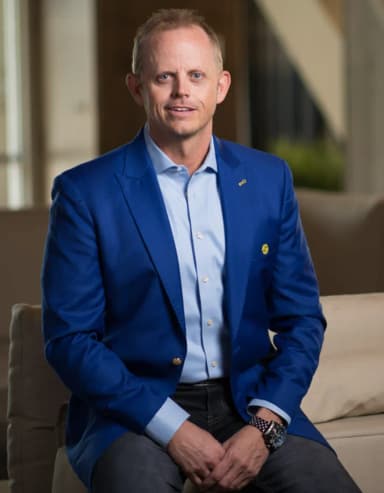
George Wright III, host of The Daily Mastermind

George Wright III

George Wright III is an entrepreneur, investor, and the host of The Daily Mastermind. Over more than two decades he has founded and scaled several multimillion-dollar companies and built a renowned seminar business that put some of the world's biggest names and brands on stage. With 25+ years across marketing, sales, and executive leadership, he's made a career of turning bold ideas into results — and momentum into lasting growth.

Today his mission is singular: empower driven entrepreneurs everywhere to master their mindset, unlock their potential, and live their ultimate destiny. Through The Daily Mastermind, George shares the Prosperity Principles and strategies that help people create massive change — in their business and in their life.

MORE ABOUT GEORGE