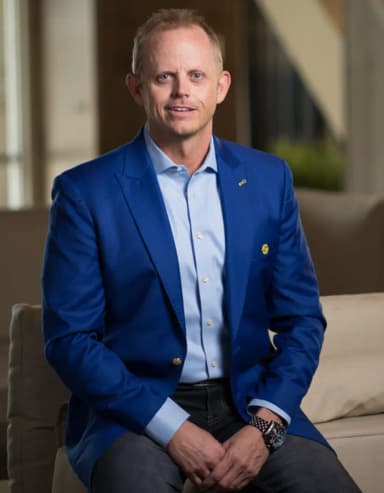
welcome back to the daily mastermind george wright the third with your daily dose of inspiration motivation education and i've got a awesome entrepreneur here for you today i'm going to intro him but before we get started remember the whole point of the podcast here is to help you to evolve and create that life that you were meant to live the life that you're trying to live that lifestyle, the mind, body, money, business. And today we've got a great example of that with Cameron Bodden. I want to give you a little bit of his background because this guy's really created a significant beast of a company here in the last little while. It's been about 14 years we were talking before the show, but Green Mango Pest Control, he started in like 2010. This thing has grown and he started from wearing all the hats to now running a company that last year tapped 24 million. And he's expanded that into a couple of other companies, a cleaning company, an auto glass company, but he's an entrepreneur that's got skills and passion, and he's got a lot of stuff to be able to share with you today. So welcome to the show, Cameron. Hey, man, I appreciate you having me on. Yeah, man, it's like a couple of busy guys trying to coordinate. We were just talking before the show with our time zones and stuff we're doing. So I'm actually super glad that we're together. I just left sunny Scottsdale Market to come up to the cold Utah market. I'm anxious to get back there, but we'll have to connect live. But thank God for technology, right? So tell me a little bit about the background. Give me just the Reader's Digest backdrop, and then we'll get into some tight stuff. But what made you decide to get into this industry? And when did you recognize this is where you wanted to go to really build something big? Oh, man. So I was like a lot of guys. I served a mission for my church. I went to Edmonton, Canada. And for me, it was just like God knew that he needed to put me there because I'm a very high paced person. I like to be busy. And nine months of my two year mission, I was stuck in like the smallest town ever. It was breathing cold. So it was just, Hey Cameron, chill. But when I got home, like a lot of missionaries, we get recruited to do door to door sales. And I was no different. So I started working for another pest control company and just quickly saw, Hey, like for whatever reason, this is cool. There's money in this. And so a business, my friend at the time talked to me and he said, Hey, I'm going to start this company called Green Mango Pulse Control. And I was like, man, that name's so dumb. Like Green Mango, flat black trucks. And eventually he talked me into it and we started. We put literally like the last money we had, the last money, it took five grand to put a rig on a truck. We had one little single cap truck and we'll never forget it. We went out and started knocking doors that first night. I never knocked a door in my life at this point. My partner had done like three summers and so he had all the experiences hey let's go get our first customer we're amped up we got the truck you know we finally got our license we're allowed to go sell and we freaking bagel that first night oh we're thinking they're like what did i just get myself into but no motivation we woke up the next day and we talked about todd peterson right at the beginning he talks about how life responds to effort and that's the journey for me man i didn't know anything you about business, nothing about pest control, but the effort was there. We woke up the next day and we started knocking doors and slowly but surely, we're now one of the largest companies in Arizona. We have over a hundred trucks on the road and we did $24 million in revenue. And it's all just because of effort showing up every single day. Man, I got to tell you, we're going to unpack that for a minute, in a minute here, but I got to ask you because I'm a big believer of that as well. I think people rarely, the real successful people I know, they act in spite of their mood. They put the effort in anyway. But do you feel like there was some kind of, I mean, and I don't want to put words in your mouth, but was it having a partner? Was there some vision or drive? Did you just not want to work for somebody else? There had to be something besides that motivated you to put the effort in. Because I think there's a lot of business owners or entrepreneurs or side hustle people that don't want to do the work, but they're trying to find that motivation. They're trying to figure out how do they stick in there when they're getting bagels and they're not making any results helped you get over that hump yeah so i'll give the credit to my business partner he was just either he was too dumb enough to understand like you're we didn't have the talent or what but like his conviction was there from day one it was we will have the biggest punch control company we will have market dominance and we will be the best and i just i bought into it Like he made me believe that. And no matter what was going on, you know, our worst days, he was still optimistic about, Hey, we stay consistent. We stay doing what we're doing. We will have market share. We will the best. And I just bought into that. And we just, once again, we just kept showing up, man. And there's one point, you know, I've told the story of a couple other podcasts, but three years into the company I in the backyard springing route I on a three call with my dad who at that time invested into the company and my business partner Dusty And I telling my dad I so sorry If someone can buy this company for 200 grand, which was your investment, we will literally hand it to them because I don't know how people make money in pest control. Luckily, nobody would buy the company from us. And so we just had to keep showing up. I didn't want to quit because I didn't want to leave my dad 200 grand. And we just, I don't know, we figured it out, man. some way. Wow, bro. Listen, brother, you said a couple of things I want to just highlight. One is that I believe a lot of people, look, Joe Rogan said it best. He's the laziest disciplined person out there. So you don't have to be the most motivated person to stick it out. You just have to stick it out. I get that. But surrounding yourself with the right people, that's a key. The financial education company that I had built from 12 million to 200 million a year in sales, I had a partner bro I tell you I would have quit every other day but I had a partner that just was like he was positive when it was like dark and cloudy outside and so this idea of surrounding yourself with the right people I think it makes a huge difference and also I think you made a good point when you said you're wanting to sell this and that you had some stake in the game with family but you just didn't give up it's not like it was I'm sure your trajectory wasn't up and to the right the whole time. It was probably all over the place. And so perseverance, right? Persistence, just continuing to go. So that's huge. So let's do this. Let me dig into a little bit here. So you started out knocking doors yourself, but at what point in your business did you feel like you had to start like putting some processes and systems in place and go from being the doer to the leader? And was that a weird shift for you? What did you, how did you do that? so it wasn't until like year five and i'm like embarrassed about this but proud of it too because you know a lot of people that i talk to now they just want to they just want to jump to making a million bucks and they just want to skip every process that it takes and it's like you just can't if you want to be a great business owner you need to understand every department or every asset of the business so luckily for dacia and i like we literally like we were the routing manager We were the CSR manager. We were the technician. You're the billing. We were the HR. We were everything. But it wasn't until like we're literally driving ourselves crazy to where we're like, we need to hire some managers. And that was year five. Like for the first two years, Dustin and I would ride in the same truck together. Like we wouldn't even split up. Like we would split up and go knock doors, but we would go spray routes together. And it just, we just didn't work efficiently, man. And I thought I just laughed that we're here today because like, we really shouldn't. We were running our company on a Microsoft spreadsheet. Like we'd forget to bill it, not forget, but we'd have enough time to bill our customers or like maybe someone slipped through the cracks. There was just so many things where, you know, God was looking after us to make sure this thing was successful, even though like we didn't know what the heck we were doing. But we were working hard and we always, you know, we had a great service. We treated people, our employees correctly, but it was year five and we were like, hey, let's hire a tech manager. Let's hire an office manager. Let's hire all these people. and that's when I like went into a really like depressed state if you will but I went from working my 16 to 18 hour days to like an eight hour day which is normal right and I was like I feel like the laziest guy in the whole world wow now I have this efficient company running with all these great people I like work myself out of a job and that's when all these other service companies started we launched five other service companies in an 18 month span and I was back to work in 18 hours at the end. And looking back, it was probably the worst financial decision I could have ever made, but best business decision because I got to learn so much about business. And the other thing is you, gosh, man, you continued to work and grind and do the work, but at some point you decided you got to bring in that layer of leadership. Did that help your business in a big way by bringing in those leaders that could then manage those areas? Oh, it was everything. And even at my scale today, you asked, have you ever experienced any burnout? And I'm like, honestly, I'm every day right now, man. Like I'll just be real. And it's because I don't have enough people on my team right now. I need to go higher and more. You make a really good two points that were really good. Number one is most people are so busy trying to get the plan together and organize it and get the right people and the right seats on the bus and all this stuff. You don't have to have everything done to really start making results. But when you're willing to bring in the layer of leadership, which is also another struggle, you start to see enormous gains in the business. And that's a whole nother challenge, right? Because not just because you felt like you didn't have you were being lazy, but now you've got to manage people and it's not up to you. It's up to their efforts. Did that worry you a lot? Did that stress you out a bit? Yes. And the coaching that I get people now is that if you going to hire someone so that you can go sit at home or go do whatever that doesn include growing your business It like you making a mistake but if you can go hire someone so that you can bring in two times amount of revenue that it took to hire them then you're making the right decision but don't hire someone to be a manager and or an employee unless you have the KPIs in place so everyone's expectations are managed on both ends and you have a way of rating that guy on how well he's doing because that's one of the biggest mistakes that we made at the beginning is that I would hire someone and then I would turn through them so quickly because they weren't meeting my standard. Where's it written down? What, you know, what am I, you know, grading them on? There's, and so, you know, I'm not sure you talk to a lot of business owners as well, but I thought that's the biggest mistake that entrepreneurs make is one, they can't release control to hire somebody. And then when they do, they have to fire them or let them go because they're not performing to their standard, but there's no standard set. There's no KPI put in place. And that's anyone that's listening right now, make sure you have those things in place before you hire someone. And if you do, it'll be successful and it'll be the best day of your whole life. And they will make you so much more money and they'll probably do it better than you can. Yeah. And living a lot, a lot less stressed out. I think you hit the fact that don't do it for the wrong reason. So a lot of people right now, they're like, I want to be able to have a more of a residual lifestyle. And so I'm going to hire people. That's the wrong reason. You want to hire people so that you can be more productive in the areas you want to be productive in to grow the business, let them manage the stuff that you've automated. But then also you're right. It's all about clear expectations and communication. And look, I don't know if I've ever found anybody, and you probably feel the same way, that is going to measure up to the work ethic I would do as a business owner and a guy that grinds it, right? But what I could do is set myself up for success and them, like you said, by setting proper expectations and being able to measure and communicate what they're doing. Otherwise, you're just setting yourself up for a lot of frustration. And not only that, but there's nothing more frustrating than it being out of your control and it not getting done. Cause now you're like, Oh my God, man, get out of here. I'm gonna do it myself. And that you'll never grow that way. You went, was there a tipping point from zero to 24 million? What was the tipping point where management like took you up to the top? Cause most businesses I find is they hit that 1 million, 3 million, that management comes in and then it really skyrockets. What was the point for you that really you felt a difference in growth of leadership man that's it that's a great question um ever since year five we've started to hire managers and department managers and i'd say it was important i don't remember our size or how much revenue you're doing at that point but you felt like that's where it started that's where it started and without my people and it sounds so cliche but it's like without the right people you'll never be able to grow a business and scale period yeah it's still gonna happen how much do you think is attributed to i was gonna ask you this even before we got going how much do you think and i know the answer is both but what do you think is more important if there is one is it the people or the processes that you put in place for the business because i know you need both right like part of my seven step for business growth is marketing sale people and processes but which one if you had to choose you think you would wait more processes for sure because you can train the people up through those processes but you can have a great person and if your business doesn't have any processes got it it's interesting because but i'm the right people for the processes yeah i don't know what you don't have if you don't have that right now no matter if you had an all-star come in i guess that's the point is you could have the best guy that's worth 500 grand a year coming in if you don't have the process right now or kpis like he's gonna let you down somehow he's not gonna perform because he doesn't know what you're looking for. Yeah. How many reps do you have out right now? So I don't have any door-to-door guys. We don't do that anymore, but we have over a hundred technicians. So those are on the center. So did your business evolve out of door to, what did you evolve to? What did you take it to in order to grow it? So years one through five, we were all door-to-door. And then we took a flyer on a radio campaign about five, six years in, and it introduced us to the world of traditional marketing because we saw that it was working. Okay, let's get rid of the door-to-door because it's a babysitting nightmare. And the acquisition costs are so high. But I'd say the radio in 2015, 2016 was our first time. We're like, okay, look, we can make sales through traditional marketing. So that's when we started doing Google. And of course, one of the stats I talk about on every podcast because I'm so proud of it is that no matter how much money we spend on radio, billboard, Google, and we're talking $250,000 to $500,000 contracts each, our customer referrals outperform it almost two to one. Wow. Into our service and who we are. And it's always been our number one growth for Green Mango. That's a difference maker. Cause I know there are a lot, look, I'm in Utah, there's companies out here with thousands of reps and the churn is huge The training huge They constantly the attrition is 80 right But when you can crack the nut on scalability in the business model and brought the difference maker because a lot of people can do the Google, Facebook, PPC type search, whatever. When you get a business that produces a product that also you can generate those referrals, bro, that's why you're so successful. And that's why you can see your business growing overall. So that's cool. I appreciate you telling me that because I didn't know that about you. I was going to ask you, And I know we don't have much more time. So I wanted to ask you about this because we both looked at each other before as we got going to running and gunning and we're like, ah, burnout and things like this. Every entrepreneur, successful or not, has times some of the biggest, I'm talking the biggest celebrities and experts out there I know have burnout. And you sometimes can sense it on their podcasts and stuff like this. Most people wouldn't know. What do you do when that happens? When you sense some burnout, some people go to taking some time to regroup. Others build their vision. Others start a new project. What is it that you do to really overcome the burnout? Or is it just head down and just keep going until it goes away? No. So in 2018, I hired a success and life balance coach. And he changed my life because I was able to understand more of the human psychology of what happens during burnout and what's causing it, what's triggering it. And so anytime I start to experience burnout, I go back to my coach and I start asking him questions. and I start going through and walking, getting through why I'm burning out. And so today, like I spent an hour and a half with him on the phone and talking through it. And what's crazy is most of the time when burnout happens, and this is where it's like almost embarrassing because I know this, but your ego's engaged and you're attached to a certain outcome. And when I think of burnout, it's because maybe I'm defeated. I'm on a five-year plan right now to get to $50 million in revenue. And our Q1 was horrible. Like it was just atrocious. And it's, man, I can sell this company right now and cash out and do this and sell myself short. And it all comes down to, okay, are you not okay right now? Like you have the house, you have amazing income every single month. You have a lot of things paid for, all these things. And even if you got your business in half and sold it, like you could still retire and be fine for the rest of your life. So what are you attached to? Why, why do you have this unexpected outcome? And that's, that's what it comes down to for me is just, it's not like I'm my, the switch is back right now. Yeah, it's come back to the basics of, okay, what are my goals? What am I focused on? What's my desired outcome? And just try not to be attached to it. Because my dad always talks about in a deal, the one that has to have it the most is the one that loses. And so you can't be attached to anything. So true. So true. Guys, listen, if you're listening to this right now and you're feeling that sense of burnout, he said a couple of things that were super important. One is you've got to become aware of it. If you are aware and you step back and you try to figure out why, that's going to be a huge difference maker. I've experienced it as well. But the other thing is almost entirely when you sense burnout, you are too wrapped up in the outcome. You're too wrapped up in where you're going that you're not focused on where you're at. Because if you, it's the same happiness, right? Success is getting what you want, but happiness is wanting what you have. So when you can be aware and do that. And so that's great wisdom, man. I really appreciate you mentioning that. And I think that's something that everyone is going to say, look, you're not building a business if you don't sense burnout at some point, like that's just part of life, right? It's like the gateway to success. So anyway, listen, I appreciate you sharing these thoughts with us. I want to do a couple of things. I'm going to put some links in our show notes. Can you give me some ideas of where you feel people can connect with you and then we'll end up. Yeah, man. So I have a flying high with cam podcast, where I do a podcast with people like you. And so if you ever come down, let me know, man, I'd love to take you up. We go up in the helicopter and talk through their lives and all that stuff. So it makes a difference. So that's one. And then the best one is probably my Instagram. So it's just like the first letter of my name, C and then bought in B-A-W-D-E-N. And I love helping people. There's a lot of people that helped me get to where I'm at today. And so I try to pay it forward. Obviously, I don't have all the time in the world, so I can't run out with simple business questions or reaching out. Like, I love seeing that stuff. That's awesome. Listen, we've got a couple of big events coming up. I'll invite you out to those. And I think I'd love to have you maybe even invite back to speak to our membership, our academy membership. It's a high-end mastermind that we have. So listen, man, I appreciate your time. And guys, if you're listening to this, go hit up, follow Cameron. This guy's got some great stuff. One of the things I love about him is that he's real. He's not out there trying to just hype you as to all the success he's getting and he's having. He's a real dude, and I want you to learn from him. So go follow him and do me a favor, share the show. If you share the show, people are going to get the message. They're going to hear. We're going to be able to build the community. That's why we do this. And so I appreciate you being here. And once again, this has been the Daily Mastermind. Have a great day. you